Family member keeps asking you medical questions: what CNAs can and can't say
A real r/cna scenario where a resident's daughter keeps asking you diagnosis, medication, and prognosis questions. The scope of your role is clear, but the conversation is hard — here's what to actually say.
A CNA on r/cna posted this:
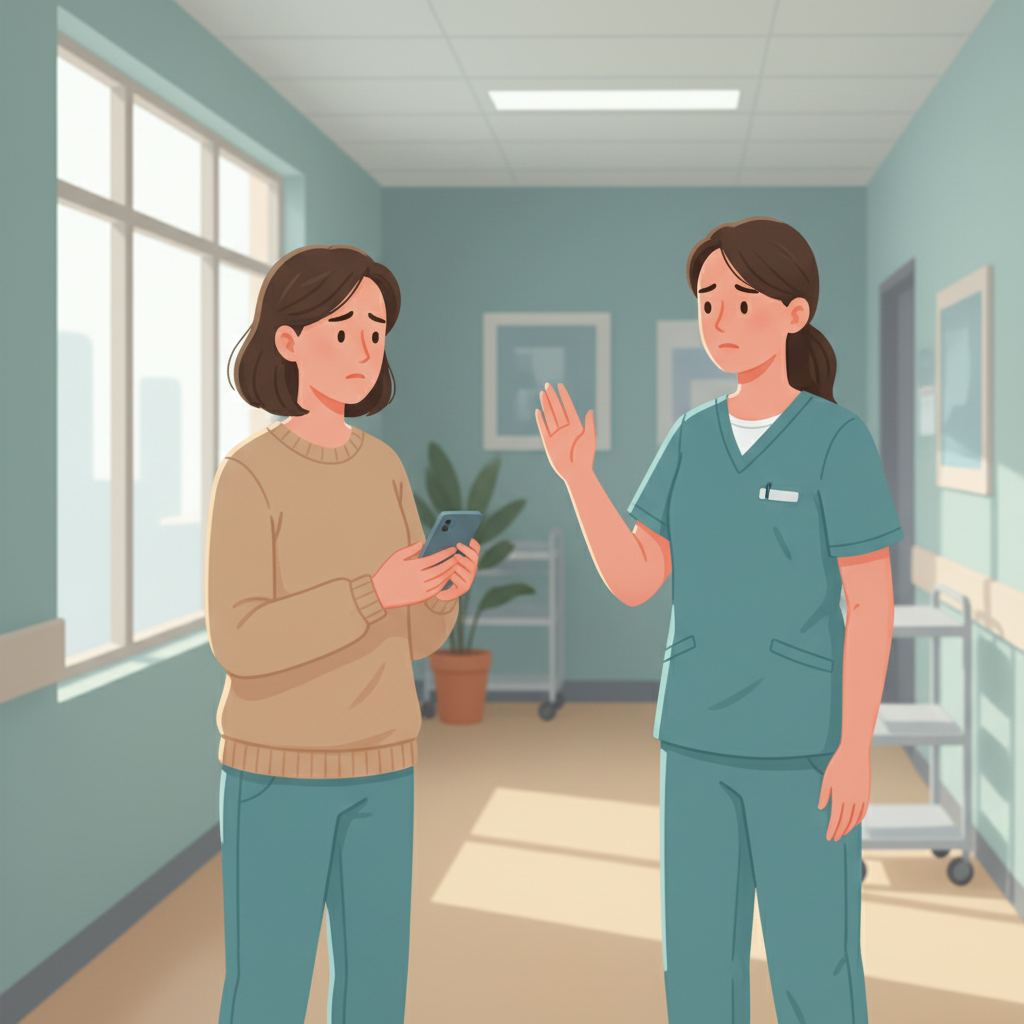
I'm 4 months in and I'm getting so frustrated. Every time a resident's daughter comes to visit, she corners me in the hallway and asks me things I can't answer. "What did his labs look like today?" "Is the antibiotic working?" "Why is he more confused than yesterday?" "Is he going to get better?" I've told her like 5 times that the nurse has to answer those questions, but she says the nurse is too busy and asks me anyway. Yesterday she asked me point blank "is he dying?" and I just froze. My charge nurse said I handled it fine but I feel like I did everything wrong. How do you handle this without being rude?
This is one of the most common awkward spots in CNA work, and it sits at the exact center of your scope of practice. The questions are real, the person asking is genuinely scared, and the rules about what you can say are clearer than the conversation makes them feel.
Why this happens so much
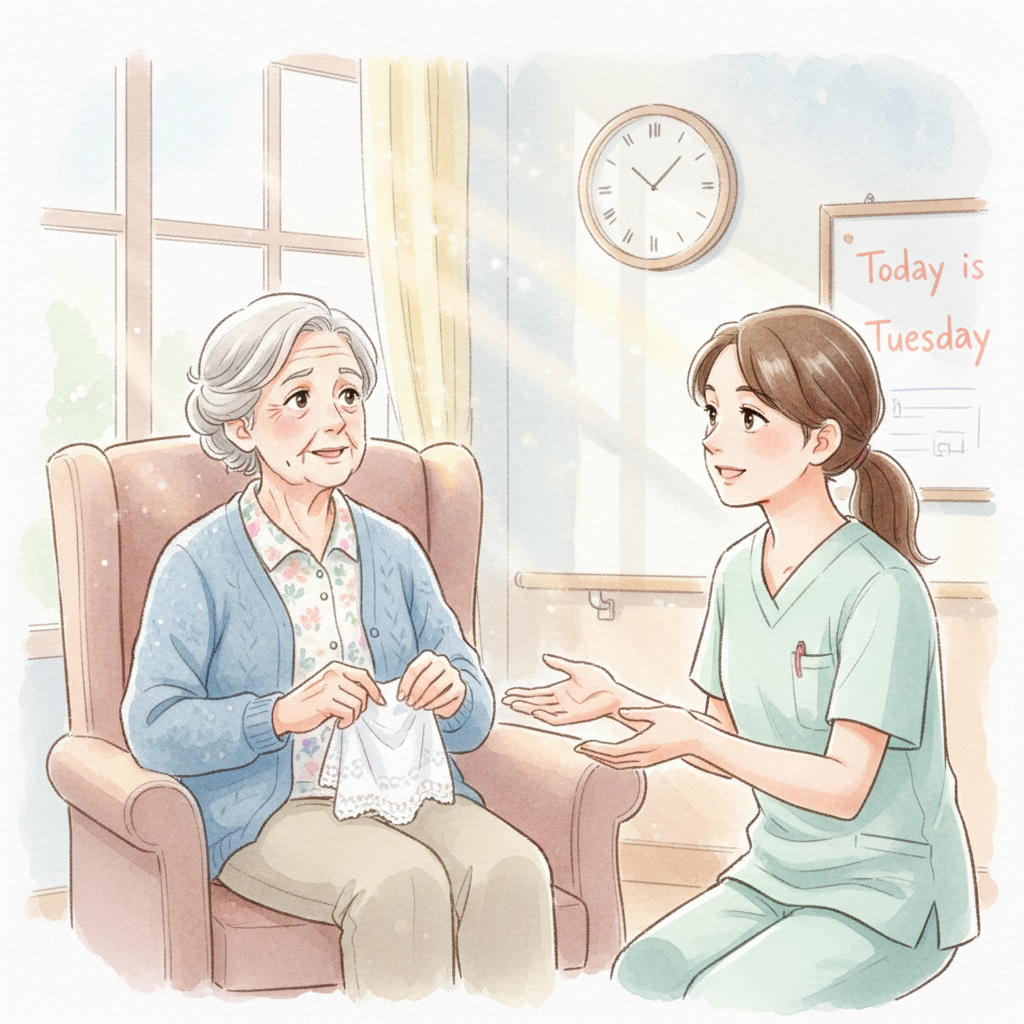
Families ask CNAs medical questions for the same reason residents hit call lights constantly: you're the one who's there. The nurse sees the resident for medication pass and assessment. You're the one in the room for baths, toileting, turns, meals, and everything between. You know how the resident looked this morning, whether they ate, whether they were more confused than yesterday, whether they slept.
To a worried daughter, that information feels medical. To you, it feels like observation.
Both of you are partially right.
What you CAN say
Your scope as a CNA includes reporting what you observe. You can absolutely tell family members things like:
- "He ate about 60% of his breakfast today and seemed to enjoy it."
- "He slept well last night, didn't seem to be in pain when I helped him turn."
- "He was up in the chair this morning and participated in activities."
- "I noticed he seemed more tired today than yesterday."
- "He asked for his call light twice this shift, which is less than usual."
These are observations about the resident's condition during your care. They are factual, present-tense, and grounded in what you personally saw. They are within your scope. They are also genuinely comforting to a family member, because families usually know less about the resident's day-to-day than you do.
You can also:
- Direct the family to the nurse by name
- Offer to have the nurse call them back
- Tell them when the nurse is expected to be on the unit
- Suggest they write down their questions for the next care-plan meeting
What you CANNOT say
The line is firm. You are not allowed to interpret, diagnose, or predict. Specifically, do not say:
- Anything about lab results, imaging, or test outcomes
- Whether a medication is "working" or not
- What a diagnosis means or whether the resident has one
- A prognosis ("they're getting worse," "they'll be fine," "it's not looking good")
- Whether the resident is "dying"
- Anything about what the doctor said, even if you overheard it
- Anything about another resident, even by accident
The reason isn't that you're not smart enough to interpret these. It's that:
-
You don't have the full picture. Labs trend over time. Medication response is judged against baseline. Diagnoses are made with differential reasoning. Sharing your read of any of these creates information that's wrong as often as it's right.
-
You can be held liable. If a family acts on something you said — changes a visit pattern, makes a financial decision, tells the resident something that affects their will — that can come back on you, even if you said "I'm not a nurse." The legal test is whether a reasonable person would have relied on what you said.
-
It undermines the care team. If families learn that CNAs will give them information, they stop waiting for the nurse. They stop going to care-plan meetings. They get fragments instead of answers. The resident ends up with confused, anxious family members who think different staff told them different things.
The nurse saying "you handled it fine" doesn't mean you're off the hook legally. It means the nurse appreciates that you didn't make things worse.
The "is he dying?" question
This is the one that breaks people. The CNA in the post above got asked it point blank, and that's not unusual — it happens weekly in long-term care and hospice-adjacent settings.
The rule is the same: you don't answer it. But how you don't answer it matters.
What doesn't work:
- "I can't discuss that with you." (Sounds evasive, like you're hiding something.)
- "You'll have to ask the nurse." (They've already told you the nurse is too busy. They're going to keep asking.)
- "I don't know." (Often true, but sounds dismissive when they're terrified.)
- Freezing and walking away. (Feels like abandonment.)
What tends to work:
- "I can see you're worried about him, and that makes sense. I want you to have a real answer, not my read of it. Let me page the nurse so she can come talk to you — can you wait in his room and she'll be there in the next few minutes?"
- "The best person to walk you through what's happening is [nurse's name]. I'll let her know you're here and have questions. Is there something specific you want to make sure she covers?"
- "I noticed today that [observation] — and I want you to have a full picture, so I'll make sure [nurse] gives you a call this evening."
The pattern is: acknowledge the emotion, give them a concrete next step, and don't pretend you didn't hear the question. Pretending you didn't hear it is what creates the freezing feeling. You don't have to answer it. You do have to acknowledge that it was asked.
What NOT to do
A few specific traps worth naming:
Don't fill the silence with speculation. If you don't know what to say, say "I want to make sure you get accurate information" and stop talking. Don't ramble.
Don't share information you got secondhand. Even if the nurse told you the labs are improving, that's not yours to share. The nurse can share it. You can't.
Don't answer on behalf of a different shift. You weren't there. You don't know what the day shift saw or what the night shift will see. Stay in your own shift.
Don't get pulled into a "you spend more time with him than the nurse does" conversation. It's true, and it's flattering, and it's a setup. The second you agree with that framing, you've positioned yourself as the medical authority.
Don't apologize for the scope. You're not being unhelpful by redirecting. You're protecting the resident and the family from bad information. The nurse isn't too busy — the nurse is the one qualified to answer.
What to document
After a conversation like this, write a brief note:
- Who asked the questions
- What they asked (general categories, not word-for-word)
- What you told them
- Whether you paged the nurse or escalated
- The resident's condition at the time
This protects you if the family later says "the aide told me Dad was dying." It also helps the team see the pattern — if the same family member is asking every shift, that's worth a care-plan conversation about who should be the family's point of contact.
The harder version: when it's your own family
If your own relative is in the facility where you work, the rules are the same. You are not their CNA. You are their family. Don't go read their chart. Don't ask their nurse questions in the hallway. Don't interpret their vitals. The boundaries exist to protect them from your bias, just as much as to protect you.
You're not failing this family by not answering. You're failing them only if you give them an answer that sends them home with the wrong picture of what's happening. Redirect well, document the conversation, and let the nurse do the part of the job that isn't yours.
For more on scope-of-practice scenarios you'll see on the NNAAP and in your first year, the clinical skills section of ExamReady CNA walks through the difference between observation and assessment — it's the exact line you'll be drawing every shift.
If this kind of post is useful, the full ExamReady library has 1,500+ practice questions, clinical skills with critical-step tracking, and an AI tutor that explains every answer — the same scope-and-voice approach as these posts, with the actual exam tools attached. A 7-day free trial gets you the whole thing, no card required.