Family member is a nurse and criticizes your care: what to do
A real r/cna scenario where a resident's daughter is an RN and keeps telling the CNA she's doing things wrong. How to stay professional, protect your license, and not lose your mind.
A CNA on r/cna posted this:
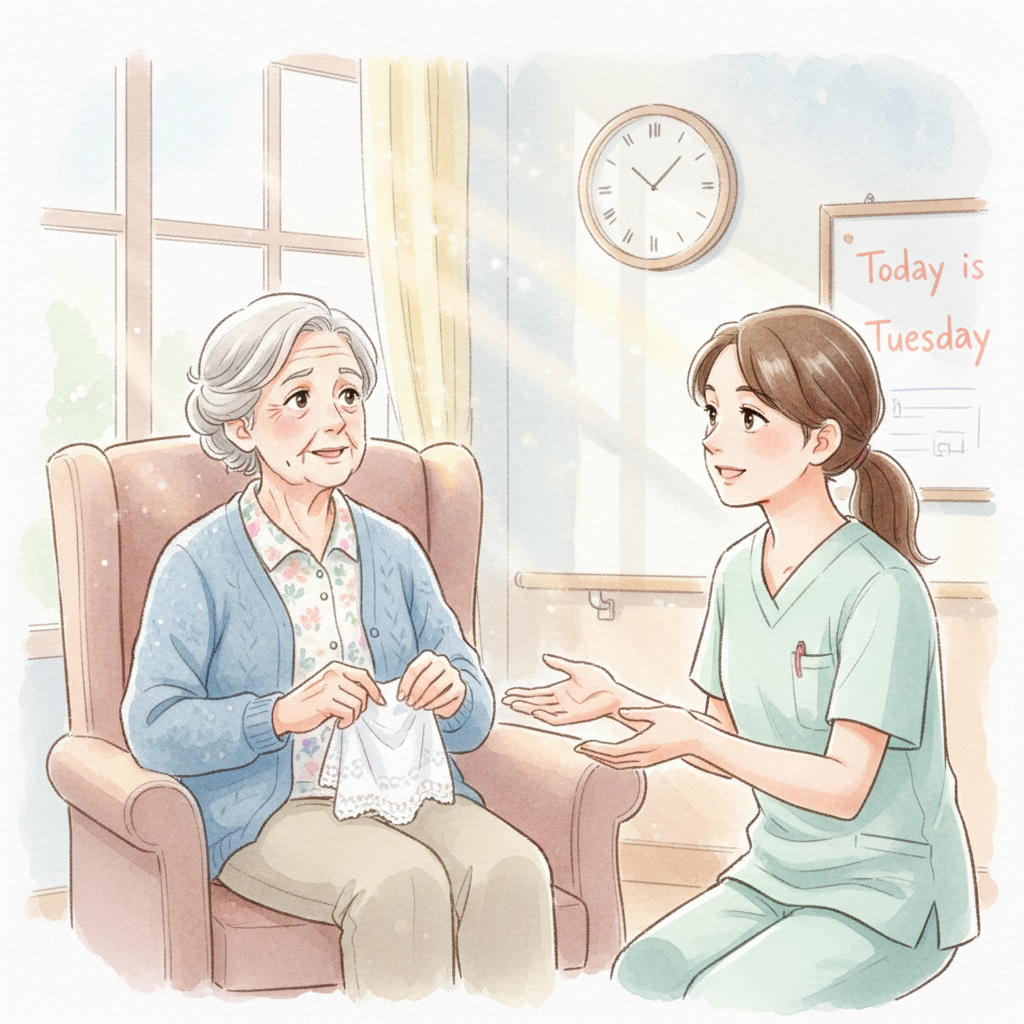
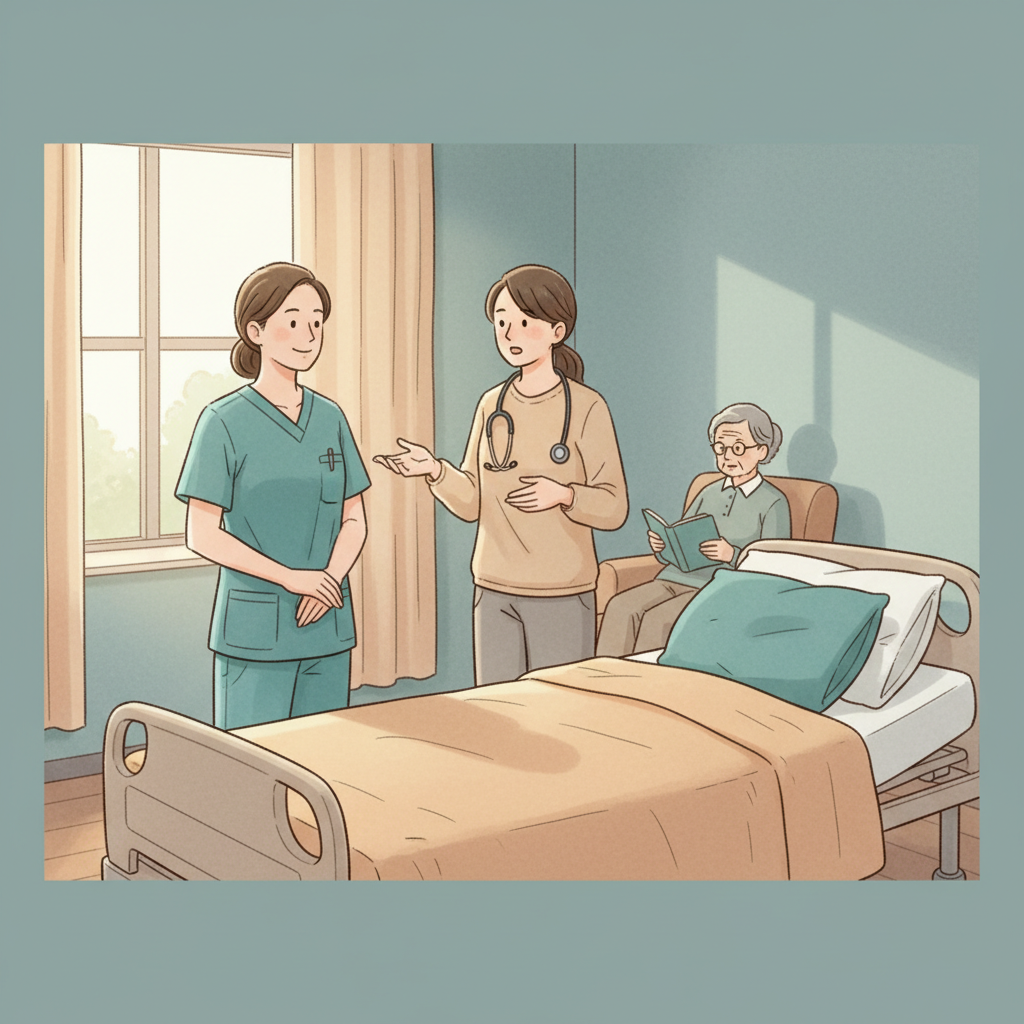
I need advice. I'm a fairly new CNA, about 4 months in. One of my residents has a daughter who is an RN at the hospital across the street. She comes in almost every day and stays for hours. She watches EVERYTHING I do. Last week she told me I was positioning my resident wrong in bed. She told me I was feeding him too fast. Today she told me I shouldn't be using a Hoyer lift that way and that I was going to hurt him. I've tried to be polite but I'm starting to dread when she walks in. I don't know what to do. She's a nurse. She probably knows more than I do. Am I doing something wrong? How do I handle this without making things worse?
This one got 412 upvotes and 180+ comments in about 24 hours. It's a specific flavor of stress that doesn't show up in training and that almost every long-term care CNA eventually runs into. Here's what's actually going on and what tends to work.
Why this is uniquely hard
A regular family member questioning your care is one problem. A family member who is also a licensed clinician is a different one.
You're being evaluated by someone with the vocabulary to make it sound like you're incompetent. "I don't think my mom is comfortable" is a soft observation. "You're not maintaining proper body alignment, you're going to cause a pressure injury" lands like a clinical finding — even when she's wrong.
You can't dismiss her the way you can with a non-clinical family member. With a nurse, "I'm a professional and I know what I'm doing" sounds defensive and escalates. She's inside the world. You can't pretend she isn't.
Your facility has a specific protocol for handling family complaints that involve a clinician, and most CNAs don't know it. That's the part no one teaches you.
She's probably stressed. Her parent is in a SNF. She's a nurse. She knows the bad outcomes. Some of what looks like criticism is fear leaking out sideways.
What is and isn't actually your problem
Let's draw the line clearly, because a lot of CNAs in the comments were already second-guessing themselves.
CNA scope (your call): how you position, how you approach personal care, the order of your rounds, how you communicate during ADLs, when you ask for help, how you cluster tasks.
Nurse scope (not your call): medication changes, assessments, wound care decisions, care plan changes, diet upgrades, fall-risk reclassification, anything involving a clinical judgment call.
Middle ground: turning and positioning technique, transfer method, feeding pace, incontinence care approach. These are CNA tasks, but they're also things where a nurse, PT, or OT may have legitimate input — input that should come through the care plan, not at the bedside.
If the daughter is telling you you're positioning wrong, that's a real conversation. But it needs to happen between her, the nurse, and the care plan. Not at the bedside during your shift.
What to do in the moment
When she says "you're using the lift wrong" mid-transfer, you have about three seconds to decide what to do. Here's the playbook.
Stop the task safely. If you're mid-transfer, finish the transfer safely and then talk. Do not continue a transfer while someone is arguing technique with you — that's how people get hurt.
Acknowledge, don't agree. "I hear you, and I want to make sure we're doing this the right way" works. "You're right, I'm sorry" does not — even if she is right, you haven't fixed the underlying issue, you've just bought yourself about four hours before she brings it up again.
Redirect to the nurse. "I appreciate you flagging that. Let me bring it to the nurse so we can update the care plan." This is the magic sentence. It says "I heard you" without saying "you're right" or "you're wrong." It moves the conversation out of your scope and into the correct channel.
Don't argue technique in the room. If she has a specific concern — "the sling should be lower under the arms" — the answer is still "let me bring this to the nurse so we can update the care plan." Not "actually, the sling goes here because in my training..."
The reason this is hard: it feels passive. It feels like you're being pushed around. You're not. You're using the only channel that actually creates change.
What to do after the moment
In the next hour, two things need to happen.
Tell the nurse on duty. Briefly, neutrally. "Hey, the daughter — she's an RN at [hospital] — she had a concern about the Hoyer transfer technique. I told her I'd bring it to you. Can you talk to her when you get a chance?" This puts the issue in the right place and creates a record that you escalated it.
Document. In your shift notes, write something factual: "Daughter (RN) present during care. Expressed concern re: transfer technique. Reassured her I would notify nursing. Charge nurse [name] informed." That's the whole entry. It doesn't take sides. It documents that you listened, that you redirected, and that you escalated. If the daughter later complains to the DON, the documentation is your protection.
You do not need to write a longer entry, and you do not need to call the DON yourself. That's the nurse's call to make.
What NOT to do
Don't try to win the technical argument. Even if you're right — even if the lift sling placement is textbook correct — arguing with a family member at the bedside is a loss. You might win the technical point and lose the relationship, and the relationship is what determines whether the next shift goes smoothly or whether you go home crying.
Don't apologize for things you didn't do wrong. "I'm sorry, I should have done it differently" creates a written record that you were doing it wrong. Even if you feel cornered, even if she's escalating, even if the resident is watching — do not concede. Acknowledge, redirect, escalate. Don't apologize.
Don't refuse to work with the resident. You don't get to drop a resident because their family is difficult. That's an assignment refusal, and it's the kind of thing that ends a CNA's job.
Don't talk about her to other CNAs in earshot of the residents or the family. "Yeah, that nurse daughter is INSANE" feels cathartic in the break room. If she hears it, you're done. The break room is for venting; keep the venting in the break room.
Don't go to social media to ask for advice about a real, identifiable patient or family. r/cna is fine for the general scenario — that's how this post got written. Naming the facility, the resident, or the daughter is a HIPAA and professionalism violation. The original poster did this right; do the same.
The longer arc
If the situation is a one-time event, the redirect-and-escalate playbook is enough. If it's a pattern — daughter showing up every shift, multiple CNAs reporting the same conflict, the resident's care being affected — the nurse, the DON, and possibly the administrator need to run a formal care plan meeting with the family. That meeting has a specific purpose: clarify the scope of the daughter's role, agree on a communication channel, set boundaries.
A good facility will run this meeting without being asked. Most facilities need to be prompted. If you've escalated to the nurse, the nurse has done nothing, the DON has done nothing, and the situation is ongoing for two or three shifts, you have the right to ask — politely, in writing — for a care plan meeting. "I want to make sure we're giving [resident] the best care and I think a quick meeting would help align everyone." That's not a complaint. That's a CNA advocating for their resident, which is exactly what CNAs are supposed to do.
What to remember
You're not failing because a nurse family member is hard to work with. You're not failing because she has a clinical eye on everything you do. You're failing only if you stop documenting, stop escalating, or stop doing the work safely.
A licensed family member is, in the end, still a family member. The care plan is the document that determines what's done at the bedside. Your job is to do the work the care plan says, document what you do, and escalate what you can't resolve. Everything else is above your pay grade — and that's not a failure. That's a scope.
If this kind of post is useful, the full ExamReady library has 1,500+ practice questions, clinical skills with critical-step tracking, and an AI tutor that explains every answer — the same scope-and-voice approach as these posts, with the actual exam tools attached. A 7-day free trial gets you the whole thing, no card required.