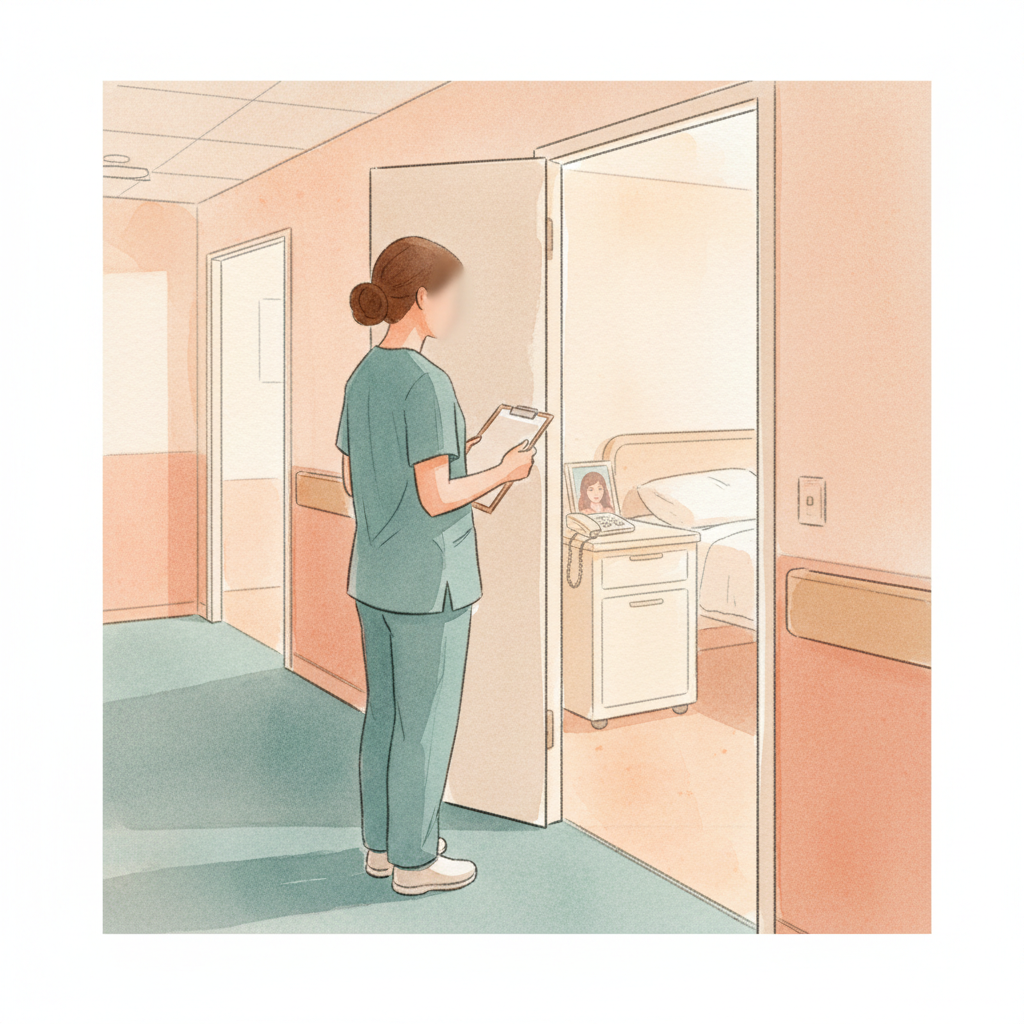
Family says you didn't change mom all day — but you did. What now?
A daughter is on the phone with the charge nurse swearing you never changed her mother all shift, and you changed her three times. How to handle false complaints from families without losing your job or your cool.
A CNA on r/cna posted this:
I am so upset I had to leave and cry in the bathroom. I had a resident today whose daughter called the facility to complain that I "didn't change her mother all day and she was soaked." I changed that resident three times. I charted it three times. I even told the offgoing CNA, "Mrs. R is a heavy brief, you might need to check her in an hour." When the daughter called, the charge nurse pulled me aside in front of everyone and asked me about it like I had done something wrong. I felt like I was being accused of something. I didn't even get a chance to explain before the nurse went to the resident's room. By the time I got off the floor I was shaking.
This post got 612 upvotes and 180 comments. Almost every CNA has been here. Here's why the daughter probably believes what she's saying, and what to do so it doesn't blow up on you.
Why families complain about care that actually happened
It is almost never personal, and it is almost never about you. The most common reasons:
The resident has short-term memory loss. Mom may genuinely not remember being changed. From her perspective, she's been lying in a wet brief for hours. She's telling her daughter that, and the daughter is relaying it. You changed her. She forgot.
The resident has pain or discomfort and is communicating it through the only channel she has. A resident with dementia who can't find the words for "my hip hurts" or "the brief feels wrong" will say "no one changed me." It's a distress signal, not an accusation.
The family member is anxious and projecting. Long-distance family members especially — they call every day, they can't see their parent, and every phone call is a chance to worry. A daughter who lives two states away and talks to mom once a day is going to hear a wet brief once and conclude that no one is helping.
The family member is processing guilt. Placing a parent in a facility is one of the hardest decisions a person can make. Guilt expresses as vigilance. Sometimes that vigilance lands on the CNA.
It actually did happen — just not on your shift. The daughter may be repeating a complaint from yesterday, or last week, or from a different shift entirely. By the time it gets to you, the timeline is already broken.
In every one of these cases, the right response is the same: stay factual, stay documented, stay calm.
What to do in the moment
If the family member is complaining to you directly, in person or on the phone:
Don't argue. "I changed her three times, I don't know what you're talking about" sounds defensive even when it's true. The family member is already emotional, and arguing escalates.
Acknowledge, then redirect to the chart. "I hear you, and I want to make sure we get this right. Let me pull the care sheet and we'll go through it together." If you're on the phone, "Let me get the nurse so we can look at the documentation together."
Don't volunteer the family member's parent into the room for a check. That sounds weird, but it's a real instinct — "well, let's go change her right now." Don't. If she's been changed three times and the daughter is angry, an immediate "let's check" reads as you proving yourself. The chart is what proves you. The chart doesn't lie. You do the next change on schedule.
Don't apologize for something you didn't do. "I'm so sorry she was wet" implies you let it happen. "I'm sorry she was uncomfortable — let me look at the timeline with you" is honest and factual.
Get the nurse involved early. Even if you think you can handle it, the moment it becomes a complaint, it needs to be a nurse-and-CNA conversation, not just a CNA conversation. The nurse's job is to talk to families. Yours is to provide the documentation.
What to do after the conversation
The conversation with the family isn't the end. It's the middle.
Write an incident note. Even if no one told you to. Time, date, what the family member said, what you said, what you did. This is a separate note from the regular charting — it's a paper trail showing you took the complaint seriously.
Notify the charge nurse in writing. If your facility has a text/Slack group, send a quick message: "FYI, Mrs. R's daughter called complaining about brief changes. I've charted three changes on my shift, copy attached." Even an email to yourself at the facility address counts.
Document the conversation in the chart. A brief note: "Daughter [name] called at 14:30 with concern that resident was not changed. Reviewed care sheet with daughter, three changes documented this shift. Resident checked at 14:45, brief clean and dry." That's it. One line. Future-you will thank present-you.
Talk to your nurse privately, not in front of the family. If the charge nurse pulled you aside in front of everyone, that's a different problem — but you can still ask for a quick private conversation. "Hey, when you asked me about Mrs. R earlier, I didn't have a chance to share the documentation. Can I show you now?"
What NOT to do
Do not let the family member reframe your work. A daughter who says "you never changed her" is not giving you a performance review. Your work is the work you did. The chart is the chart.
Do not get dragged into a he-said-she-said. The minute it's your word against the daughter's, you've already lost, because the daughter is the customer and you're the employee. The chart is the third party. The chart doesn't care who's upset.
Do not change the resident right then to "prove" you can change her. A wet brief that has been clean for 20 minutes is still a clean brief. Changing it doesn't fix anything and it confuses the next CNA's read of the schedule.
Do not stop documenting after a complaint. The worst time to be casual about charting is right after you've been accused of not doing the work. Chart everything. Every brief, every position change, every round. If it isn't charted, it didn't happen.
Do not badmouth the family member to coworkers in the break room. The break room is where these stories get out. The family will hear something you said, and suddenly you have a second problem.
How to protect yourself going forward
Chart in real time, not at the end of the shift. A note at 10:15 is worth ten times the same note at end of shift, because the timestamp matches your actual movement through the day.
Use specific language. "Resident changed" is weak. "Resident changed at 10:15, large amount of liquid stool, brief clean and dry, peri care with barrier cream, no redness noted" is a chart entry. The first one is what gets you accused of not doing it. The second one is what proves you did.
Take false complaints seriously anyway. The daughter who complains that you didn't change her mom is the same daughter who, six months from now, will defend you to the DON when someone else gets accused. How you respond to a false complaint decides how the family sees you forever.
If a complaint escalates to a write-up or a state report, ask for the documentation in writing. Most facilities will share it. If yours doesn't, that's worth flagging to your union rep or your state CNA association.
The hard truth
False complaints happen. They happen to good CNAs more often than to bad ones, because bad CNAs don't chart, and the chart is what the complaint runs into. You will be accused of things you didn't do. You will have to defend yourself with a piece of paper instead of your character. That is the job.
The CNAs who survive this career long-term are the ones who learn, by the second or third false complaint, that the chart is the only thing that matters. "I did it" is worth exactly as much as "I did it" written down at the time. Write it down. Move on. The next resident needs you more than this one needs an argument.
The ExamReady clinical-skills library has critical-step tracking on peri care and brief changes — the same step-by-step reasoning that protects you on the floor. Walking through the perineal care skill module once is a good reminder of what the chart entry should actually say.
If this kind of post is useful, the full ExamReady library has 1,500+ practice questions, clinical skills with critical-step tracking, and an AI tutor that explains every answer — the same scope-and-voice approach as these posts, with the actual exam tools attached. A 7-day free trial gets you the whole thing, no card required.