Resident cries when family leaves: what to do (and what not to do)
An r/cna question about a resident who breaks down crying every time her daughter walks out the door, then calls the daughter begging to be taken home. What's happening, and what CNAs can actually do to help.
A CNA on r/cna posted this:
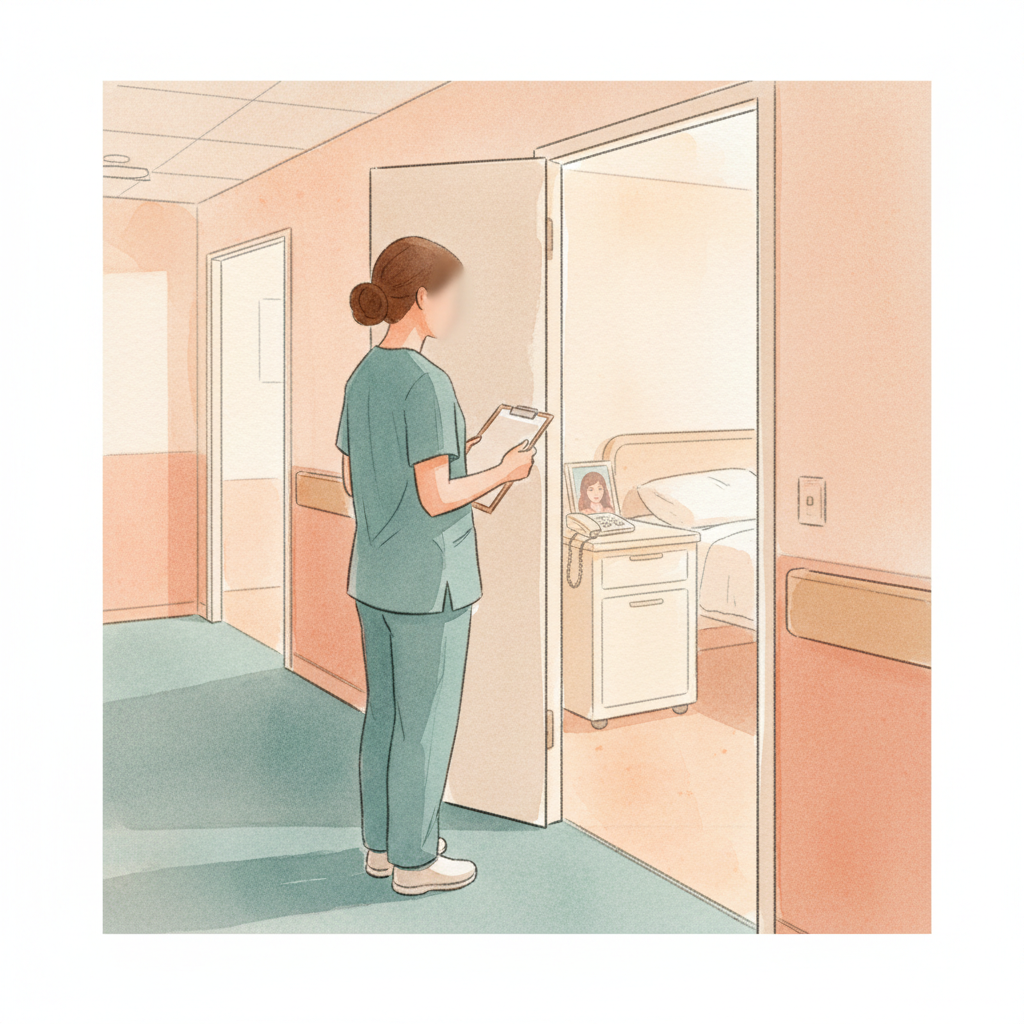
I have a resident on my hall, sweet lady, mostly with it cognitively, who cries every single time her daughter visits and then has to leave. Like, hard crying. The daughter always looks wrecked walking out. After the daughter leaves, the resident calls her on the phone 4-5 times in a row begging to be taken home. Sometimes she calls the front desk asking them to call her daughter. Sometimes she tells me she just wants to die so she can "stop being a burden." It's wearing on me and on the daughter. I don't know what to say to either of them anymore. Is this normal? Is there something I'm supposed to be doing?
This got a few hundred upvotes and a long comment thread. It's one of those situations that doesn't show up in CNA textbooks, but it shows up in real facilities constantly. Here's what's actually going on and what tends to help.
What's happening
The textbook term is separation distress or post-visit grief, but you don't need the term to recognize it: a resident is fine (or even cheerful) during a visit, then completely falls apart the moment the family member walks out the door. The crying, the phone calls, the "take me home," the dark comments — this is a real emotional response, not manipulation.
A few things are usually layered together:
Anticipatory grief. Many residents in long-term care know, on some level, that this is where they will live for the rest of their life. The visit, especially from an adult child, surfaces that grief in a way that quiet weekdays don't. The crying often starts a few minutes before the family member actually leaves, not after.
Loss of role. At home, the resident was a mother, a grandmother, a homemaker, the person who made decisions. In the facility, they're "room 214, the one who needs her meds at 8." The visit is often the only time they get to be a mom again. When the visit ends, the role ends, and so does the sense of self that came with it.
Genuine loneliness. Some residents see family once a week. The visit is the highlight of seven long days. It's not a small thing to lose it.
Learned behavior on the daughter's side. Sometimes the daughter has been trained — gently, accidentally — that the only way to leave without a scene is to slip out. So the resident has learned that crying gets the visit extended, and the daughter has learned that sneaking out is the only way out. Both are stuck in a loop that gets worse over time.
Cognitive factors. Even when cognition is "mostly intact," the part of the brain that regulates emotional responses and understands time can be off. A resident who knows her daughter is coming tomorrow may still feel, in her gut, that she's been abandoned forever. That's not faking.
What NOT to do
This is the part that gets CNAs in trouble, because the instinct is to either fix it or shut it down.
- Don't tell her to calm down. "It's okay, don't cry" almost always makes the crying worse. It tells the resident that her feelings are a problem to be solved rather than a real experience she's having.
- Don't lie to make it stop. "Your daughter is coming back in 5 minutes" when she's coming back in 5 days is a short-term fix that breaks trust when the resident realizes it didn't happen.
- Don't sneak the family member out. If the daughter is slipping out while the resident is in the bathroom or at therapy, that almost always backfires. The resident finds out, and the next visit starts with betrayal.
- Don't take the "I want to die" comment lightly. When a resident says she wants to die so she can stop being a burden, that's a statement worth reporting to the nurse every single time. It may be grief talking, but it may also be a real warning sign. The line between "I wish I were dead" and "I want to kill myself" is one a CNA is not trained or expected to draw. Report it, document it, let the nurse decide.
- Don't promise things you can't deliver. "I'll make sure you get to go home for Thanksgiving" — don't say it unless you know. Promises from staff that don't come true are how residents lose trust in the entire care team.
What tends to help
1. Acknowledge the feeling before trying to redirect. A simple line that works: "I can see how much you love her, and I can see how hard it is when she has to go. That makes a lot of sense." You're not fixing it. You're telling her that her reaction is real and heard. Most of the time, being heard is half the cure.
2. Help the daughter build a real goodbye ritual. A clean goodbye with a clear "I'll be back on Tuesday at 2" — with a hug, an "I love you," a hand squeeze — is almost always better than a long, drawn-out, tear-soaked departure. Suggest to the daughter (gently, through the nurse or social work) that a shorter, firmer goodbye tends to result in less distress afterward than a long, lingering one. The "just one more minute" cycle is what amplifies the breakdown.
3. Redirect to a real activity, immediately. Crying that goes on for an hour is harder than crying that lasts 10 minutes. After the daughter leaves, having something concrete to do — a walk, a cup of tea, a phone call to a different relative, a TV show she likes — gives the resident somewhere to put the energy. Don't say "let's go do something fun." Say "let's go get a cup of coffee" or "let me show you what's in the activity cart today." Concrete, not cheerful.
4. Document the pattern. Every visit, note in the chart: who visited, when they left, how the resident reacted, how long the distress lasted, what helped. This is the data the care team uses to decide whether the resident needs a psych consult, a medication review, a different room, or more frequent visits. Without the documentation, the team is guessing.
5. Loop in the nurse and social work. A single CNA is not going to solve this. The nurse can evaluate for depression, anxiety, or untreated pain. Social work can talk to the family about visit frequency, about caregiver guilt, about realistic expectations. If the resident is making statements about wanting to die, the nurse needs to know that day, not at the next care-plan meeting.
6. Take care of yourself. This kind of emotional work wears CNAs down. Hearing "I want to die so I can stop being a burden" twice a week for months is heavy. Talk to your coworkers. Use your breaks. If the weight of it is starting to follow you home or affect your sleep, that's worth bringing up with someone you trust. You can't pour from an empty cup, and you cannot be the steady presence this resident needs if you're running on fumes.
The line that helps most
If you only have time to say one thing when the daughter walks out and the crying starts, this is the line that tends to work:
"She loves you, and you love her, and that's why this is so hard. I'm going to sit with you for a few minutes, and then we're going to get a cup of coffee."
You're not fixing it. You're not making it stop. You're letting her know she's not alone in it, and you're giving her a next step. That's almost always enough to start coming down from the worst of it.
If this kind of post is useful, the full ExamReady library has 1,500+ practice questions, clinical skills with critical-step tracking, and an AI tutor that explains every answer — the same scope-and-voice approach as these posts, with the actual exam tools attached. A 7-day free trial gets you the whole thing, no card required.