Told the nurse something is wrong and nothing happened: what to do next
A CNA on r/cna told the nurse a resident looked off for hours and nothing changed. How to escalate a change of condition when the nurse isn't responding — without overstepping your scope.
A CNA on r/cna posted this:
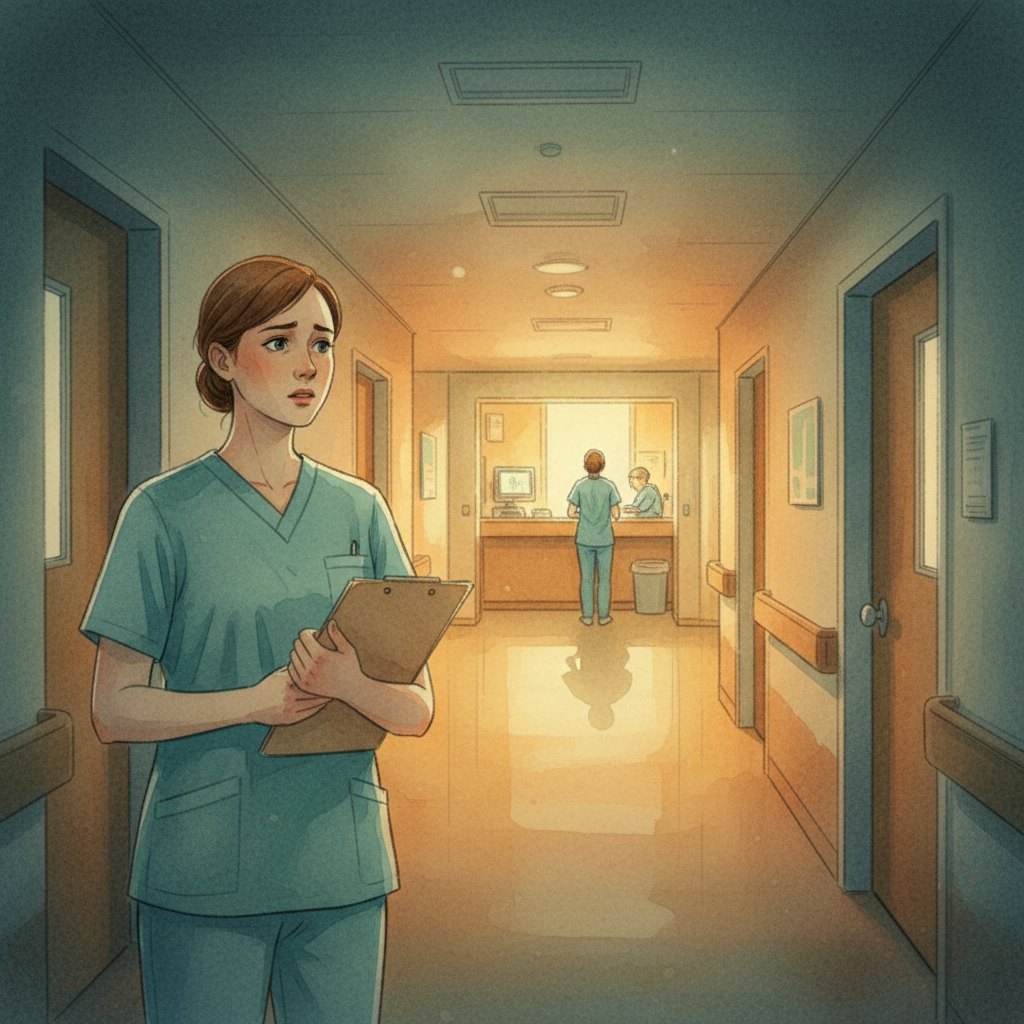
I work nights in a SNF and I've been keeping an eye on a resident all shift. Around 2am I noticed her BP was lower than her usual, she was super sleepy but I could wake her up, her urine output dropped to almost nothing over the last few hours, and she said her back hurt when I turned her. I told the nurse around 2:30. She said "ok noted" and went back to her charting. Around 4am I took her vitals again — same trend, maybe a little worse. I told the nurse again. She said "she's fine, just tired, stop worrying." I don't know what to do. She IS the nurse. But my gut says something is wrong. Am I overstepping?
This is one of the most common — and most stressful — situations a CNA faces. You see something. You report it. Nothing happens. The clock keeps ticking and you're the one in the room.
Why this happens
Nurses are often overwhelmed — meds for 20-30 residents, provider calls, families, charting, codes. When a CNA says "Mrs. Smith looks off," it competes with everything else the nurse is holding. Some nurses are trained, explicitly or by culture, to filter CNA reports because most "she looks off" calls end up being fine. The problem is when the filter is set to full dismissal.
Some nurses are new. Some are tired. Some are bad at their job. None of that matters when a resident is declining — but understanding the dynamic helps you figure out how to push.
What your scope actually lets you do
CNAs cannot diagnose. CNAs cannot call the provider directly. CNAs cannot give medications or change the care plan. None of that is in dispute, and you should not do it.
What CNAs CAN and MUST do:
- Take vital signs and document them
- Report changes of condition to the nurse, in real time, in a way that is hard to dismiss
- Document that you reported it, to whom, and at what time
- Escalate to the next person up if the nurse doesn't act on a real change
- Call a rapid response or code if the resident is in immediate danger and the nurse is unresponsive
That last one is the most important. If the resident is unresponsive, apneic, choking, or has no pulse — you call the code. You do not wait for a nurse's permission. Anyone in the building can pull a code blue.
The case above is different. The resident is stable but trending wrong. That's the harder middle ground.
The first report: how to make it land
Most CNAs say it like this: "Hey, Mrs. Smith looks a little off to me." That's a feeling, not a finding. Nurses get a hundred of those a shift. They filter them out.
What lands is a specific finding:
- "Mrs. Smith's BP is 88/54, her baseline is 130s/70s. She's been hypotensive all shift."
- "Mr. Lee's urine output has been under 30cc an hour for the last 3 hours."
- "Mrs. Garcia's oxygen sat is 88% on room air, her baseline is 95%."
- "Mr. Brown's right leg is noticeably more swollen than his left, and he says it hurts when I touch it."
Specific numbers, specific times, specific changes from baseline. The nurse doesn't have to take your interpretation. She can look at the number and decide for herself. That's what makes it stick.
If you have a gut feeling but no number — fine, say that. But say it with the finding attached: "I don't have a number, but she just doesn't look right to me, and here's what I'm seeing."
The second report: when the first one didn't get action
Give the nurse a window. Not infinite — usually 30-60 minutes for a non-emergency trend — but some time. The nurse may be mid-med-pass, mid-call, mid-something. Not every delay is dismissal.
If the trend continues and you're worried:
- Report again. Use the words "I'm concerned." Not "I'm worried" — concern is the clinical word. It triggers a different response in most nurses.
- Be specific about the trend, not just the new finding. "She was hypotensive at 2:30, she's still hypotensive at 4, and now she's harder to wake up."
- Document the second report. Time, what you said, what the nurse said back. Paper trail.
- If the nurse is dismissive, ask a direct question: "Are you comfortable with this trend, or do you want me to call the charge nurse?" That sounds confrontational, but it's not. It's asking her to either act or hand it off.
Most nurses will take the report seriously when it's framed this way. Most.
The third escalation: when the nurse still won't act
If you're at the point in the r/cna post — two reports, dismissal both times, vitals still trending wrong — you escalate. That's not overstepping. That's the chain of command working the way it's supposed to.
Options, in order:
-
Charge nurse. The nurse in charge of the unit for the shift. Tell her what's happening, including that you reported to her nurse already. The charge nurse has authority to reassess the patient, contact the provider, or pull the primary nurse aside.
-
House supervisor / nursing supervisor. Most facilities have one overnight. They sit above the unit charge nurse and can override her decisions.
-
DON (Director of Nursing) or ADON. For a non-emergency that has gone on shift after shift, this is the right escalation. Email or call the next morning if it's not urgent.
-
Provider / on-call provider. In a real emergency, or if all nursing chain has failed and the resident is actively declining, you can call the provider. This is rare. Most facilities have a policy on who can call. Check yours. Do not surprise your DON with this if there is any other route.
-
Rapid response / code. If the resident is acutely decompensating and your nurse is unresponsive, you pull the code. Yes, you. A rapid response team doesn't require a physician's order to be called in most facilities. Anyone can call one.
The documentation that protects you
If you're escalating, you're documenting. Every step.
In your CNA notes or shift notes, record:
- Time you took the vitals, what they were
- What you observed (subjective and objective)
- Time you reported to the nurse, what you said, what the nurse said back
- Time of second report
- Time you escalated, to whom, their response
This is not paperwork for paperwork's sake. This is the record that, if something goes wrong, shows you did your job. If the resident crashes and the family sues, the lawyers will look at this. If the state inspects after a sentinel event, this is what they pull. If your DON investigates why a resident declined on your shift, this is your answer.
If you can't write a long narrative, write the times and the findings. Numbers and timestamps carry more weight than adjectives.
What NOT to do
- Don't diagnose. "She looks septic" is a diagnosis. "She's hypotensive, febrile, tachycardic, and confused, baseline is normal" is a finding. Use the second one.
- Don't give meds or treatments on your own. Even "innocent" things like adjusting oxygen or giving Tylenol are out of CNA scope in most states.
- Don't stay silent because you don't want to be "that CNA." You are that CNA. That's the job. The CNAs who see something and stay quiet are the ones whose names end up in incident reports — not because they caused the problem, but because they didn't document that they reported it.
- Don't let the nurse's tone turn you off. Some nurses are dismissive. Document the report anyway. You cannot control her response. You can control your paperwork.
The bigger picture
The r/cna poster was not overstepping. She was doing exactly what a CNA is supposed to do. The CNA scope is observation, reporting, and documentation. She observed. She reported. The system failed the resident, not her.
If you find yourself in this situation — and most CNAs do, more than once — the move is to keep doing your job with more rigor, not less. More specific reports, better documentation, clearer escalation. The nurse who doesn't listen is one person. The resident's decline is a real thing. You work for the resident.
If the facility makes it impossible to escalate, that's a workplace problem — same playbook as any other: document everything, bring it up the chain, and if nothing changes, the facility is the wrong place to work.
If this kind of post is useful, the full ExamReady library has 1,500+ practice questions, clinical skills with critical-step tracking, and an AI tutor that explains every answer — the same scope-and-voice approach as these posts, with the actual exam tools attached. A 7-day free trial gets you the whole thing, no card required.