Call light every 3 minutes: how to handle residents who call constantly
A real r/cna question about a SNF resident who hits the call light every 3-5 minutes for non-urgent things. What's actually going on, and what works to reduce the calls without ignoring the patient.
A CNA on r/cna posted this:
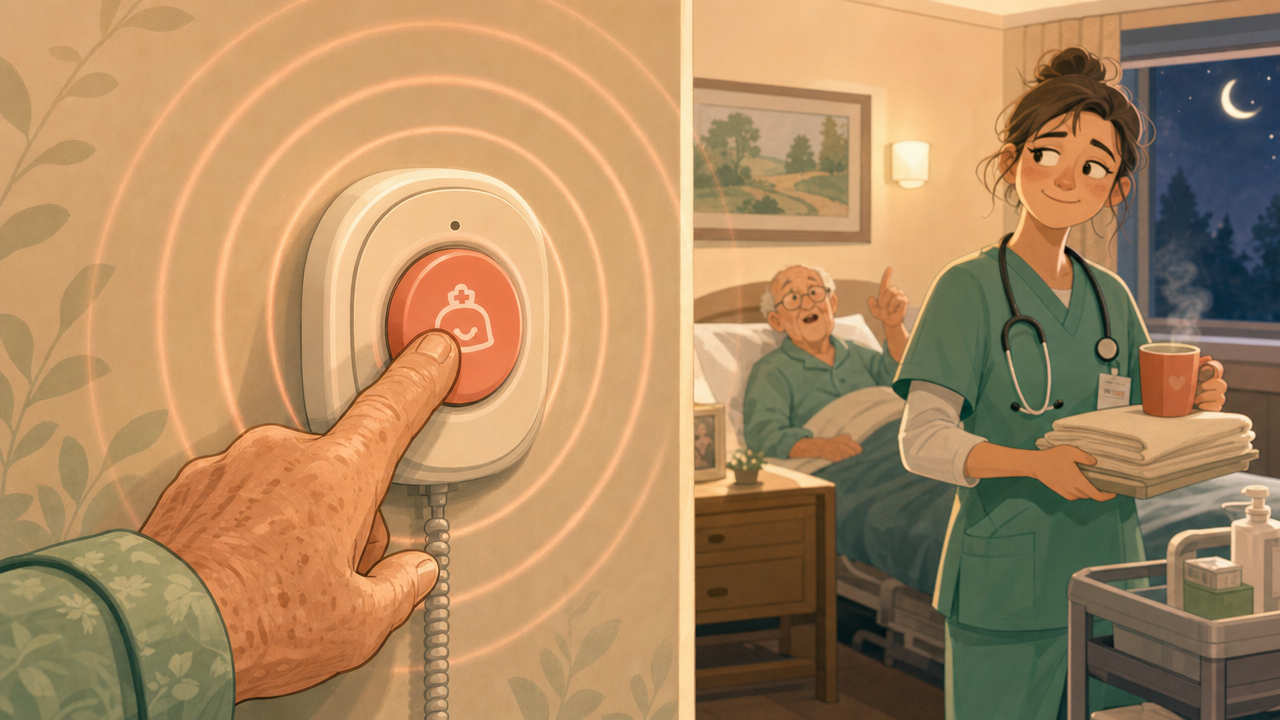
I work in a SNF and I have this resident that is driving me absolutely bonkers!!! She's hitting her call light every 3-5 minutes. It's always something like, she wants me to help her with her cell phone, she wants me to rearrange something on her table, she wants her shirt adjusted, she wants her eye drops, bathroom, more ice water, pillow fluffed, etc. I've tried going in there and doing everything I can think of for her at once, but it doesn't matter, she'll find something else to push her button for. I've tried to get her to come out of her room and sit in the common areas, but she refuses.
This post got 827 upvotes and 230 comments. It's one of the most common frustrations in long-term care. Here's what's actually going on and what tends to help.
Why this happens
Residents who hit the call light constantly usually aren't being difficult. There are almost always one or more of these underlying causes:
Loneliness. The call light is social contact. For a lot of residents, you're the only person who talks to them all day. The five minutes it takes to come in, joke about the call light, and adjust the pillow is a relationship, not a task.
Anxiety. New environments, unfamiliar routines, unfamiliar people — these are deeply disorienting for someone in a SNF. Constant calling is often a way of checking: is someone still there? am I safe?
Pain or discomfort that hasn't been resolved. Even when the stated request is "adjust my pillow," the underlying reason might be that the position hurts. Fixing the pillow without checking what hurts just kicks the can down the road.
Boredom. Especially with patients who were highly active before admission. Long-term care can be profoundly boring, and the call light is the only "game" available.
Cognitive impairment. The resident may genuinely have forgotten they just called, or may not remember that someone already came in five minutes ago.
Loss of control. A SNF is a place where almost everything is decided for you. The call light is the one piece of agency many residents have left.
Knowing which of these applies to your resident changes what helps.
What usually doesn't work
The first instinct is to fix the request. You go in, adjust the pillow, fluff it again, hand her the eye drops. She calls again. You go in faster this time. She calls again.
This approach fails for a few reasons:
- It rewards the behavior — every call gets a response, so the calls continue
- It treats the symptom, not the cause
- It burns you out, which leads to shorter visits, which leads to more calls
"I told her I'd come back in 10 minutes and she'd have to wait" — that's the advice in the comments, but it doesn't usually work either. The resident doesn't have a clock to look at. They have anxiety.
What tends to work
1. Address the underlying cause, not the request.
The cell phone, the pillow, the eye drops — those are the surface. The real question is: what is she actually needing right now?
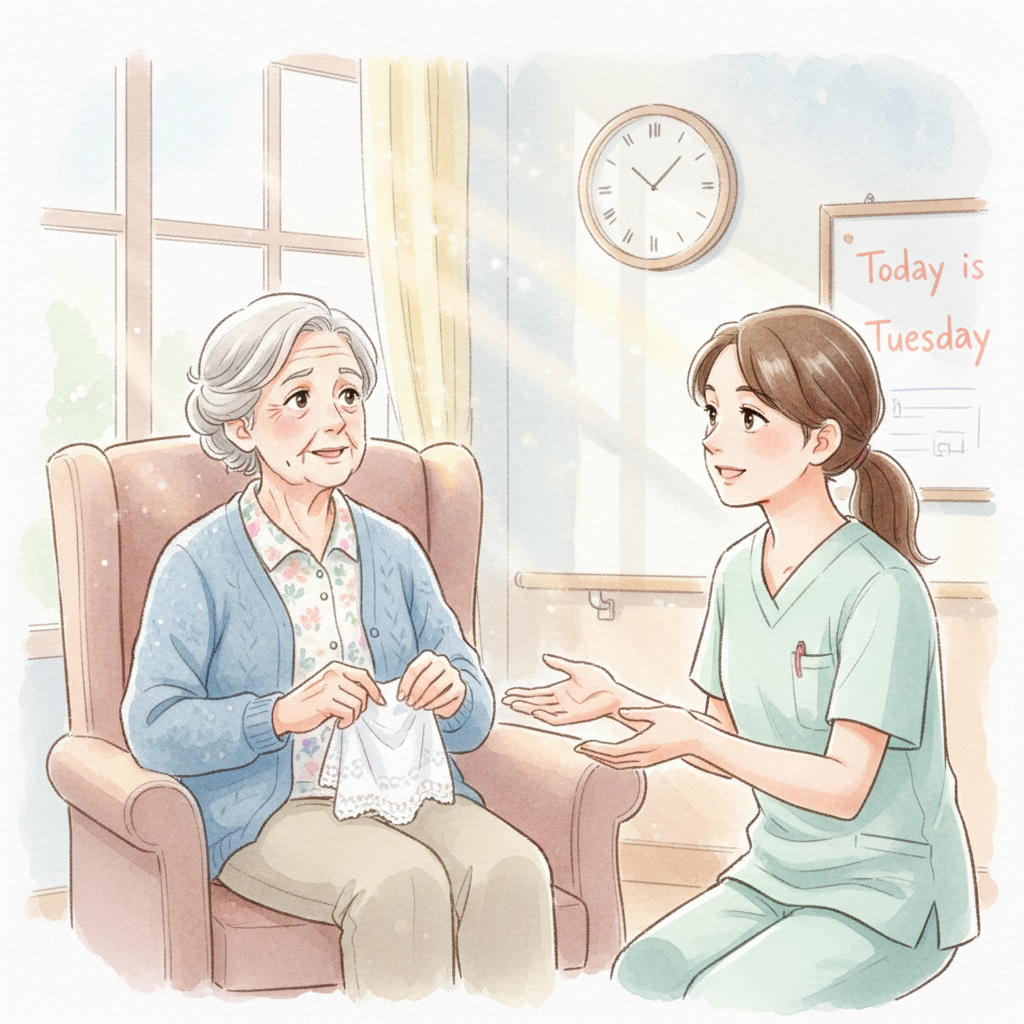
Try asking. "What's the most important thing I can do for you in the next few minutes?" forces the resident to prioritize. Often the answer is "I just want to know someone's coming back." You can then say "I'll be back at 2:30 to check on you" — concrete, verifiable, calming.
2. Predictable check-ins.
If the resident is anxious, they call because they don't know when help is coming. Proactive rounding — every hour, on the hour, walking past their room — reduces call-light frequency significantly. Most facilities have a "two-hour rounding" policy that CNAs are supposed to follow. If your facility has one and you're not following it, this is why call lights go off constantly.
3. Engagement.
The "boredom" cause is fixable with engagement, but the engagement has to be during the call, not after. Bring a deck of cards. Look at photos with her. Ask about her life before the SNF. People who are engaged don't call, because they have something better to do.
4. The cluster approach.
When you go in for a call light, anticipate the next 30 minutes. Pillow? Done. Eye drops? Done. Anything else you might need? Done. Bathroom before lunch? Done. The goal is to satisfy everything you reasonably can so the next call is 30 minutes away instead of 3.
5. Family involvement.
For some residents, the constant calling is partly because family visits are sparse. If you can encourage more frequent visits — even short ones — the calling decreases. This isn't always in your control, but flagging it to social work can help.
6. Medical review.
If the resident is genuinely anxious or distressed at a level that doesn't match their situation, that's worth flagging to the nurse. Medication review, depression screening, even a change of room or roommate — these can all help.
What to document
When a resident is calling constantly, document:
- Frequency (every X minutes)
- Type of request
- Your response
- Whether the request is reasonable (real need) or repetitive
This matters for two reasons. First, it's data the care team uses to figure out what's actually going on. Second, if the family complains that "no one comes when she calls," your documentation shows exactly when you came and what you did. The paper trail protects you.
The hard truth
Some residents will call every 3 minutes regardless of what you do. They have dementia, or severe anxiety, or simply a personality that needs constant reassurance. You cannot fix this. Your job is to:
- Be patient without burning out
- Document the pattern so the team can adjust the care plan
- Use your breaks, eat your lunch, take your PTO — this kind of patient wears CNAs down faster than almost anything
If the calling is genuinely unmanageable — if it's affecting your other residents' care, if it's wearing you out to the point of mistakes — that's a staffing and care-plan issue, not a personal-failure issue. Bring it to the charge nurse. Bring it to the DON if the charge nurse doesn't act. Bring it to your union rep if the facility won't listen.
You're not failing because a resident calls constantly. You're failing only if you stop responding.
If this kind of post is useful, the full ExamReady library has 1,500+ practice questions, clinical skills with critical-step tracking, and an AI tutor that explains every answer — the same scope-and-voice approach as these posts, with the actual exam tools attached. A 7-day free trial gets you the whole thing, no card required.