Resident's oxygen sat reads 82: what to do before you panic
A CNA on r/cna got an SpO2 of 82 on routine vitals. The resident looked 'fine.' Here's how to handle a low reading without either ignoring it or over-reacting and embarrassing yourself in front of the nurse.
A CNA on r/cna posted this:
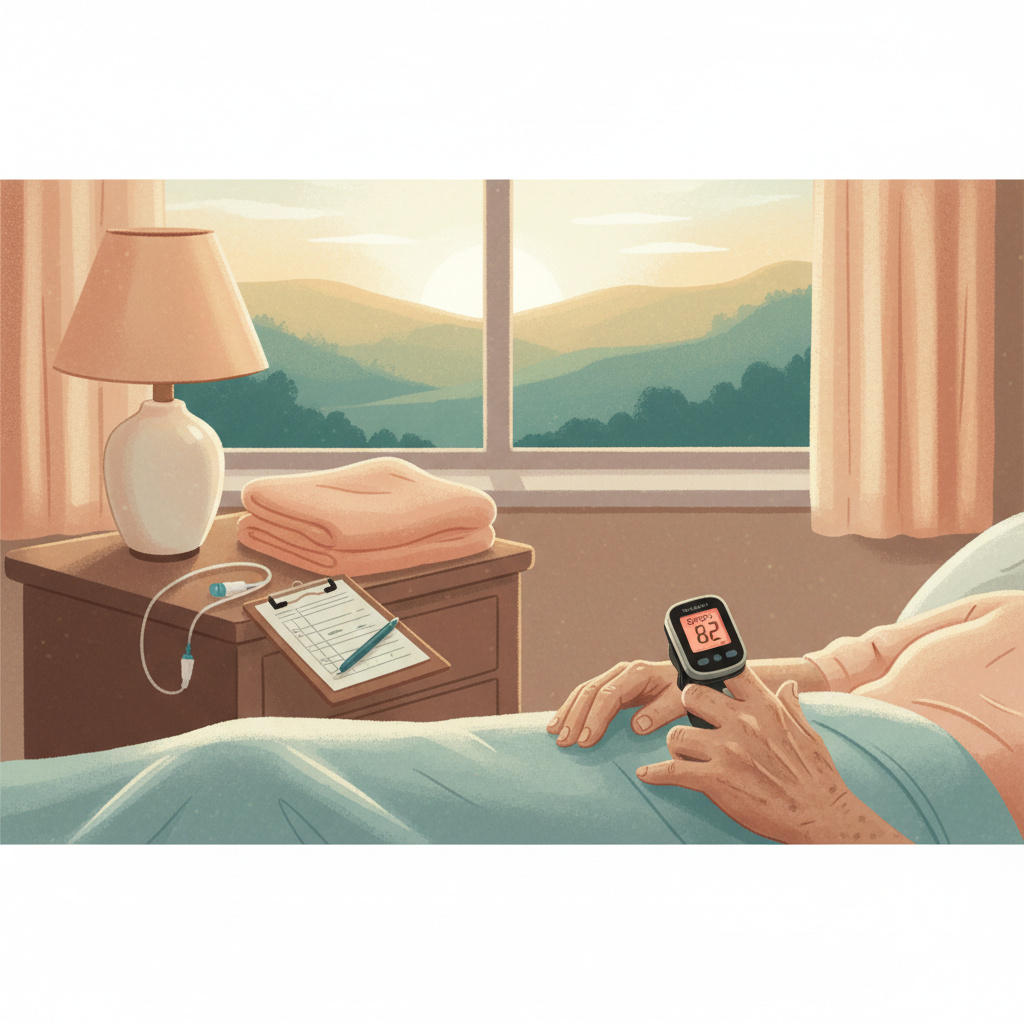
I took routine vitals on one of my residents this morning and her O2 sat was 82. She's on 2L nasal cannula, baseline is usually 94-96. She looked totally fine — sitting up in bed, eating breakfast, talking to me like normal. I almost didn't say anything because she looked so okay. I told the nurse anyway and she came and listened and increased her O2 to 3L and the sat came up to 91 over the next ten minutes. The nurse said I did the right thing telling her, but I feel like I cried wolf over something that wasn't really an emergency. How do you tell when a low reading is actually a problem vs just a bad reading?
This is one of the most common anxieties new CNAs have. You take the vitals, the number comes up low, and you have to decide in the next thirty seconds whether to interrupt the nurse or wait. Here's how to think about it.
First: was the reading even accurate?
Before you do anything else, the reading itself needs to be questioned. Pulse oximeters are notoriously easy to fool. Common causes of falsely low SpO2:
- Cold hands or cold room (cold fingers = poor perfusion to the sensor site)
- Dark nail polish (especially blue, black, green)
- Artificial nails or thickened nails
- Motion — the resident was talking, moving their hand, or shivering when you took it
- Poor sensor placement (sensor not all the way on, wrong finger, sensor too loose or too tight)
- Low battery in the machine
- COPO (chronic obstructive pulmonary disease) patients whose "real" baseline is in the high 80s and runs lower than textbook normal
If any of those apply, fix the issue and retake. Warm the resident's hand for a minute first — that's the easiest fix. Wait 30-60 seconds for the reading to stabilize. Watch for the pulse rate on the oximeter to match what you'd take manually; if it doesn't match, the reading is unreliable.
If the second reading is still 82 and you can't explain it, you have a real number and a real problem.
What "looks fine" actually means
The thing that throws new CNAs off is when the resident looks completely normal — talking, eating, oriented, pink. The instinct is "they can't actually be hypoxic if they look like that." That instinct is wrong, and it's wrong in a dangerous direction.
People compensate for hypoxia remarkably well, especially chronic lung patients who have been slowly desaturating for years. A resident whose baseline is usually 94 can drop to 82 and feel "off" but not in a way they can articulate — they might just say they feel tired, or be a little more confused than usual, or want to skip breakfast. These are subtle. A brand-new low sat in a resident whose baseline is documented higher than that is a real change, even if they look okay.
The reverse is also true: a resident can look terrible and have a normal sat. Cyanosis (blue lips, blue nail beds) is a late sign. By the time you see it, you've been missing the problem for a while. The machine is often more honest than your eyes.
What to do in the moment
You are a CNA, not a nurse or a respiratory therapist. You do not diagnose, you do not adjust oxygen flow rates on your own judgment, and you do not make medical decisions. But you do have a job to do here, and it's specific.
-
Recheck with intention. Note what could have made the first reading wrong. Warm the hand. Wait. Take it again.
-
If the second reading is still low and there's no obvious artifact, tell the nurse right away. Don't wait until end-of-shift report. Don't wait until you're done with your round. Pull the nurse aside or hit the call button for her. "Mrs. Smith's O2 sat is 82 on 2L, baseline is 94-96, she looks okay but I wanted you to know." That's the report.
-
Stay with the resident. Don't leave the room to find the nurse and have the resident sitting there alone if the sat is real. If you have to leave to get the nurse, make sure the call light is in reach and ask the resident to use it if they feel anything — shortness of breath, dizziness, chest pain.
-
Document. Time, reading, what you did (rechecked, warmed hand), who you told, what the nurse said. This is one of those moments where the chart note you write today protects you months from now.
-
Watch for escalation. If between now and the nurse arriving the resident becomes short of breath, confused, blue around the lips, or unable to speak in full sentences — that's a rapid response situation, not a "tell the nurse when she has a minute" situation. Hit the emergency call button, call out for help, stay with the resident.
What NOT to do
The mistakes new CNAs make on this kind of finding:
-
Don't sit on it. If you get a 82 and the resident is normally 95, telling the nurse is non-negotiable. The nurse may decide it's not urgent — that's the nurse's call to make. Yours is to report.
-
Don't adjust the oxygen on your own. Turning the nasal cannula up from 2L to 3L on your own initiative can cause real problems, especially for COPO patients whose drive to breathe depends on slightly low oxygen rather than high CO2. Even if your instinct is "more oxygen is better," that's not your call. Wait for the nurse.
-
Don't tell the resident "your oxygen is low, you might need to go to the hospital." That's a diagnosis and a plan, neither of which is yours to give. You can say "I'm going to let the nurse know your vitals look a little different from usual so she can come check on you." That's it.
-
Don't dismiss your own finding because the resident "looks fine." Looking fine and being fine are different things. The machine is a tool, and the nurse gets to decide what the number means. You got the number honestly; report it.
Why "I cried wolf" is the wrong frame
The CNA who posted the question felt bad because the nurse increased the oxygen, the sat came up, and it didn't turn into a code. She felt like she'd escalated nothing.
That's exactly what a good catch looks like. The nurse didn't act because she was humoring you — she acted because a sat of 82 on a resident with a baseline of 94-96 is a real change. The reason it didn't become a code is partly luck and partly because you caught it at 82 instead of at 70 when the resident was already crashing. Your early report is what "not a code" looks like from the inside.
If you tell the nurse about a concerning number ten times and nine of them turn out to be fine, you've done your job. The tenth time, when it isn't fine, you'll be the CNA the nurse is glad to see when she walks into the room. That's the reputation you want.
If this kind of post is useful, the full ExamReady library has 1,500+ practice questions, clinical skills with critical-step tracking, and an AI tutor that explains every answer — the same scope-and-voice approach as these posts, with the actual exam tools attached. A 7-day free trial gets you the whole thing, no card required.