When a resident grabs you: how to handle inappropriate touching at work
A real r/cna question about a resident who keeps grabbing CNAs during care. What's actually going on, what to do in the moment, and how to document it so it stops.
A CNA on r/cna posted this:
I have a resident who keeps grabbing my chest and my butt when I'm doing his cares. He's not aggressive, he's actually really sweet the rest of the time, but every time I lean over to change him or do peri-care he reaches for me. I keep freezing up and just trying to get through it as fast as I can. I told one of the other aides and she laughed and said "oh he does that to everyone, he's just handsy." I don't know what to do. I feel gross after every shift with him but I also feel bad because he has dementia and I don't think he means it.
This post got hundreds of upvotes and dozens of replies. Almost every CNA — male and female — has a version of this story. Here's what's actually happening, what to do in the moment, and what the care plan should look like after.
First: this is not a joke
If a coworker laughs it off, that's a culture problem, not a "handshake" problem. The resident's intent does not change what is happening to your body. You have the right to perform care without being grabbed. Period. Dementia does not erase your right to a safe workplace.
This matters for a separate reason, too: residents who grab one CNA usually grab others. The "he's just handsy" comment is almost always true — which is exactly why it needs to be in the care plan, not treated as a personality quirk everyone quietly tolerates.
What to do in the moment
The goal in the moment is to stop the behavior without escalating it and without putting yourself in a position to be grabbed again. That sounds simple and it isn't, especially when you're mid-task with a wet brief and an open wound care kit.
1. Say it out loud, calmly, while you keep working.
"No thank you, please keep your hands up here on the blanket." Or: "I need you to keep your hands to yourself while I finish." The words matter less than the fact that you said them. If the resident has dementia, the words may not stick, but the tone does — firm, neutral, not punitive.
2. Reposition, don't retreat.
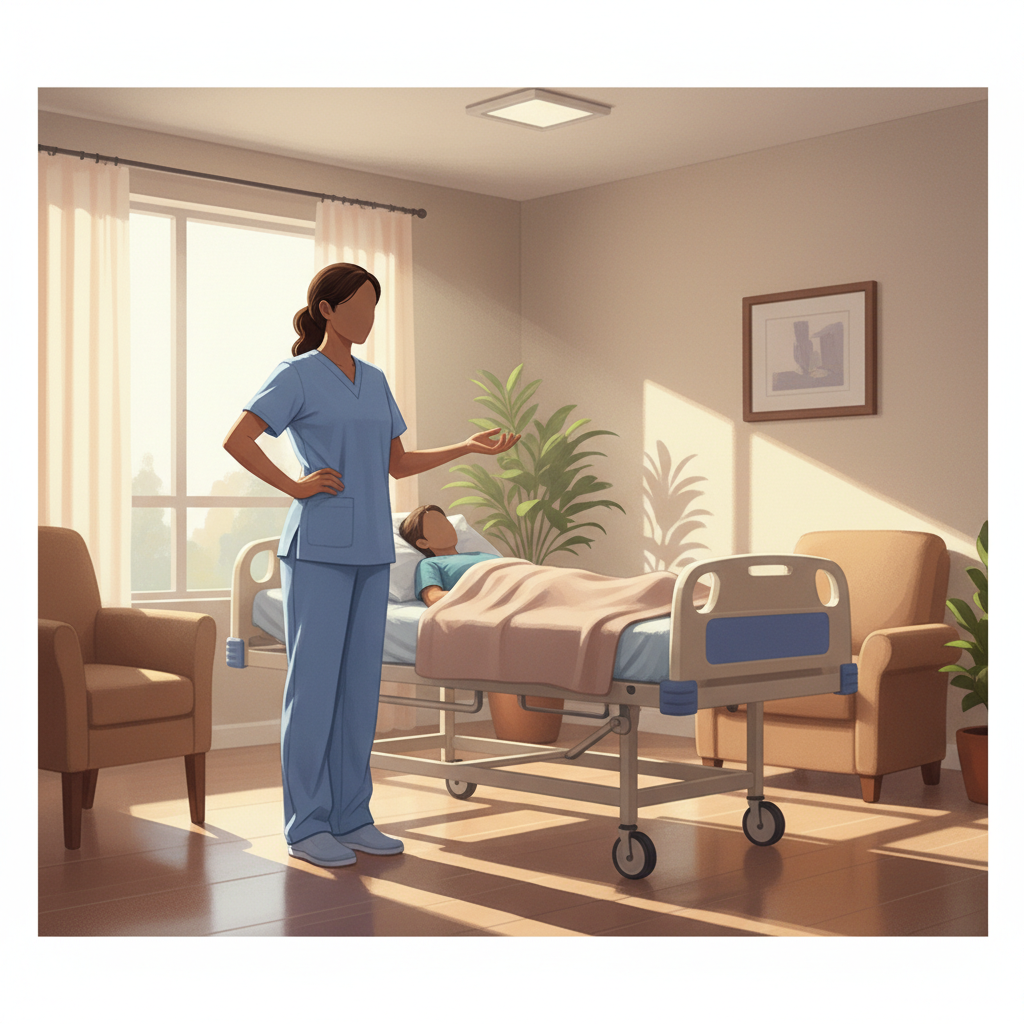
Back away and you'll have to come back. Instead, move so you're out of reach. Stand at the side instead of leaning over. Step to the head of the bed for a turn instead of the hip. Use the bed rail as a barrier. Bring a second CNA in to hand you supplies so you don't have to reach across the body.
3. Cover the resident.
A draw sheet over the groin, a gown over the chest, a towel over the lap — covering up reduces the grabbing without you having to say anything else. This works especially well for residents who grab during peri-care or while you're changing a brief.
4. Do not pretend it didn't happen.
Do not laugh. Do not brush it off with the resident. Do not joke about it to coworkers in the room. Laughing tells the resident (and any confused roommates) that this is acceptable. You don't have to make a federal case of it — "I need you to stop that" is enough — but you do have to say no.
What NOT to do
A few common mistakes that come up over and over on r/cna:
Don't blame the resident for having dementia. Saying "he's a creep" or talking about the resident to other staff in front of him is unprofessional and doesn't solve the problem. The behavior is the problem, not the person.
Don't blame yourself. A surprising number of CNAs — especially newer ones — assume they did something to invite it. You didn't. You were providing care.
Don't accept "he's handsy" as the final answer. That's a description of the problem, not a solution.
Don't wait months to document. The first time it happens, document it. The fifth time, document it again. If you've been tolerating it for six months and then report it, the response will be "why didn't you say something sooner."
What to document
Every incident, every time. Minimum:
- Date and time
- What you were doing (perineal care, turning, brief change, etc.)
- What the resident did, described factually — "resident reached both hands toward staff chest while staff was leaning over to change brief"
- What you said
- What you did to reposition
- Anyone else in the room who witnessed it
Use the facility's incident reporting system if you have one. If you don't, write it in the chart or on the assignment sheet — wherever the rest of the care team will see it. The point is to create a paper trail.
Bring it to the nurse
After you document, tell the nurse on your cart. Not as gossip, not as a complaint — as a clinical observation: "Mr. J grabbed me twice during morning cares. It's happened every shift this week. I want it in the care plan so the next CNA knows."
The nurse has options you don't. She can:
- Update the care plan with a "two-staff assist" or "no solo peri-care" order
- Talk to the resident's family or POA
- Flag it to the doctor — sometimes the grabbing is a medication side effect or an unmet need (pain, UTI, constipation)
- Bring it to the behavior management team if your facility has one
- Reassign you to a different cart if you ask
You are not asking for the resident to be punished. You are asking for a care plan that keeps both of you safe.
What if it's not dementia?
If the resident is alert and oriented and is doing this on purpose, that's a different conversation. It still gets documented. It still goes to the nurse. It still goes in the care plan. But the language around it changes — it's now a patient-rights and boundary issue, not a "behavior related to cognitive impairment" issue. Either way, your documentation and your right to refuse solo care with that resident are the same.
What if the resident is your favorite
This is the part nobody wants to talk about. Sometimes the resident who grabs you is also the one who tells you about their grandkids, who says please and thank you, who you actually like. Documenting and care-planning doesn't mean you stop liking them. It means you protect yourself and the next CNA while still being kind to the person in the bed.
You can hold both: "I like this person AND I will not be grabbed."
When to escalate beyond the nurse
If the nurse doesn't act, go up the chain: charge nurse, then DON, then your union rep if you have one. If your facility has a workplace violence or harassment reporting process, use it. If you're not sure where to start, your state's long-term care ombudsman can usually point you at the right policy.
You can also document at the facility level for OSHA recordable purposes if it crosses into assault. Most CNA-on-resident grabbing doesn't, but if a resident pulls you down into the bed, or hits you, or causes injury — that's a workplace injury and should be reported as one.
The hard truth
Being grabbed is one of those things that makes CNAs leave the profession faster than almost anything else, because it combines the physical violation with the guilt of feeling like you can't be angry at someone who is sick. You can be angry. You can be angry and still be a good CNA. You can protect yourself and still provide compassionate care.
You're not "being dramatic." You're not "making it weird." You're setting a boundary that the rest of the care team needs to know about so the next shift, and the next CNA, doesn't go through the same thing.
The ExamReady CNA exam drills you on patient rights, documentation, and incident reporting for exactly this kind of situation — because what you do after the grab is what makes you a professional, not just a body in the room.
If this kind of post is useful, the full ExamReady library has 1,500+ practice questions, clinical skills with critical-step tracking, and an AI tutor that explains every answer — the same scope-and-voice approach as these posts, with the actual exam tools attached. A 7-day free trial gets you the whole thing, no card required.