Resident having a seizure: what to do in the first 60 seconds
A real r/cna question about what a CNA is supposed to do when a resident starts seizing — and the mistakes that can hurt them before the nurse even gets there.
A CNA on r/cna posted this:
I was doing morning rounds and one of my residents — let's call her Mrs. K, she's 78, history of stroke but no seizures on her chart that I know of — suddenly went stiff, her eyes rolled back, and she slid out of her wheelchair onto the floor. I had no idea what was happening. I yelled for the nurse, but it felt like forever before anyone came. I just stood there. I have no idea if I did the right thing or the wrong thing and it's bothering me.
This post got 412 upvotes and 180 comments. Seizures on a CNA shift are not rare. A lot of facilities have residents with seizure history, and a first-time seizure in a resident who has never had one is more common than people think. Here's what you're actually supposed to do, in the order you're supposed to do it.
The first thing: protect the head
When a resident is actively seizing — body stiff or jerking, unresponsive, eyes rolled — your only job in the first seconds is to keep them from hitting their head on something hard. The floor, the bed rail, the wheelchair frame, the corner of the nightstand. All of it can cause a serious injury in the middle of a seizure.
What that looks like in real life:
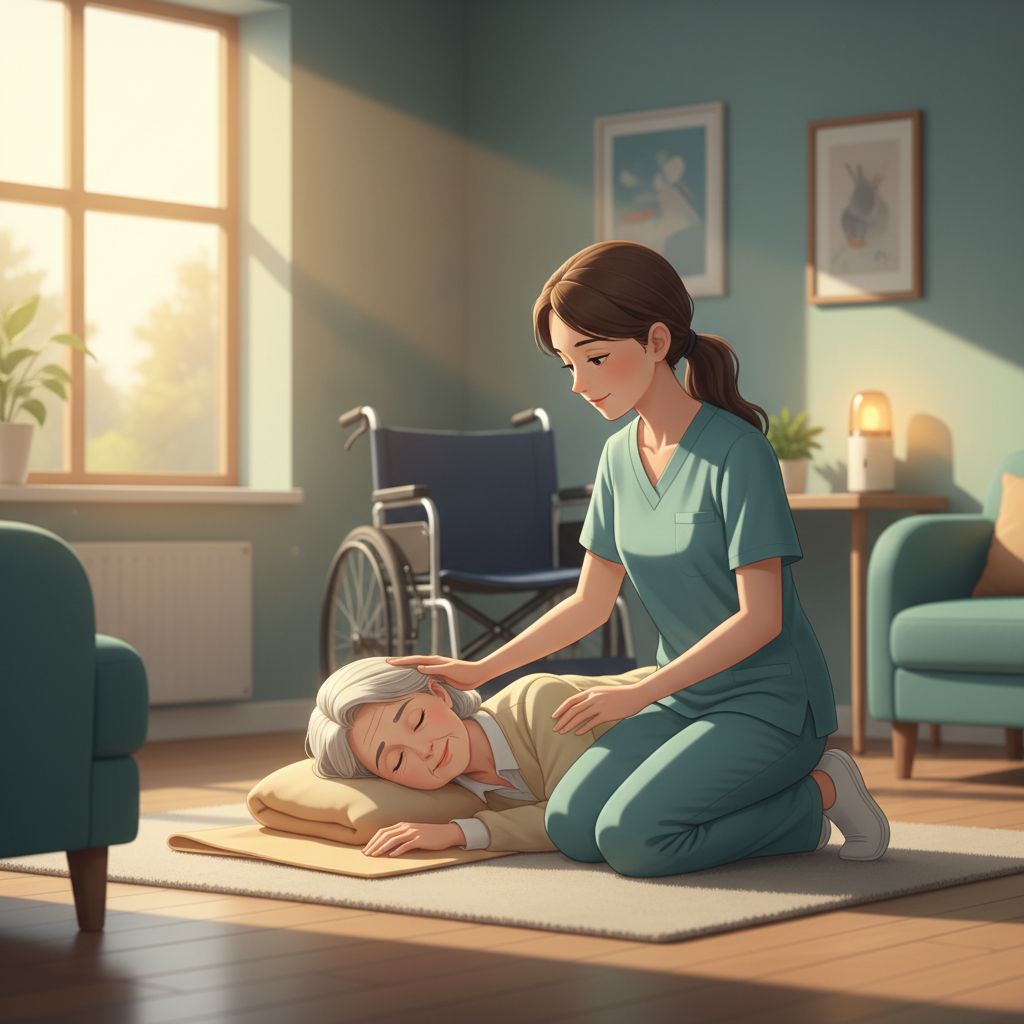
- If they're on the floor, cradle their head with your hands or put something soft under it. A folded towel, a pillow, your jacket. Anything.
- If they're in bed, lower the bed if you can. Pad the rails with pillows or blankets.
- If they're in a wheelchair and you can safely lower it back with them in it, do that. If not, ease them to the floor — but only if you can do it without dropping them.
Don't try to hold them still. Don't try to restrain the movement. You will hurt yourself and you won't stop the seizure. The seizure runs its course. Your only job is keeping the head safe.
Don't put anything in their mouth
This is the single most persistent myth in CNA training, and it still gets repeated. Do not put anything in the mouth of someone having a seizure. Not a tongue depressor. Not a bite stick. Not your fingers. Not a wallet.
People do not swallow their tongues during a seizure. It's physically not possible. What they can do is bite down — hard — on whatever is in their mouth, and you can lose a finger or break their teeth.
The only thing that goes near their mouth during a seizure is, if they're drooling or have vomit, you turn them on their side so it drains out. That's it.
Time it
The moment you realize someone is seizing, look at a clock or start counting in your head. "Started at about 9:14." That's the most important piece of information the nurse and the provider are going to need.
A seizure that lasts under 5 minutes is generally not a medical emergency on its own. A seizure that lasts over 5 minutes — or one seizure that stops and another starts without the person waking up in between — is status epilepticus, and that is a true emergency. EMS gets called. Meds get pushed. The clock is what tells everyone whether we're in the bad zone yet.
Time it from the start. Tell the nurse the time when they arrive, or write it on your glove, or shout it across the room. Just don't lose it.
Call for help without leaving them
Yell. Hit the call light. Use the emergency button in the room. Bang on the wall. Do not leave the resident alone to go find someone — unless you are the only staff on the unit, in which case shout loud enough for someone in the next hallway to hear and stay with the resident.
The reason this matters: most seizure-related injuries to residents happen after the seizure, when the person is confused and tries to stand up and walk. If you've left to get help and the resident is post-ictal (the recovery phase after a seizure) and disoriented and gets up off the floor, you can miss a fall, a head injury, or a second seizure. Stay with them.
What to do during the seizure
While it's actively happening, here's the full list:
- Stay calm. They will not remember this. You will.
- Lower them to the floor if they're not already there.
- Protect the head — your hands, a pillow, a folded blanket.
- Loosen anything tight around the neck. Buttons, collars, ties, oxygen tubing if it's pulling.
- Turn them on their side if there's fluid in the mouth.
- Time it. Don't stop timing.
- Don't put anything in their mouth.
- Don't try to hold them still.
- Don't give them water, food, or pills until they're fully awake and oriented.
That's the whole list. It's not complicated. The hard part is doing less, not more.
After the seizure stops
Once the jerking stops — and it will — the resident is usually unresponsive for a few seconds, then confused, disoriented, and sleepy. They may not know where they are. They may try to get up and walk, which is when falls happen. They may be incontinent of urine (normal and very common). They may be agitated or combative (also normal).
What you do:
- Stay with them. Do not let them get up unattended.
- Talk to them calmly. "You're at [facility name]. You had a seizure. You're safe. I'm right here."
- Check for injuries — head, arms, hips, anywhere they hit something.
- Keep them on their side if they're vomiting or have fluid in the mouth.
- Tell the nurse everything: when it started, how long it lasted, what it looked like, whether they hit their head.
What NOT to do (the mistakes)
These come up over and over in r/cna threads:
Don't call 911 first. Call the nurse first. The nurse calls 911. Your job in a facility is to get the licensed staff, not to escalate past them. The exception is a seizure over 5 minutes with no one responding — then you escalate.
Don't restrain the resident. Even a gentle hold is wrong. You can fracture a humerus or femur on a seizing adult if you try to hold them down.
Don't suction during the seizure. Wait until it's over.
Don't move them during the seizure. Move them after. Most post-seizure injuries are from well-meaning people trying to "get them more comfortable" while the resident is still seizing.
Don't give them water or food. Aspiration risk is high right after a seizure.
Don't leave them alone. Even if you're freaking out, even if you have eight other residents who need you. Stay with them until the nurse takes over or another CNA relieves you.
What to document
The nurse will chart most of the medical details. You chart what you saw, in plain language:
- Time it started and time it stopped (to the best of your ability)
- What the resident was doing right before
- What the seizure looked like (whole body, one side, blank stare, eyes rolled, stiff, jerking)
- Whether they lost bladder or bowel
- Whether they hit their head or anything else
- How long they were unresponsive after
- How they acted when they woke up (oriented, confused, combative)
- Any injuries you noticed
- Vital signs if you took them
- Who you reported to and when
This chart note protects the resident (the provider needs to know what happened) and protects you (if anyone later asks what you did, the chart is the answer).
A note on the "I just stood there" feeling
The CNA who posted the question above said she felt like she froze. Almost everyone does the first time. The seizure sounds and looks much worse than it usually is. The fact that she got the resident out of the wheelchair and called for help is, in fact, doing the right thing — even though to her it felt like nothing.
If you've never seen a seizure before, you will freeze. That is normal. Talk about it after. Talk to your charge nurse, your DON, your preceptor, the r/cna community. The residents who have seizures regularly don't need you to be calm. They need you to know the steps. You learn the steps by seeing one, freezing, debriefing, and seeing the next one better.
If this kind of post is useful, the full ExamReady library has 1,500+ practice questions, clinical skills with critical-step tracking, and an AI tutor that explains every answer — the same scope-and-voice approach as these posts, with the actual exam tools attached. A 7-day free trial gets you the whole thing, no card required.