 ExamReady CNA

Resident says you stole their belongings: what to do next
A real r/cna question about a resident who accused the CNA of stealing cash and jewelry after their room was cleaned. What actually happens, what's at stake, and how to protect yourself without escalating the situation.
A CNA on r/cna posted this:
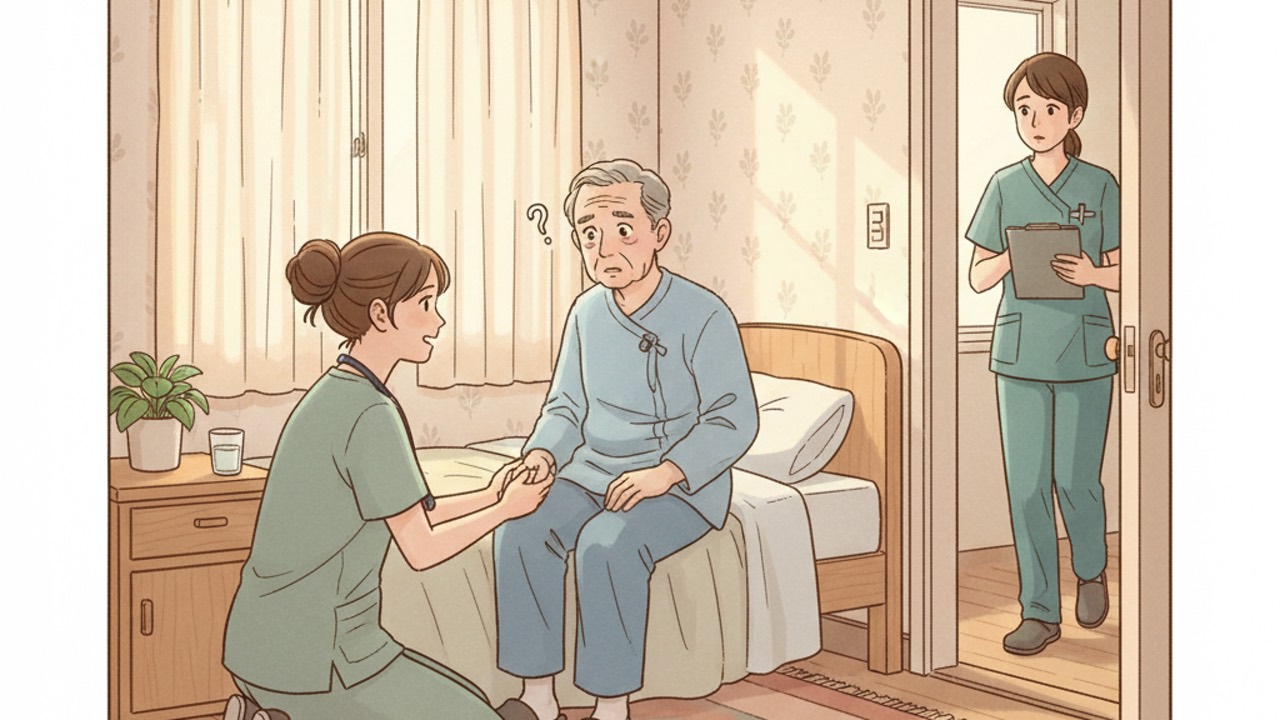
I am absolutely shaking right now. I went in to do routine cleaning on Mrs. H's room, and when I was finishing up she started screaming that I stole $200 cash out of her dresser drawer and her wedding ring off her nightstand. I didn't take ANYTHING. I told her that, but she got louder. She said she was calling the police and her son (who is a lawyer). The charge nurse came in and Mrs. H pointed at me and said "that's the one, she was in here alone." My manager pulled me into the office and asked me if I took anything. I said no. She said okay and sent me back to the floor. But I'm freaking out. What if they think I did it? What if her son really does call the cops? What if I get fired? I love my job and I'm a good worker.
This kind of accusation happens in SNFs, in assisted living, and in hospitals, and it almost always lands on the CNA first because the CNA is the one in the room alone most often, with the fewest witnesses.
Here's what's actually happening, what protects you, and what mistakes get CNAs in real trouble.
Why this happens (it's almost never about you)
Before you do anything else, internalize this: the accusation is almost never actually about you. When a resident says a CNA stole something, the usual causes are:
Cognitive impairment. This is the big one. Residents with dementia, delirium, or acute confusion genuinely believe things were stolen because they cannot remember where they put them. Wedding rings get put in a sock. Cash gets put in a tissue and thrown away. Hearing aids get wrapped in a napkin at lunch and end up in the trash. The resident's brain fills in a logical explanation — "someone was in my room, so that person took it" — and points at you.
Delusional parasitosis or paranoia. Some residents have fixed beliefs that things are being stolen. This is a real medical symptom, not bad character.
Grief and disorientation. A new admission, a resident who just lost a spouse, someone whose cognition is slipping — these are all states where accusations spike.
Actual theft, by someone else. Sometimes things really do go missing. Facility laundry, items thrown away by housekeeping, family members taking things without checking. The CNA is the easiest target, but the CNA is rarely the actual thief.
Knowing this doesn't make the accusation less stressful. It does change what you do next.
What to do in the first 30 minutes
1. Stay calm. Do not argue.
The worst thing you can do is get defensive, raise your voice, or insist on your innocence in front of the resident. To the resident, you are the thief, and arguing confirms it. To anyone listening, an argument looks bad. A short, calm "I did not take anything, but I will get the nurse so we can figure out what happened" is the only correct response.
2. Tell the charge nurse immediately.
Do not wait for them to come find you. Walk up to the desk, in earshot of at least one other staff member, and say plainly: "Mrs. H just told me I took $200 and her wedding ring out of her room. I did not. I'm letting you know right away so it's on record." That sentence does three things — it creates a contemporaneous report, it puts the nurse on notice that they have to investigate, and it shows you are not hiding.
If the charge nurse is busy, write it down on the resident's chart or a facility incident form before you leave the floor. The point is the timestamp.
3. Do not enter that resident's room alone again.
For the rest of the shift, do not go into Mrs. H's room without another staff member present. If you have to provide care, bring a witness. If a witness isn't available, document that you delayed the task and why. This is for your protection, not hers.
4. Do not search for the missing items yourself.
Your instinct will be to tear the room apart looking for the cash and the ring, to "prove" you didn't take it. Don't. You are not a detective. If you "find" the ring in a place you've already searched, the accusation gets worse, not better. Let the nurse, the manager, or the family handle the search.
What the facility is required to do
Once a theft accusation is on the record, the facility has a process they have to follow. Most CNAs don't know this because it's never explained. The typical path: the charge nurse or DON documents the accusation, files an internal incident report, notifies the family, and searches the room with two staff members as witnesses. They review who had access to the room during the relevant window — CNAs, housekeeping, visitors, other residents. If the item is found, the matter closes. If it isn't, they may call police, especially for higher-value items, and they may place you on administrative leave pending investigation — which is normal procedure, not a sign of guilt.
You have a right to ask, in writing, what the status and timeline of the investigation is. If the facility asks you to consent to a search of your belongings or car, you can decline, but understand that declining will be held against you. Most CNAs in this situation consent because they have nothing to hide.
What NOT to do
This is the section that protects your job.
-
Do not quit. If you quit before the investigation concludes, your file says "resigned during active theft complaint." That is career-ending in a background check. Let the investigation run — your only protection going forward is your behavior from the moment the accusation starts.
-
Do not post about it on social media. Even a vague "ugh, can you believe what a resident did today" is identifiable. Assume anything you write online will be read by the DON and the family.
-
Do not discuss it with coworkers in detail. You can say "there was an accusation and I didn't do it." You cannot say "the resident is crazy and her family is awful." Coworkers get interviewed. Assume everything you say gets quoted.
-
Do not retaliate against the resident. No cold-shouldering, no eye rolls. She is still your patient. You still provide care. Anything that looks like retaliation is a fireable offense on its own.
-
Do not lie. Not about anything, ever. The lie is what ends your career, not the accusation.
How long does this take?
In most cases: less than 72 hours. The cash or ring turns up in a tissue box, in a shoe, in the laundry hamper, in another resident's room, in the resident's own pocket. The matter closes. You go back to your routine. The resident may not even remember the accusation by the next day.
Sometimes: longer. If the items genuinely don't turn up and the family pushes, the investigation can run weeks. You may be reassigned to a different hall for the duration, or placed on paid administrative leave. None of this means you're guilty. It means the facility is protecting itself.
In rare cases: you are formally accused and the facility terminates you. If you believe the termination is unjust, file for unemployment (theft-for-cause is hard to win but not impossible if the evidence is thin), consult an employment attorney — most will do a free consultation — and consider filing a complaint with your state board if the accusation was based on discrimination.
The emotional part
The hardest part isn't the accusation. It's the waiting, and the way coworkers look at you for a few days, and the way your stomach drops every time the manager calls you into the office.
Talk to someone — a friend outside of work, a partner, a therapist, your union rep. Do not isolate yourself with the accusation. It is about a missing item; it is not about your worth as a person or a CNA.
If the matter resolves in your favor, save the documentation. If a future employer asks about it, you want to be able to say "this was investigated, here is the letter from the DON clearing me." The paper trail protects you then, the same way it protects you now.
The ExamReady CNA /skills library walks through incident-report and chain-of-custody documentation, which is the same paper trail that protects you in this kind of situation.
If this kind of post is useful, ExamReady CNA has practice questions with kind explanations, clinical skills walkthroughs with critical steps flagged, and a study coach. Start your 7-day free trial. 7 days free, then $9.99/month. Cancel anytime.
A little every day
Practice questions with kind explanations, and 23 clinical skills walkthroughs with critical steps flagged.
Start your 7-day free trial7 days free, then $9.99/month. Cancel anytime.