Resident won't eat or drink: what to do when intake drops
A real r/cna question about a resident who stopped eating and barely drinks. How to encourage intake, when to push, and when it's time to flag it up.
A CNA on r/cna posted this:
I've got a resident, mid-80s, who's been here about three weeks. She barely eats anything. Like, she'll take two bites of oatmeal, push the tray away, and say she's not hungry. Fluids are even worse — she might sip a few ounces of water across the whole shift. She's lost weight. She looks tired. She doesn't complain of pain, she doesn't seem depressed exactly, she just... doesn't want to eat. I don't know what to do. I can't make her eat. But I also can't just stand there and watch her waste away. What am I missing?
This post got 412 upvotes. "Won't eat, won't drink" is one of the most common and most worrying things you'll see in long-term care. Here's what's usually going on and what actually helps.
Why residents stop eating
There are a lot of reasons, and most of them aren't "being difficult."
Medication side effects. Many common meds — antibiotics, opioids, antidepressants, anticholinergics, even some blood pressure drugs — suppress appetite or change how food tastes. If the drop in intake lines up with a med change, that's probably it.
Oral problems. Ill-fitting dentures, mouth pain, dry mouth, a sore from a chipped tooth, thrush. If eating hurts, people don't eat. Open the mouth and look. You'll be surprised how often the answer is right there.
Swallowing difficulty (dysphagia). This is the big one. A resident may want to eat but be afraid of choking, or may be silently aspirating thin liquids. You won't always see them cough. The signs are subtle: a wet or gurgly voice after sips, food pocketing in the cheek, taking forever to finish a small amount, weight loss without trying.
Depression. New environment, loss of independence, missing family, recent loss of a spouse. Depression in the elderly looks nothing like it does in younger adults. It looks like not eating, not drinking, sleeping all day, and "just being quiet."
Loss of taste and smell. Aging does this. Meds make it worse. Food that was once enjoyable becomes bland and unappealing. Residents don't always have the words to describe this — they just say "I'm not hungry" or "nothing tastes right."
The food itself. Pureed meat looks like brown paste. Hospital scrambled eggs are famously terrible. If you've ever eaten the food yourself and thought I wouldn't eat this either, you're not wrong. The food is part of the problem sometimes.
Cognitive impairment. A resident with dementia may not remember they just ate, may not recognize food as food, may be distracted, or may be unable to focus long enough to finish a meal. They need someone sitting with them, gently cueing every few bites.
Cultural or preference mismatch. The kitchen sends what's on the cycle menu, not what the resident actually likes. If your resident is from a culture where breakfast is soup and rice, plain oatmeal is going to feel weird and wrong.
Knowing which of these applies changes what you do at the bedside.
What to do during meals
1. Set up the tray properly.
Glasses within reach. Utensils the resident can actually grip. Clothing protector if they want one, napkin if they don't. Dentures in. Hearing aids in — residents who can't hear the conversation around them eat less because they're isolated. Glasses on, so they can see what they're eating. These small things matter more than people realize.
2. Sit down.
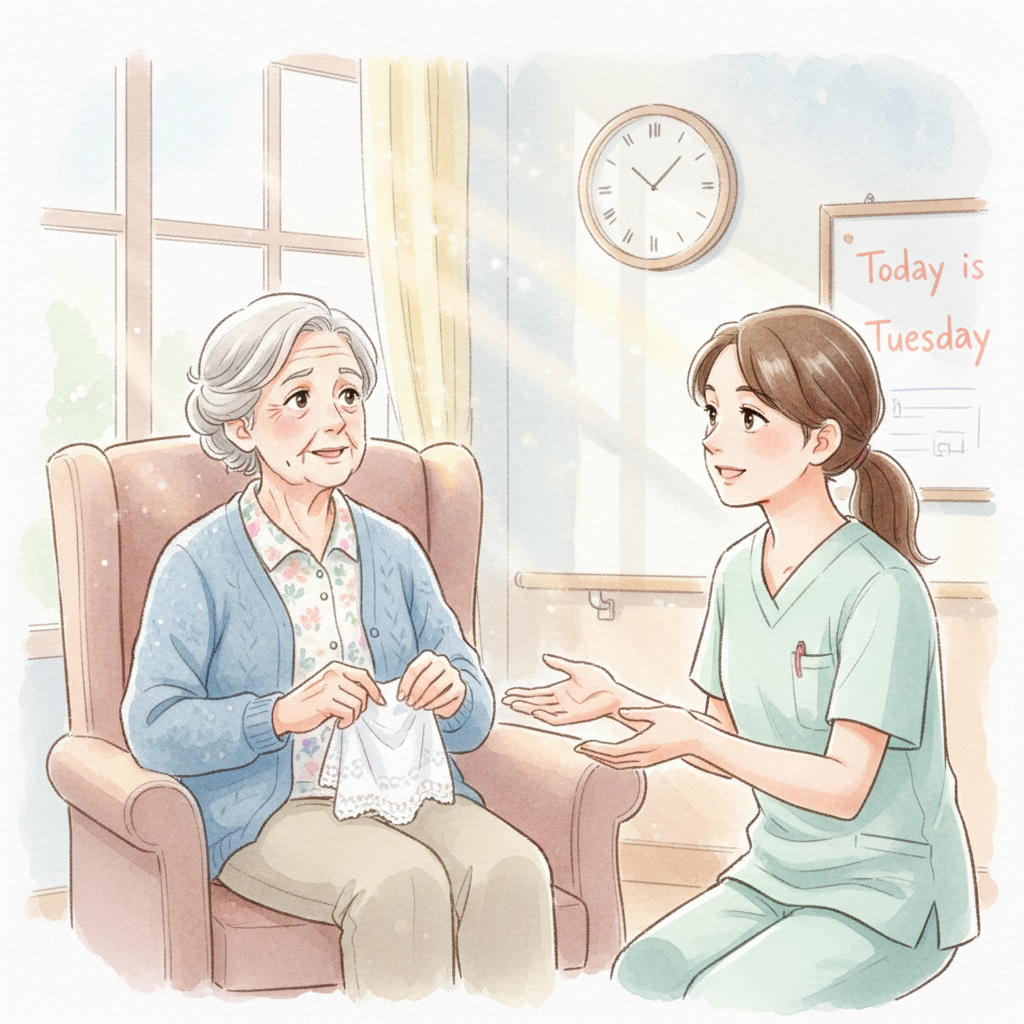
If you're standing over them while they eat, you're signaling "hurry up." Sit at eye level. Make eye contact. Talk about the food, about anything. Studies show residents eat significantly more when someone is sitting with them at eye level versus standing.
3. Offer small, frequent amounts.
A full tray is overwhelming. "I just need you to take five bites" is doable. "I just need you to take three sips" is doable. A resident who won't finish a tray will often accept a small cup of supplement four times across the shift.
4. Honor preferences.
Don't argue with "I don't like that." Ask what they would like. Check with the kitchen — most facilities can substitute, especially if you've got a good rapport with dietary. A grilled cheese instead of pureed beef may sound like a small thing, but it's the difference between 200 calories and 600.
5. Make eating a social thing.
Eat with them if you can. Bring them to the dining room. Group meals produce higher intake than tray-in-room meals almost every time. Loneliness and isolation are appetite killers.
6. Don't force it.
You cannot make someone eat. Coaxing is fine. Encouraging is fine. "You need to eat, you're going to die" is not. That resident will refuse the next tray out of spite or fear. Be patient, gentle, and consistent.
Fluids specifically
Dehydration is the bigger immediate risk in most cases. A resident who won't eat for a few days will be okay. A resident who won't drink for a few days will land in the ER with a UTI, low BP, confusion, or all three.
- Offer sips every time you walk past. "Here, take a sip of water" while you're adjusting the pillow. Don't make it a whole thing.
- Keep the cup within reach and filled. A resident who has to ask for water won't always ask.
- Track actual intake. "She drank some" is not a measurement. "She drank 240 mL of water and 60 mL of apple juice" is. If your facility has an intake tracking sheet, use it.
- Flag a drop in fluids to the nurse. This is a "tell the nurse" moment, not a "wait and see" moment.
When to escalate
Tell the nurse — same shift, not at end of shift — if:
- Intake has dropped for more than 24 hours
- The resident is visibly thinner or weaker
- They're coughing, gurgling, or sounding wet after swallowing
- They've lost more than a few pounds
- They're refusing fluids, not just food
- They're showing any new confusion or lethargy
- Mouth looks painful, swollen, or has white patches
The nurse may order a swallow eval, a med review, lab work, an appetite stimulant, a dietary consult, or supplements. Your job is to surface the pattern early. The earlier the team catches it, the less drastic the intervention has to be.
What NOT to do
- Don't sneak calories in. Hiding supplements in coffee or mixing thickener without telling them is a violation of trust and, in some cases, of consent. If a resident has been told by the SLP to have thickened liquids, they need to know what they're drinking.
- Don't threaten. "If you don't eat, you'll get a feeding tube" is not your line to say. It's not even usually true, and it produces panic, not eating.
- Don't take it personally. A resident refusing food is rarely about you. It's almost always pain, meds, fear, depression, or the food itself.
- Don't document "ate well" if they didn't. "Ate well" is the most dangerous phrase in CNA documentation. If they ate 25% of the tray, write "ate 25% of meal." If they ate nothing, write "refused meal, fluids taken: 120 mL." Be precise. Future you (and the dietitians, and the surveyors) need accurate data.
A note on end-of-life
Sometimes a resident stops eating because they're dying. It's not failure on your part, and it's not your call to reverse it. Mouth care, sips if they want them, ice chips, sitting with them — these are still meaningful care. Talk to the nurse about hospice if it feels like that's the direction. This part of the work is hard. It's also some of the most important work you do.
If this kind of post is useful, the full ExamReady library has 1,500+ practice questions, clinical skills with critical-step tracking, and an AI tutor that explains every answer — the same scope-and-voice approach as these posts, with the actual exam tools attached. A 7-day free trial gets you the whole thing, no card required.