First time a resident dies on your shift: what to do as a CNA
A new CNA's first death on the floor — the practical steps, the emotional weight, and how to get through the rest of the shift.
A CNA on r/cna posted this:
I just had my first resident pass away on me. I was doing my rounds and went in to do vitals and she was gone. I didn't know what to do. I just stood there for what felt like forever. The nurse eventually came in and took over. I had to keep working the rest of my shift and I didn't know if I was allowed to be upset or if I should just keep going. I'm still thinking about it two days later. Is this normal?
This post got 612 upvotes and 188 comments. Almost every CNA goes through this. Here's what the actual procedure looks like, and what nobody tells you about the part after.
What you do in the moment
When you walk into a room and find a resident who is not breathing, has no pulse, and is unresponsive, the steps are the same every time:
1. Stay calm. Don't leave the room.
The instinct is to run and get the nurse. Don't. Stay with the resident. Call out from the doorway or hit the call light on your own station — anything to bring the nurse to you without leaving the body unattended.
2. Call for the nurse immediately.
Use the call light, your Vocera, or call out. Be specific: "Resident in room [number] is unresponsive, no respirations, no pulse." Don't guess at cause. Don't try to decide if they're dead or not — that's not your call.
3. Don't start CPR.
Unless the resident is a full code and you witnessed the arrest and you're trained and the code cart is right there — wait for the nurse. If it's an unwitnessed arrest and the resident is clearly DNR or comfort care, the nurse will confirm and the code will not be called. Let the nurse make that determination.
4. Note the time.
Look at the clock the moment you realize what's happening. The nurse will ask. "I found her at approximately 9:40" is the kind of detail that matters.
5. Stay until the nurse dismisses you.
The nurse will assess, call the provider, sometimes start a code, sometimes call the family, sometimes call the funeral home. You'll be told what to do next. If you're not told to leave, don't leave.
6. Don't move anything.
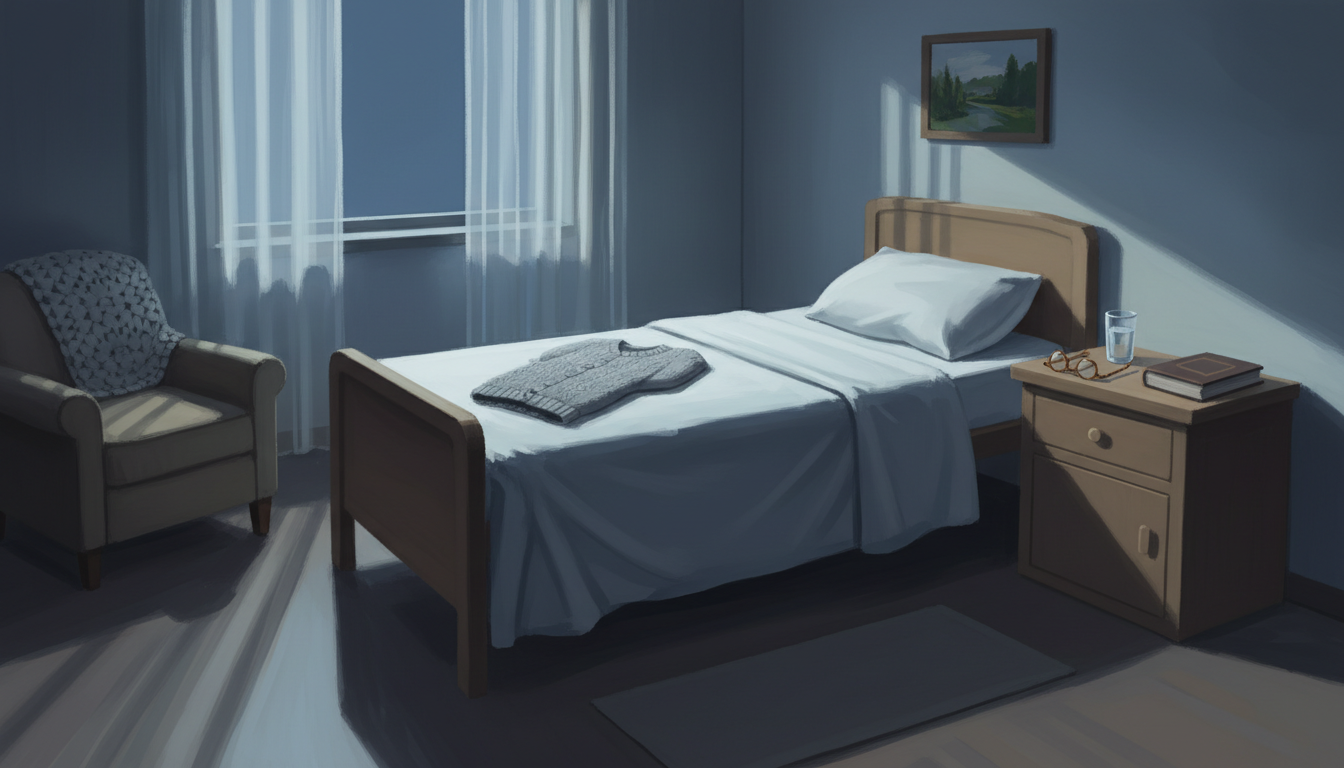
Leave the body, the bedding, the call light, the water cup — everything — exactly as you found it. The nurse and the provider need to see it as-is for documentation and, in some cases, for the death investigation that follows.
That's it. Six steps. The whole thing usually takes five to ten minutes from the moment you find them.
What you do right after
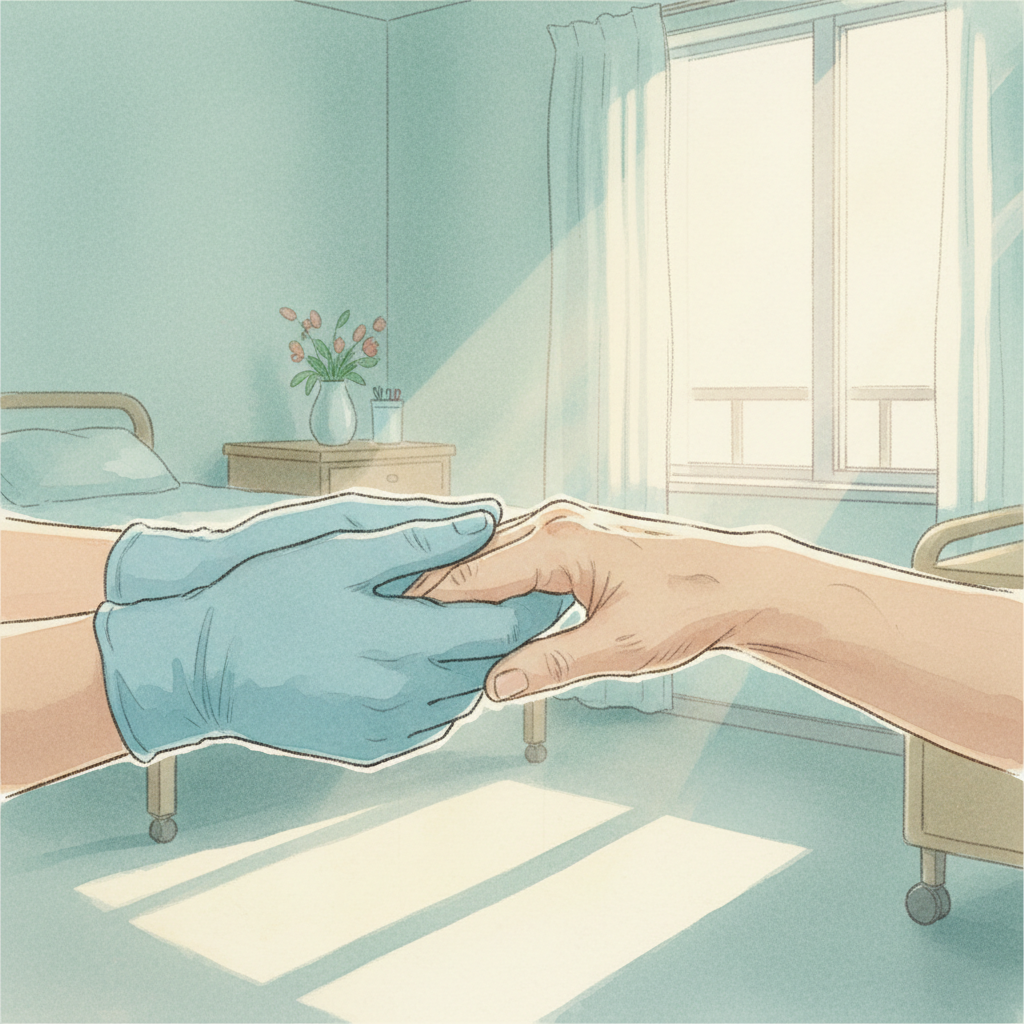
Once the nurse takes over, you'll be pulled back to your other residents. This is the part nobody prepares you for.
You will still have eight other people who need care. Their breakfast trays are coming. Someone's call light is going off. Your med pass is in 20 minutes. The facility does not stop because one person died.
Tell the charge nurse if you're not okay to keep working. Most states and most facilities have a policy that you can be reassigned or sent home after finding a body. You don't have to keep going. You also don't have to leave — that's your call. But say something. Don't silently push a med cart for four hours while your hands are shaking.
Document the discovery. You'll write an incident note or a progress note. Keep it factual:
- Time you entered the room
- What you observed (no respirations, no pulse, skin color, position)
- Time you called for the nurse
- Any instructions you received from the nurse
Do not write "I think she passed away peacefully" or "she looked like she was at peace" or any interpretation. State what you saw. The medical examiner or provider writes the death summary; you write what you observed.
Do not call the family. The nurse or the social worker calls the family. If the family is in the building and walks up to you, the appropriate response is "I'm so sorry for your loss — the nurse will be right with you." Then get the nurse.
Do not post about it on social media. Even vaguely. Even without names. Even in a "venting" group. HIPAA applies to the dead.
What the rest of the shift feels like
This is the part the post is really asking about, and it's the part that's hardest to write a procedure for.
You will probably feel numb for the first hour. Then you'll feel tired. Then you'll feel sad, or scared, or angry, or nothing at all. You'll go through the motions of caring for your other residents and you will not remember it later. You will smell the same soap and see the same kind of gown and think about the resident who died for the rest of your career.
That is normal.
The hard part is that your coworkers may not bring it up. The shift continues. There's a new admission coming in at 3 PM who needs an intake. There's a stack of charts to finish. There's a meeting about a different resident's behavior. The death becomes a line in a report and a name on a list and the day moves on.
This is not because your coworkers don't care. It's because long-term care staff see death regularly, and they've learned how to keep working because they have to. It's a professional skill, not a personal failure.
What NOT to do
Don't bottle it up. If you're thinking about it two days later like the CNA in the post, that's a sign to talk to someone. A peer, a mentor, the employee assistance program (most facilities have one and it's free), a counselor. Death in a care setting is something you process, not something you push through.
Don't pretend it didn't happen. Some CNAs cope by getting clinical about it — "she was 89 with a fib and a stroke history, it was her time." That's true and it's also a way of avoiding the fact that a person you cared for is gone. Both can be true.
Don't take it home in a way that affects your next shift. If you're losing sleep, snapping at your family, drinking more than usual, or finding yourself avoiding certain rooms or residents — those are signs to talk to someone. This is burnout or early PTSD and it doesn't go away on its own.
Don't compare your grief to the family's grief. Your grief is real. The family's grief is bigger. Both are valid. Don't minimize theirs by talking about how hard it was for you, and don't minimize yours by talking about how the family must feel.
Don't refuse assignments out of fear. After a first death, some CNAs ask to never work that unit again or never care for that resident's roommate again. That's understandable, but it usually passes. Give it a few shifts before you make any permanent changes.
The thing nobody tells you
The first death is rarely the worst one. It's the one you're most prepared for in some ways because it surprises you, and that surprise has its own shock. The deaths that come later — the ones you've been watching decline for weeks, the ones where you've been turning and feeding and talking to someone for months — those are the ones that hit differently.
You will get better at the practical part. You will learn to find a body, call the nurse, and go back to work without freezing. That part gets easier.
The emotional part doesn't get easier, but it gets familiar. You build a relationship with the work of caring for dying people, and that relationship is one of the things that makes CNA work meaningful even when it's heavy.
If you're a new CNA reading this because it just happened to you: you're allowed to be upset. You're allowed to take a break. You're allowed to talk about it for as long as you need to. You're also allowed to keep working if that feels right. There's no wrong way to handle it, as long as you take care of yourself somewhere in there.
You're not alone in this. Every CNA who's been at it for more than a year has a first death story. They'll tell you theirs if you ask.
For more on the emotional reality of long-term care work — what helps, what burns you out, how to set boundaries — the workplace section of our CNA study guide walks through the patterns most CNAs hit in their first year.
If this kind of post is useful, the full ExamReady library has 1,500+ practice questions, clinical skills with critical-step tracking, and an AI tutor that explains every answer — the same scope-and-voice approach as these posts, with the actual exam tools attached. A 7-day free trial gets you the whole thing, no card required.