Resident keeps losing hearing aids: who's responsible, what to do
Hearing aids keep disappearing at your SNF. The resident can't find them, the family is asking pointed questions, and the charge nurse wants answers. What's actually going on, and how to protect yourself.
A CNA on r/cna posted this:
So I work at a SNF and we have this resident who is constantly losing her hearing aids. Like, multiple times a week. She's pretty with it cognitively but she sets them down on her meal tray, forgets, the tray goes back to the kitchen, and then it's a whole thing trying to find them. We've found them in the trash, in her bedding, in other residents' rooms. The family is already asking questions and we're not even a month in. Last week one of them cost almost $6,000 to replace. I know it's not the CNAs' fault — we can't watch every move she makes — but the charge nurse is acting like it is. How do we handle this without being blamed every time?
This post got 600+ upvotes and 150+ comments. Hearing aids disappearing is one of the most common SNF frustrations and one of the fastest ways to get into a family conflict. Here's what's actually going on and how to protect yourself.
Why this happens so often
Hearing aids are small, expensive, easy to misplace, and easy to mistake for trash. A few factors stack up:
Cognitive load. Even residents who are "with it" are dealing with fatigue, medications, and an unfamiliar environment. Setting a hearing aid down to take a call is a perfectly normal sequence — until the resident forgets they did it.
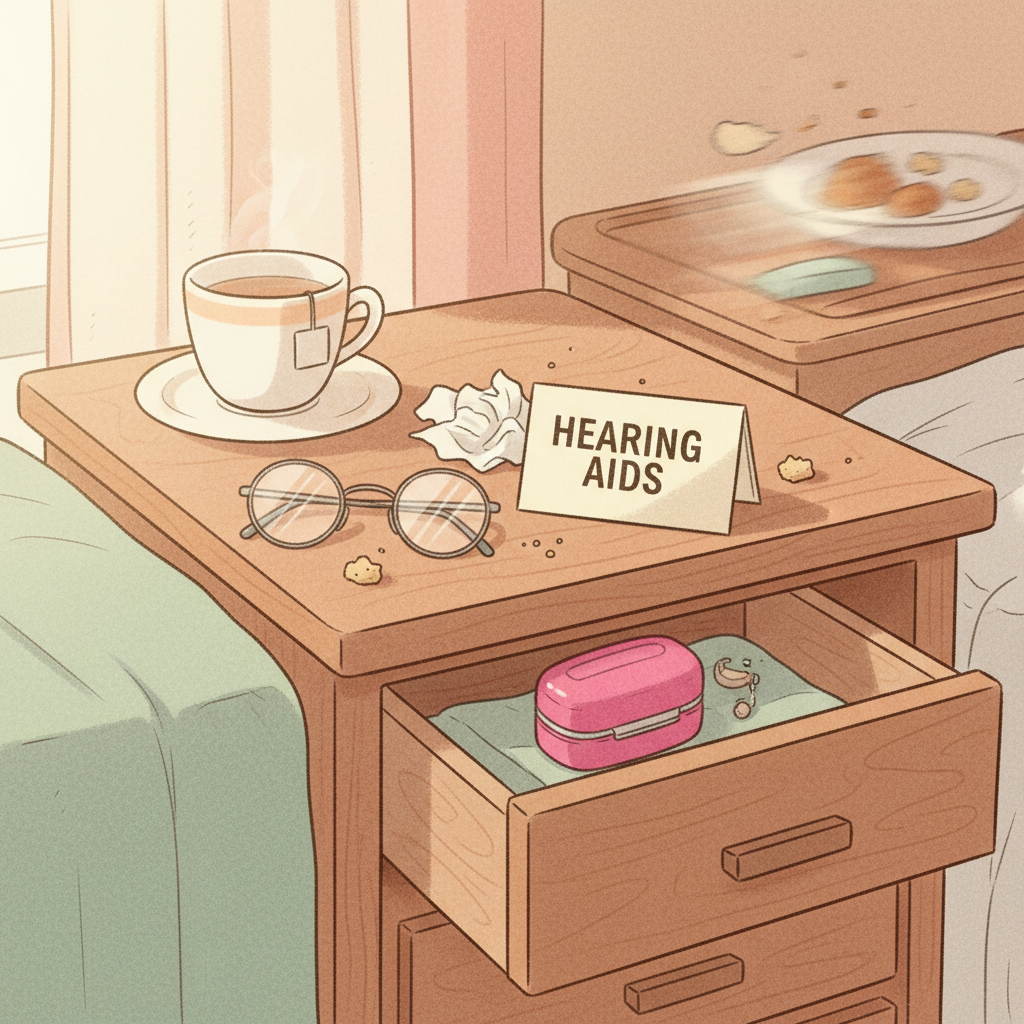
The meal tray is the worst offender. Most CNAs eventually learn this the hard way. Trays go back to the kitchen, the hearing aid is sitting on the tray, and by the time anyone notices, the tray is being scraped. Some facilities have started using bright-colored hearing aid cases for exactly this reason — they're easier to spot on a tray.
Other residents. Wandering residents with dementia pick things up. So do visitors. So do housekeepers doing turn-over cleaning. It's not malicious, it's just that hearing aids look like interesting little objects.
Theft, sometimes. Most losses aren't theft, but you need to be honest about the possibility without assuming it.
No standardized storage. This is the big one. If your facility doesn't have a consistent place where hearing aids live when they're not in a resident's ears, you'll have this problem forever.
What NOT to do
Don't stash them yourself "for safekeeping." If a hearing aid goes missing and you took it upon yourself to lock it in a drawer, that is now a much bigger problem than a missing hearing aid. You are not the custodian of a resident's personal property unless your facility has a written policy that says you are. Even then, document it.
Don't blame the resident. Even in the chart, even in casual conversation with coworkers — saying "Mrs. Jones keeps losing her hearing aids" sounds like blame, and it spreads. It also undermines the resident in front of the team that's supposed to be helping her.
Don't promise the family you'll "make sure it doesn't happen again." You can't make sure. No one can. Promising that is a setup for the next loss to be a personal failure rather than a systemic one.
Don't replace a hearing aid from your own pocket to "make the problem go away." This is a real thing CNAs do, especially newer ones. It's generous and it's also a disaster — it sets a precedent, it removes the incident from the official record, and it can come back to bite you if there's ever a state inspection or a liability question.
What actually works
1. A consistent storage spot — every shift, every CNA.
If your facility has a hearing aid case, use it. If not, ask the charge nurse or the DON for one. The case should live in the same place — bedside drawer, top of the dresser, in the resident's eyeglass case — every single time the hearing aids come out. "Did you check her case?" should be the first question everyone asks.
2. The morning-and-evening check.
Make it part of your routine. When you do your morning care and your HS care, confirm: hearing aids in, working, accounted for. This is two minutes and it creates a paper trail.
3. The meal-tray protocol.
Before any meal tray leaves a resident's room, check it. Top of the tray, under the plate, in any napkins. Most SNFs that get serious about this problem put it on the tray-check policy as a written step. If your facility doesn't, this is worth raising.
4. Flag the pattern to the nurse — early, in writing.
If a resident has lost a hearing aid twice, that's a pattern. Tell the nurse, document it, and ask for a care plan update. Some facilities will:
- Switch to a clip-on style that's harder to lose
- Use a brightly colored retention cord
- Move the resident closer to the nurses' station
- Update the family on the issue without framing it as anyone's fault
5. The family conversation.
When the family asks "where are mom's hearing aids," the right answer is collaborative, not defensive. "We had a close call on Tuesday — we found it on the meal tray. We've added a tray-check step and we're keeping them in the bedside case when she's not wearing them. We want to work with you on this so we can prevent the next one." This is a completely different conversation than "we don't know what happened."
What to document
When a hearing aid goes missing or is found:
- Time you noticed it was missing
- Time and location it was found (or "still missing at end of shift")
- Anyone you told
- Any conversation with the resident or family
- The condition of the hearing aid when found
This matters for two reasons. First, the care team uses this data to update the care plan. Second, when a hearing aid ends up lost permanently — and it will happen eventually at any large SNF — your documentation shows you did everything reasonable. If the family files a complaint with the state, your documentation is what protects you.
If your facility has an "Aide Log" or "Personal Items Inventory," make sure hearing aids are on it. If they aren't, that's worth raising at your next staff meeting.
The hard truth
Some residents will lose hearing aids no matter what you do. It's a small, expensive object that they're handling many times a day in an environment with dozens of other people moving through it. You can dramatically reduce the frequency with the steps above, but you cannot get to zero.
If your facility is blaming CNAs for every hearing aid loss instead of looking at the system — that's a culture problem, not a you problem. Bring it up at a staff meeting. Bring it to the DON. If the DON won't engage, bring it to your union rep or to the family council. The right answer to "Mrs. Smith's hearing aid is missing again" is almost never "which CNA was in her room last." It's "what's our protocol, and is it being followed."
You're not failing because a hearing aid goes missing. You're failing only if you stop documenting, stop raising it, and stop trying to fix the system.
If you want to walk into a shift knowing exactly how to handle the small stuff that becomes big stuff, the clinical skills section of ExamReady covers hearing aids, assistive devices, and the documentation that goes with each one.
If this kind of post is useful, the full ExamReady library has 1,500+ practice questions, clinical skills with critical-step tracking, and an AI tutor that explains every answer — the same scope-and-voice approach as these posts, with the actual exam tools attached. A 7-day free trial gets you the whole thing, no card required.