 ExamReady CNA

Can a CNA flush a feeding tube? Your scope and what to do
A real r/cna question about a PEG tube that leaked after a water flush — what a CNA can flush, when to stop pushing, and what to tell the family asking for extra water.
A water flush takes thirty seconds. It's also the part of tube care where new CNAs get the most nervous, and where a resident can end up with a tube out, a leak, or a medication that never made it into their stomach.
A CNA on r/cna posted this:
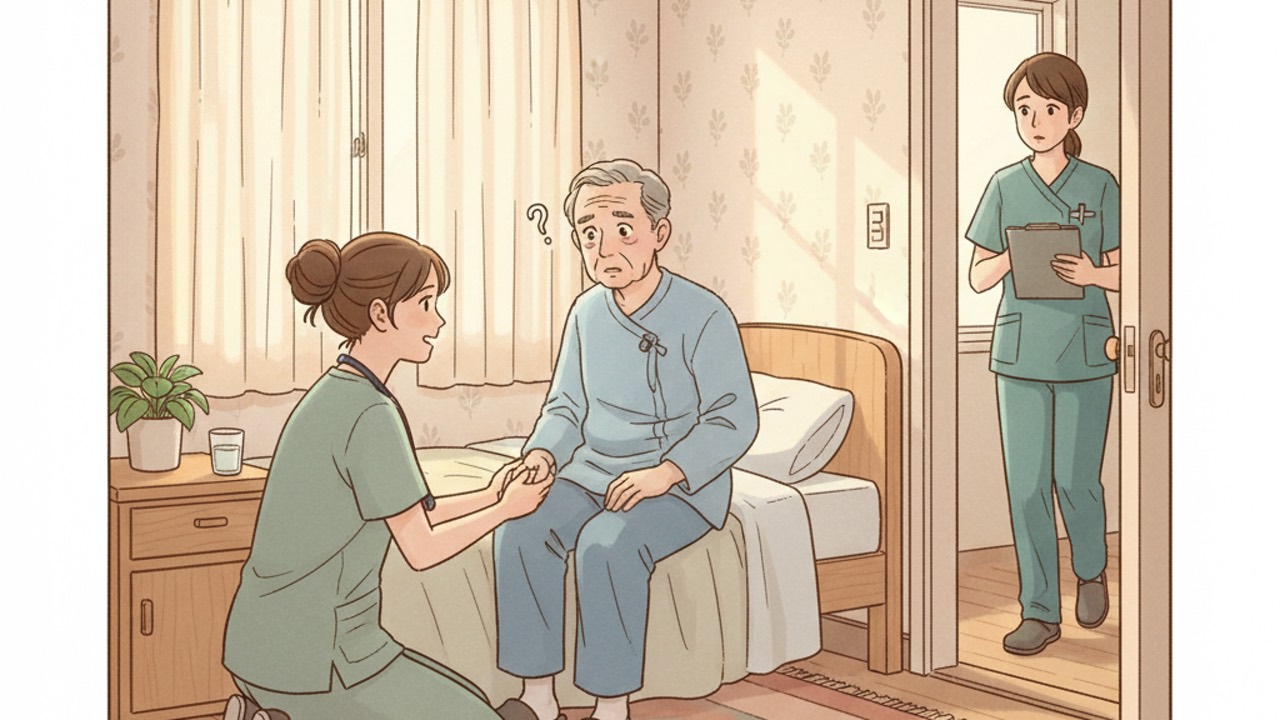
So I started at a new facility about a month ago and a lot of my residents have feeding tubes. Tonight I was told to flush Mr. B's tube after his tube feed. I used the plunger they had on the cart and it was really hard to push — I had to push hard to get the water in. When I came back to check on him his dressing was wet and there was water on his shirt. I told the nurse and she said "that happens, don't worry about it." But now I'm sitting here wondering if I pushed water into his stomach when the tube wasn't in. Then his family was in the room and asked me how much water he's supposed to get in a day and I said I didn't know and it got awkward. My coworker told me to just give him an extra cup since he's dry, and I didn't. Am I doing this right?
This is the most common tube-care question new CNAs ask, and the answer depends on three things: what the order says, what the resident's tube is, and what your facility's policy says. Here's how to think it through.
What the flush actually is
A flush is a small amount of water pushed through the tube — after a feed, before a feed, or between medications, depending on the order and that resident's care plan. It isn't an amount you get to pick on your own. The amount is specified for that resident, and it changes. A resident who gets free water boluses has a completely different flush than a resident who gets every drop of fluid through the tube.
Two things make a flush go wrong fast.
Resistance. If the plunger doesn't push smoothly, stop. Don't force it. Resistance can mean the tube is clamped, kinked, or has shifted, and forcing water through a displaced tube is how water ends up in the abdomen instead of the stomach. Reposition what you can, then tell the nurse.
The wrong syringe. Use the size your facility provides for that resident. A smaller syringe generates more pressure for the same amount of water, which is exactly what you don't want when something isn't right.
The leak in this scenario
A wet dressing and water on the shirt after a flush usually means water is leaking out around the tube at the stoma site, or the external bolster is sitting differently than it was. A small amount of clear drainage at a site is normal. Water actively leaking out of the stoma, a site that is suddenly red, swollen, or painful, a tube that feels loose, or formula leaking around the site is not normal.
None of that is a "don't worry about it" situation. Report what you saw and when you saw it. Don't try to re-secure the tube yourself unless your facility trained you to do that.
Who answers the family's question
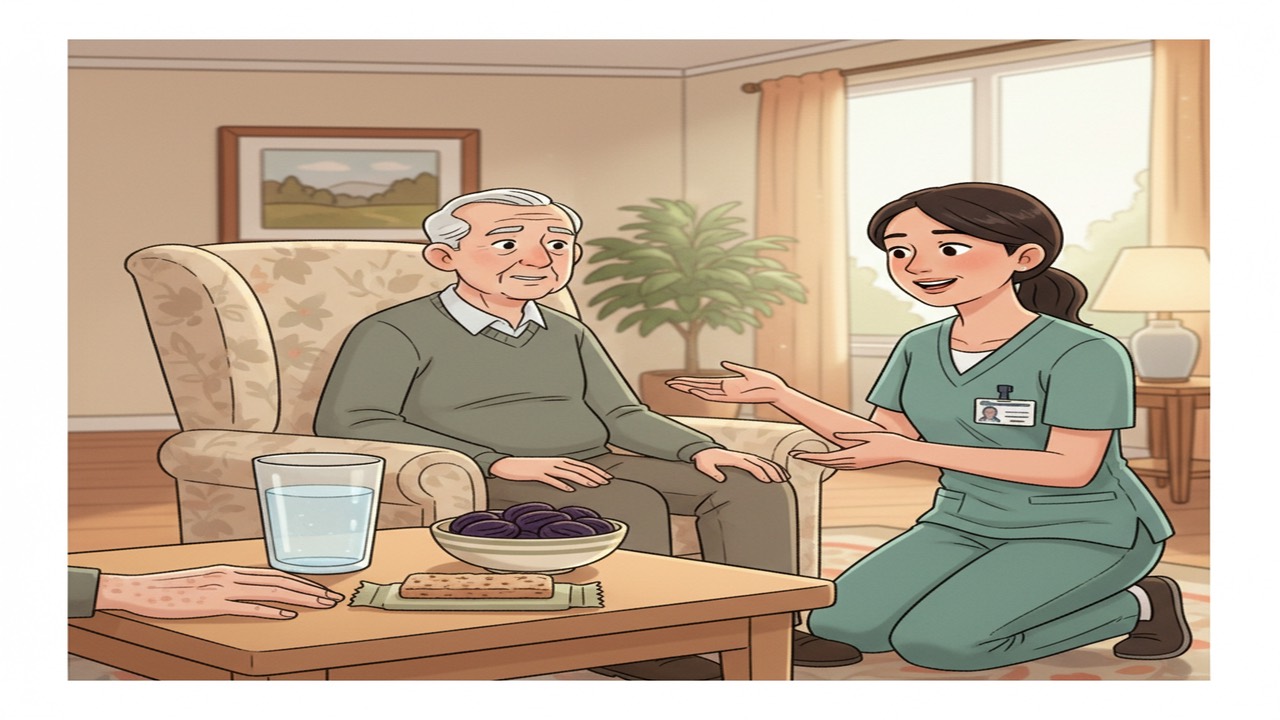
The family asked how much water Mr. B gets in a day. The right answer is "let me check with your nurse" — not a number you guess, and not "I don't know" delivered to a worried spouse at 10 p.m.
Fluid totals for a tube-fed resident usually come from the order, the dietitian, and the nurse, and they change when a resident is constipated, has diarrhea, is on an IV, or is on a fluid restriction. Your coworker telling you to give an extra cup "since he's dry" is a problem three ways: it may be wrong, it's not your call, and if the resident is on a fluid restriction it's an incident.
When a family member pushes for extra water, the move that works is to tell them you're going to ask the nurse and then actually ask the nurse, out loud, in front of the family. The family hears the answer, the nurse hears the request, and you're not the one making the decision.
Medications through the tube
This is where the "did it go in?" question matters most, because a medication can leave the syringe and still not reach the stomach.
- Only give medications the pharmacy has verified for that resident's tube. If a medication isn't flagged for the tube, don't give it through the tube.
- Don't crush anything that says do not crush. Extended-release and enteric-coated medications are the usual ones, and crushing them dumps the entire dose at once.
- Don't mix medications together in one syringe. Give them one at a time, flushing before, between, and after.
- Don't mix medication into formula, or into a feeding bag that already has formula in it.
- If a resident pulls the tube out mid-medication, that medication is gone and it needs to be re-flagged to the nurse. Don't re-draw it, and don't assume they got it.
If the tube comes out
Call the nurse immediately. That part doesn't change no matter how good a shift you're having.
Then: don't force it back in unless your facility has trained you to do that, you know you're reinserting the same tube in the same resident, and the nurse has told you to go ahead. Some facilities do train CNAs to reinsert a well-established tube. Some don't. What's never acceptable is reinserting a tube you're not trained and authorized to reinsert, or reinserting a freshly placed tube that a provider put in.
Keep the tube. The nurse or the IR team may need it intact. Note the time you noticed it, and don't give the next feed or any flush until the nurse tells you the tube is in place.
What to document
Document the flush (amount, time, and whether it went in smoothly), any resistance, any leak at the site, how the resident tolerated it, and anything you had to stop. "Flush of ___ mL, no resistance, no leakage" is a clean record. "Pushed flush, resident was fine" is not a record if something was wrong.
If a medication didn't go in or a tube came out, document it factually and tell the nurse before the end of your shift. Don't wait to see whether it resolves on its own.
What NOT to do
Don't force a flush. Resistance is information. Pushing through it turns a small problem into an ER trip.
Don't crush a medication that says don't crush, and don't give a medication through the tube that wasn't verified for the tube. Both look helpful. Neither is.
Don't give extra water because a family member asked or because the resident looks dry. Fluids come from the order and the nurse.
Don't chart a medication as administered if it didn't go in. If you're not sure it went in, that goes to the nurse as a question, not into the chart as a completed medication.
Don't reinsert a tube you aren't trained and authorized to reinsert.
If a family member asks you something you can't answer, "let me get the nurse" is a complete answer. It's also the answer that keeps you out of the situations you can't undo.
If this kind of post is useful, the full ExamReady library has 1,500+ practice questions, clinical skills with critical-step tracking, and an AI tutor that explains every answer — the same scope-and-voice approach as these posts, with the actual exam tools attached. A 7-day free trial gets you the whole thing, no card required.
A little every day
Practice questions with kind explanations, and 23 clinical skills walkthroughs with critical steps flagged.
Start your 7-day free trial7 days free, then $9.99/month. Cancel anytime.