When patients say things that stay with you: coping with the emotional weight of CNA work
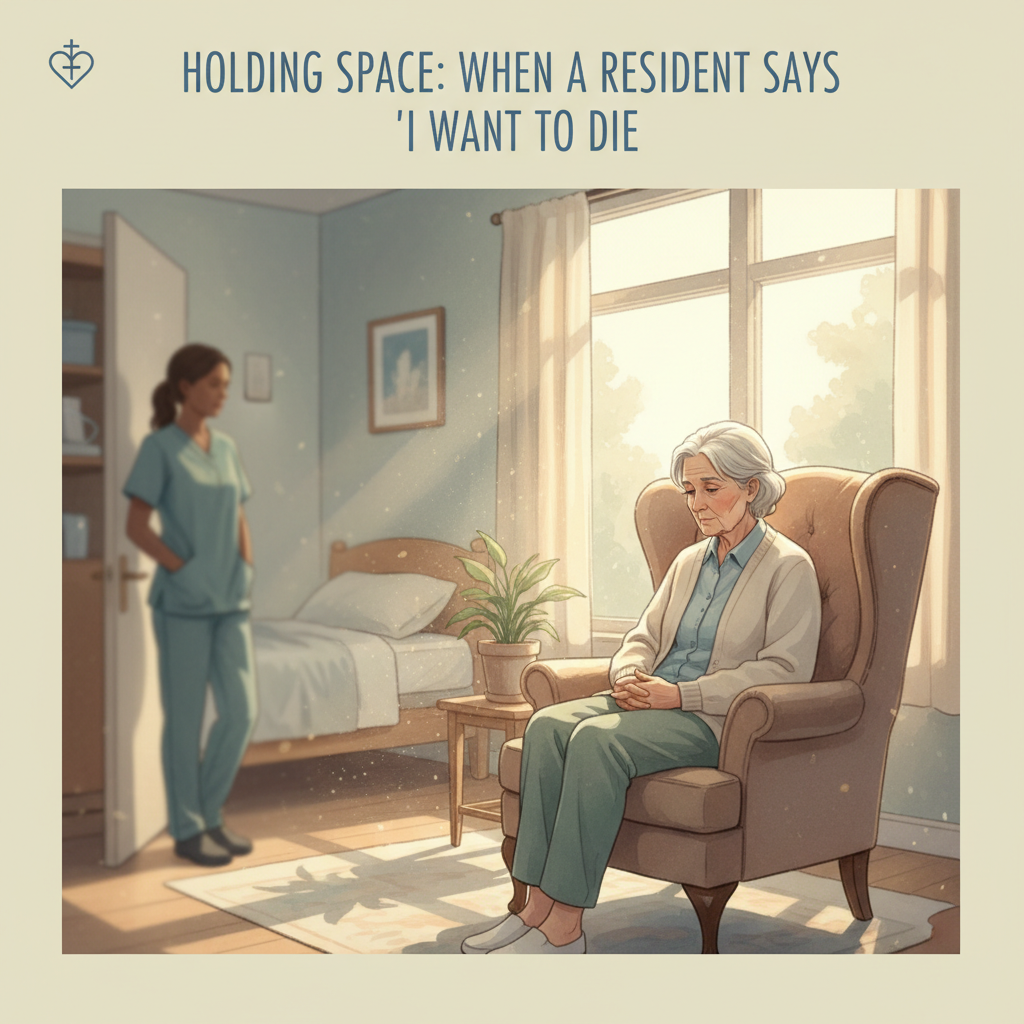
A bed-bound resident told a CNA 'I feel like a body without a soul.' 675 upvotes, 316 comments, and a thread full of people sharing the moments they can't shake. Why this work hits the way it does, and what actually helps.
A CNA on r/cna posted this:
At about 6:30 this morning, one of my residents (bed bound) told me 'I feel like a body without a soul.' Don't know why but that just kind of struck a nerve and I'm pretty used to shit like that, anyone else relate?
This post got 675 upvotes and 316 comments. The comments are full of CNAs sharing their own versions of the same moment — the patient who said "I just want to die," the wife who asked if her husband of 50 years was going to recognize her, the daughter who came in once and never came back.
These moments accumulate. The work of being a CNA is not just physical — it's emotional in a way that most career guides don't address. Here's what's actually going on, and what helps.
Why this work hits different
Most jobs have failure modes you can see and fix. A bad software commit can be reverted. A bad sale can be made up next quarter. A bad meal can be remade.
A CNA's failures — and the failures they witness — are different. You can't undo a patient's last days of loneliness. You can't unsay a thing you didn't mean to say. You can't make a family member come back.
The work also requires sustained emotional engagement. You have to be there with patients, not just perform tasks. A CNA who is technically competent but emotionally absent is not doing the job. The emotional engagement is part of the job — and it's the part that wears you down.
What's actually accumulating
The phrase "compassion fatigue" describes this well. It's the gradual erosion of empathy that comes from sustained exposure to suffering. It's not the same as burnout (which is more about exhaustion and cynicism about the job itself). Compassion fatigue is specifically: I still care, but the caring is breaking me.
Symptoms include:
- Intrusive thoughts about patients, especially at night
- Dreading going to work even when you're not burned out on the work itself
- Feeling guilty about small things (using the bathroom, taking lunch, going home)
- Numbness during patient interactions
- Anxiety about making mistakes
- Difficulty being present with your own family because you're still processing the day's losses
Most CNAs experience some version of this. The ones who last in the profession long-term have learned to manage it. The ones who leave usually leave because of it, even when they cite other reasons.
What actually helps
1. Talk about it with people who understand.
The 316 comments on that post are evidence: CNAs need to talk to other CNAs about the hard moments. Not to fix it, not to problem-solve, just to be heard by someone who gets it.
If your facility has a formal debrief after a death or serious event, use it. If it doesn't, find informal ways — coffee with a coworker after a hard shift, an online community like r/cna, a text thread with other CNAs you trust. The hard moments don't get easier by holding them alone.
2. Have a ritual for leaving work at work.
This sounds silly. It is not silly. CNAs who last decades in the profession almost universally have some kind of transition between work-mode and home-mode. Some examples:
- A specific song in the car that signals "I'm done for the day"
- A shower the moment they get home
- A 10-minute walk before going inside
- Writing one sentence in a journal before bed
- A specific TV show that's "home time, not work time"
The ritual doesn't have to be elaborate. It just has to be consistent. The point is to create a marker that says: I'm not in the SNF anymore. I'm here now.
3. Maintain boundaries with patients.
You can deeply care about a patient without taking their suffering home with you. Some practical boundaries:
- Don't check up on patients on your days off (unless your facility has a specific program for this)
- Don't follow families on social media
- Don't talk about specific patients by name with people outside work
- Don't read the obituaries
This isn't coldness. It's preservation. You can give excellent care without internalizing every loss.
4. Take your PTO.
Most CNAs don't. They hoard PTO "in case something happens" and then lose it when the year rolls over. That's a net negative — you gave your employer free labor and got nothing back.
Take the time off. Plan trips. Take long weekends. Disconnect completely. The facility will manage without you. If they can't, that's a staffing problem, not a personal failure.
5. See a therapist if you can.
This is hard for a lot of CNAs. Many facilities don't have EAPs that actually help. Many CNAs don't have insurance that covers mental health. Many feel that seeking therapy is "weak" or "selfish."
Therapy, when you can access it, works. Not because a therapist will tell you something you don't know, but because talking through hard things with someone whose job is to listen is genuinely restorative. If you can find a therapist who specializes in healthcare worker burnout, that's ideal. If not, any therapist.
6. Know when to leave.
Not every CNA stays in the profession forever. Some move on to nursing school and become RNs. Some go to different units. Some leave healthcare entirely. None of these are failures. Staying in a job that's destroying you is not virtuous; it's just destruction.
If you're thinking about leaving, give yourself permission to actually leave. Don't martyr yourself for a facility that would replace you in two weeks. Don't stay because you feel guilty about your residents. Find a job that doesn't cost you your health.
What the residents need from you
Here's the thing the r/cna commenters figured out: the resident who said "I feel like a body without a soul" wasn't asking the CNA to fix it. They were sharing a feeling. The CNA's response didn't need to be a solution — it needed to be presence.
That's the actual job. Not just the bathing, feeding, and transferring. The presence. The "I'm here and I heard you." The "you matter even if you can't do anything for yourself right now."
That presence is what stays with you. It's also what makes the work meaningful.
The trick is being present during the shift and then letting go after the shift. Most CNAs struggle with the letting-go part. The ones who last learn to do both.
What the post taught
The r/cna thread on that post is one of the most human things on the internet. Hundreds of CNAs sharing the moments they carry. The comments are full of:
- "I had a resident who..."
- "This happened to me last week..."
- "After 12 years, this still gets me..."
You are not alone in being affected. The work affects everyone who does it with care. The difference between CNAs who last and CNAs who burn out isn't whether they're affected — they all are. It's whether they have a way to process the effect.
Find your people. Find your ritual. Take your time off. Get help if you can.
You're not weak for being affected. You're doing the job right.
If this kind of post is useful, the full ExamReady library has 1,500+ practice questions, clinical skills with critical-step tracking, and an AI tutor that explains every answer — the same scope-and-voice approach as these posts, with the actual exam tools attached. A 7-day free trial gets you the whole thing, no card required.