 ExamReady CNA
Your first code blue as a CNA: what to do in the first 30 seconds
A new CNA on r/cna asked what to do when a resident coded on their first solo shift. Here's the actual order of operations, what to do, what not to do, and how to be useful instead of frozen.
A CNA on r/cna posted this:
I'm three weeks in. Yesterday I walked into Mr. R's room to do his 2 pm vitals and he was slumped over in his wheelchair, not responding. I froze. The nurse ran in and did compressions and the team got him back, but I just stood there for what felt like five minutes. I don't know what I'm supposed to do when this happens. I'm terrified it's going to happen again and I'll be just as useless.
If you've been a CNA for more than a few months, you've either seen one or you're going to. The first code blue is a rite of passage nobody warns you about. Here's what you're actually supposed to do, in the order you're supposed to do it.
The first thing: recognize
A "code blue" in long-term care usually means: no pulse, not responsive, not breathing normally. Some facilities say "dr. blue" or "code 99" — same event. The point is the resident has either stopped breathing, has no pulse, or both.
What it usually looks like:
- Slumped over, no response when you call their name or shake them
- Not breathing, or making gasping/agonal sounds (these are not normal breathing)
- Skin color is off — gray, blue, mottled
- For some cardiac events, they collapse mid-conversation — "he was fine, then he wasn't"
Don't waste time second-guessing. If there's no pulse and no normal breathing, that's a code. Call it.
The 30-second order of operations
You are not the leader of a code. The nurse or the rapid response team is. Your job in the first 30 seconds is to call for help and bring resources to the room. That's it. Everything else is bonus.
Step 1: Shout for help. Don't quietly walk to the nurses station. Yell down the hall. "I need help in room 12, Mr. R is unresponsive." Loud. Other staff will hear. The charge nurse, the floor nurse, anyone — they're going to come running, and that's what you need.
Step 2: Hit the call light and pull the emergency cord. Some facilities have an emergency call button at the head of the bed or on the wall. If yours does, hit it. If not, the call light works. Do this even if you've already yelled — sometimes rooms are soundproofed or the unit is far from the station.
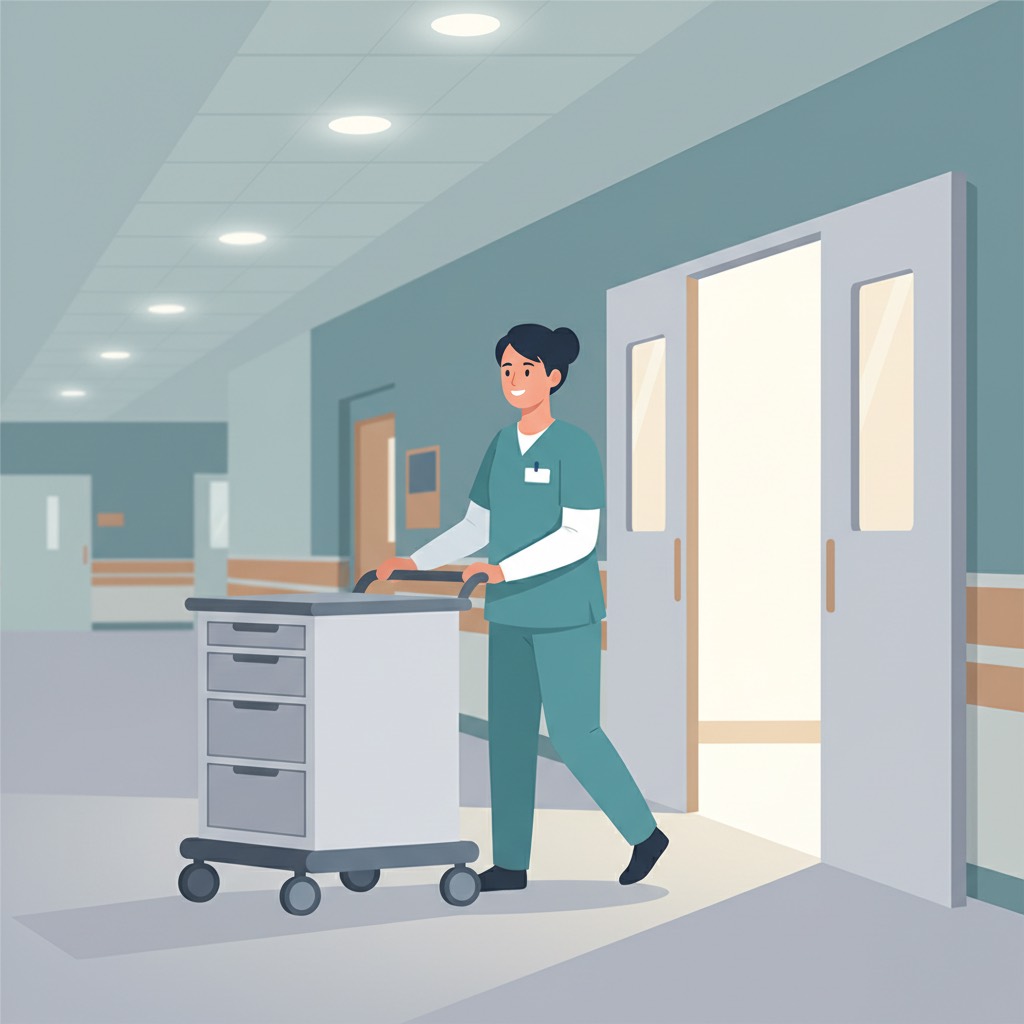
Step 3: Get the crash cart nearby. Every unit has an AED and most facilities have a crash cart somewhere on the floor. You don't need to know what's inside. You need to know where it is and how to roll it fast. If you don't know where the AED on your hallway is, find out before your next shift.
Step 4: Stay with the resident. Do not leave the room to go get the nurse. Do not run to the station. Other people will come to you. Your job right now is to keep the resident visible, keep talking to the team about what you saw, and stay close.
If you're the only one in the room for the first 30 seconds, those four steps are the entire job. Nothing else matters.
What you tell the team when they get there
When the nurse or code team arrives, they're going to ask you questions. Be ready to answer with specifics. The thing they care most about is time — when did you last see the resident normal, and when did you find them like this.
What to say:
- "I saw him at 1:45 and he was fine. I came in at 2:00 and he was like this."
- "He's been on 2L of oxygen. His O2 sat this morning was 94. He's a full code."
- "He was eating lunch at noon. He complained of chest tightness at 11 but the nurse knew."
What NOT to say:
- "I don't know, I just walked in"
- "He was fine a few hours ago" — give a specific time
- Anything about what you think caused it — that's not your call, and speculating out loud doesn't help anyone in the room
If you genuinely don't know an answer, say "I don't know" and offer to go check the chart. That's honest and helpful. Making up a timeline to sound competent makes things worse.
What you actually do during the code
Once the team is in the room and running things, here's where CNAs usually help:
Compressions. Most facilities train CNAs in CPR. If you're certified and the nurse tells you to do compressions, you do compressions. If you're not certified or you're not comfortable, say so — someone else will step in. Switch out every two minutes; compressions are physically brutal and tired compressions don't work.
Crowd control. Other residents in the hallway, family members walking by, visitors — you're the one who keeps them out. Move them to their rooms. Get the activity director to redirect. If the family of the coding resident is on-site, find them a private space and stay with them. Don't let them stand in the doorway watching the team work unless the team explicitly says it's okay.
Documentation. The second the code is over, you start writing down what happened. Time of event, time of code team arrival, who was present, what was done. Even if the nurse or charge nurse is also documenting, your independent timeline matters for the chart and for any review after.
Equipment runs. Need another ambu bag. Need the suction turned on. Need the bed flipped to CPR position. These are the small jobs that keep the code from stalling. Stay close, listen, do what's asked.
What NOT to do during a code
Don't scream. People freeze in panic. The opposite of freezing is screaming, and that's almost as bad. Talk at a normal volume. Yell only when you need to get help from far away.
Don't try to move the resident yourself. If they're on the floor or slumped in a chair, leave them. The code team will reposition. Trying to drag a 200-pound resident onto the bed by yourself wastes seconds and can hurt you both.
Don't document on your phone or text family. Put the phone down. The chart is the only record that matters during a code.
Don't tell the family "they're going to be fine" or "they're not going to make it." That's the nurse's call. If the family asks you directly, say "the team is working on them right now, the nurse will come talk to you as soon as she can."
Don't disappear afterward. The worst thing you can do is go home and not process it. Code blues are hard, even when they go well. Talk to the nurse, talk to the charge nurse, talk to your friends. If your facility has an employee assistance program, use it.
What happens after — the debrief
Most facilities do a debrief after every code. You'll be asked what you saw, what you did, and what would you do differently. This isn't a test and it's not a place to blame anyone. Be honest. If you froze, say so. Most CNAs freeze their first time — the team has seen it before.
If the resident died and this was your first death on the job, that's a separate kind of hard. The short version: take your PTO, talk to someone, and don't feel guilty for being glad you're not on shift the next day.
How to be ready for the next one
Three things to know by your first month on the floor:
- Where the AED and crash cart are on your hallway. Walk to them on your next shift. Open the AED case and look at the pads. The point is to make them familiar, not scary.
- Your facility's code status policy. Full code, DNR, DNI — know what these mean and where to find each resident's code status on the chart.
- That your BLS/CPR card is current. Most facilities require it. If yours doesn't, get it anyway.
You're not going to be the hero of your first code blue. The nurse is. The code team is. Your job is to call for help, bring the equipment, stay with the resident, and document what you saw. That's enough. That's the job. And it's not useless — it's the difference between a code that runs smoothly and one that doesn't.
If this kind of post is useful, ExamReady CNA has practice questions with kind explanations, clinical skills walkthroughs with critical steps flagged, and a study coach. Start your 7-day free trial. 7 days free, then $9.99/month. Cancel anytime.
A little every day
Practice questions with kind explanations, and 23 clinical skills walkthroughs with critical steps flagged.
Start your 7-day free trial7 days free, then $9.99/month. Cancel anytime.