 ExamReady CNA
Never lift a resident under the arms: a safer pivot
A real r/cna question about a resident who grabs your arms and begs to be pulled up by the armpits. Axilla lifting can dislocate shoulders and tear skin — here's the safe alternative, every time.
A CNA on r/cna posted this:
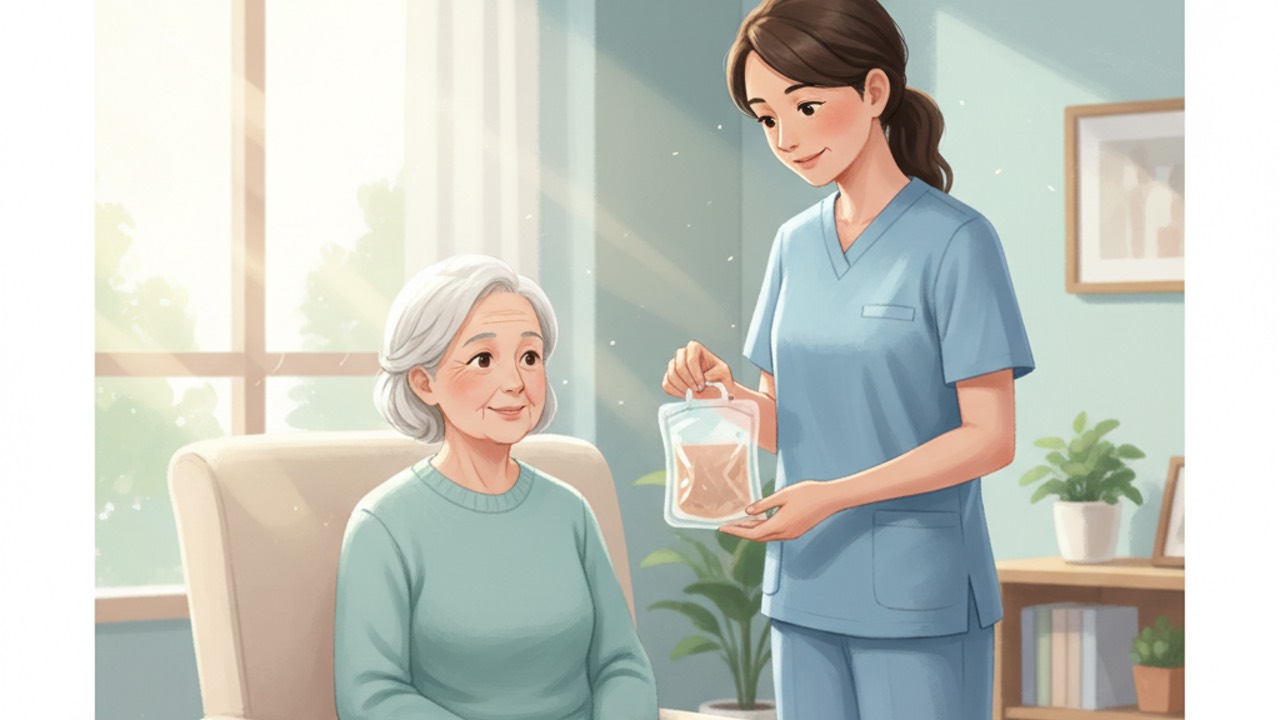
My 88-year-old resident with dementia grabs my forearms every time I try to help her stand. She pulls herself up using my arms and pulls HARD. My preceptor told me to "just let her" because she's "doing it herself." But I can feel her whole weight hang on my shoulders when she slips, and last week I heard a little pop in her shoulder and she cried out. The nurse said "that's an axilla lift, you shouldn't do that" but didn't really tell me what to do instead. She keeps grabbing me. I can't say no to a resident. What am I supposed to do here?
This is one of the most common situations in long-term care, and one of the most under-taught. The instinct — "she's pulling herself, so it's fine" — is wrong in a way that can injure both of you. Here's what you need to know.
What an axilla lift actually is
An axilla lift is when someone — usually a confused or frightened resident, but sometimes a well-meaning CNA — pulls a person up by hooking hands under the armpits and lifting from above. The resident's full bodyweight hangs from the shoulder joint and the soft tissue under the arm for a few seconds.
There are two people involved in any axilla lift: the person being lifted, and the person doing the lifting (or allowing themselves to be used as the lifting point). Even if the resident "does it themselves," if you're the anchor, you've done an axilla lift.
Why it hurts the resident
The shoulder joint is a ball-and-socket held in place by four small muscles called the rotator cuff. In an elderly person, especially a frail woman with osteoporosis, those tissues are thin and the bones underneath are brittle. An axilla lift can:
- Dislocate the shoulder — the upper arm bone pops out of the socket, often partially (a subluxation). The resident feels a "pop" and immediate pain. Sometimes it pops back, sometimes it doesn't.
- Strain or tear the rotator cuff — pain on movement that doesn't go away, especially when reaching overhead.
- Cause a skin tear — the fragile skin on the underside of the arm tears easily against a CNA's fingers or wrist. Skin tears in the elderly are slow to heal and easily infected.
- Bruise or fracture ribs — especially in residents on blood thinners or with metastatic disease.
- Cause a brachial plexus injury — stretching the nerves that run through the armpit. This is rare but real.
That "little pop" the CNA in the post heard was likely a partial subluxation or a rotator cuff strain. It will probably hurt that resident for weeks, and it may never be entirely right again.
Why it hurts you
The CNA in the post is right to be worried about her own body, too. When a confused resident grabs on and pulls — especially if they slip mid-move — your low back, neck, and shoulders take the load. The injuries to CNAs from this pattern are real:
- Chronic shoulder pain
- Low back strain that becomes chronic
- Disc injuries
- The instant any 88-year-old slips mid-grab, you cannot save them without injuring yourself
Your body is not a hoyer lift. You cannot safely bear a resident's full weight under any circumstance, even briefly.
What to do instead
There is a right way, and it's the same almost every time.
1. Stop the grab before it happens.
For residents who always grab, approach from the front so they can see you coming. Keep your arms close to your body until you're in position. Use a calm voice: "I'm going to help you stand. Put your hands here on the transfer belt, not on me." Most of the time, a resident who knows the routine won't grab.
2. Use a transfer belt (gait belt) every time.
A transfer belt is a heavy canvas or nylon belt that goes around the resident's waist. You grip the belt at the back, not their body. If they slip, you have a controlled place to grab. If they pull, the belt absorbs it — not your arms, not their armpits.
The rule is: belts for any stand-pivot transfer. No exceptions for residents who can bear weight.
3. Use the lower-body pivot.
Place your feet shoulder-width apart, knees bent, back straight. Your knees do the lifting — not your arms, not your back. Slide one hand under the resident's shoulder blade and the other on the transfer belt or on their hip. Push up with your legs. The resident does the same: nose over toes, push through the hands-on-belt position.
If you cannot physically do this alone — and most CNAs cannot with a confused or weak resident — you are not failing. You need a second person. Get help.
4. For the resident who won't stop grabbing.
For dementia residents who always pull, the approach is body positioning, not words. Stand slightly to the side, not in front. Use your forearm across your own chest as a guard, not as a grip point. If they grab your arm, gently unwrap their fingers — never yank — and redirect their hands to the transfer belt, the bed rail, or the chair arms.
You can say, calmly and repeatedly: "Hands on the blue bar, not on me." Residents with cognitive impairment respond better to short, repeated instruction than to long explanations.
5. For the resident who really cannot bear weight.
If the resident cannot safely bear weight at all, you should not be doing a stand-pivot — full stop. This is a mechanical lift situation: a hoyer lift, a sit-to-stand lift, or a stand-aid with two CNAs. Talk to the nurse about whether the care plan needs updating. Many residents get a "stand-pivot with one" on their care plan from years ago when they were stronger. Care plans don't get updated enough.
The "I can't say no to a resident" problem
The CNA in the post is stuck on this. Saying "no" to a confused resident feels wrong. It is not wrong. You are not refusing care — you are refusing to do something that will hurt both of you.
What you say matters. Try:
- "Let me get the belt so we can do this safely." (Not refusing, redirecting.)
- "Hands on the belt, please." (Instruction, not negotiation.)
- "Hold on, give me one second." (Pause is fine. The resident will still be there.)
If a resident is cognitively intact and asks you to lift them under the arms anyway — sometimes they say "just pull me up, I'm fine" — explain briefly that it's against your facility's safe-handling policy because it can hurt them. Most residents understand once it's phrased as being for their safety, not your convenience. Offer the transfer belt. They almost always take it.
What to document after a near-miss or injury
If you hear the pop, see the skin tear, or feel the grab go wrong:
- Tell the nurse immediately. Don't wait until end of shift.
- Document the event in the chart using the facility's incident form.
- Note what you were doing, what happened, and what the resident said or did.
- If the resident shows new pain or limited movement, the nurse needs to know within minutes — dislocations and fractures are easier to address early.
You are not "tattling." You are doing your job.
What NOT to do
- ❌ Never let a resident pull themselves up by your arms, neck, or shoulders — even for a second.
- ❌ Never do a stand-pivot without a transfer belt, even if you're in a hurry.
- ❌ Never do a stand-pivot alone if the resident cannot fully bear weight or if you've never worked with that resident before.
- ❌ Never let the "she's doing it herself" line convince you the axilla lift is fine. Her hands are on you. You are the anchor.
- ❌ Never ignore a "pop," a skin tear, or new shoulder pain on a resident. Report it.
- ❌ Never feel guilty about asking for a second person. That is not laziness — that is the policy.
The right answer every time is: transfer belt, two-person assist when needed, mechanical lift when the resident cannot bear weight, and your hands stay clear of the armpits. Every single time.
If this kind of post is useful, ExamReady CNA has practice questions with kind explanations, clinical skills walkthroughs with critical steps flagged, and a study coach. Start your 7-day free trial. 7 days free, then $9.99/month. Cancel anytime.
A little every day
Practice questions with kind explanations, and 23 clinical skills walkthroughs with critical steps flagged.
Start your 7-day free trial7 days free, then $9.99/month. Cancel anytime.