Scary-high BP reading on a resident: what to do as a CNA
A real r/cna question from a new CNA who took a BP of 210/115 on a resident and panicked. Here's what your scope of practice actually allows, what to do in the moment, and what to never do.
A CNA on r/cna posted this:
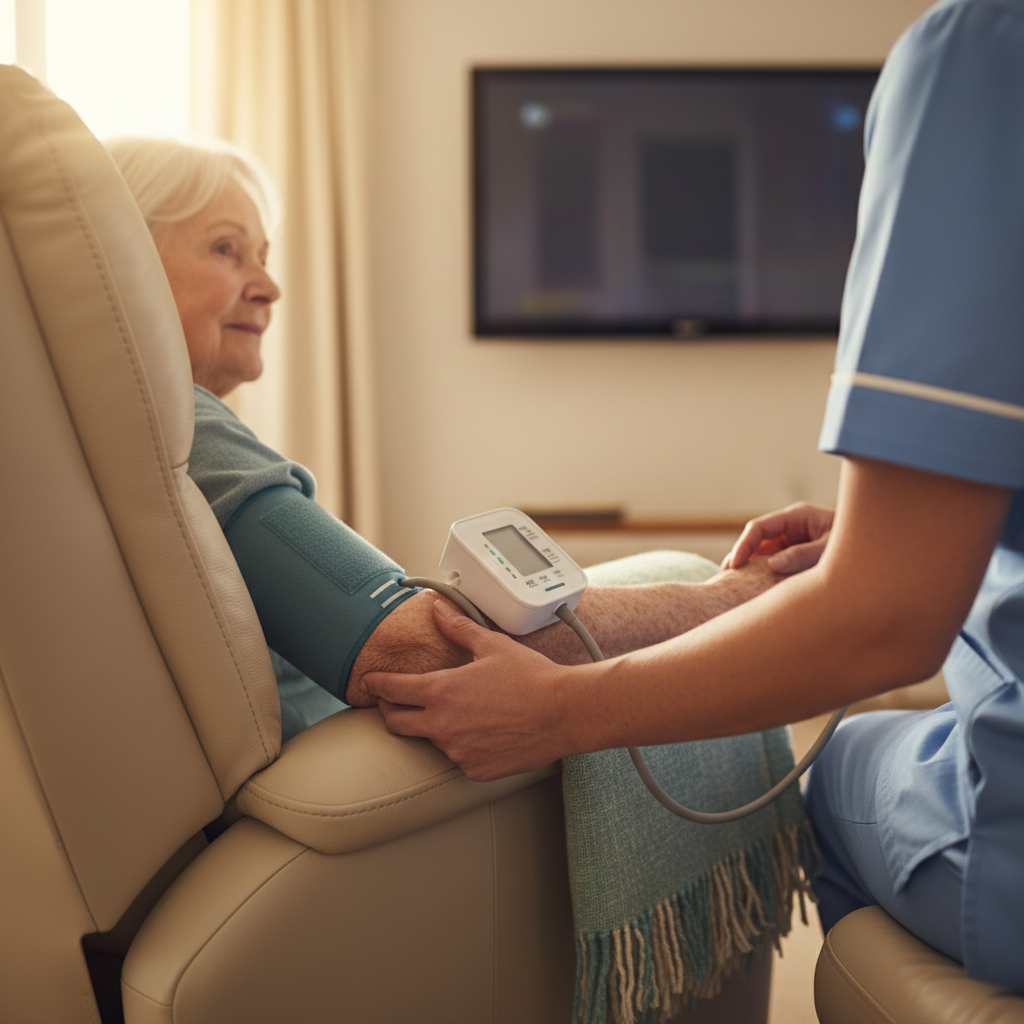
I'm a brand new CNA, just started two weeks ago on a subacute rehab floor. Tonight I took a routine BP on one of my residents and got 210/115. I literally froze. The resident is sitting there watching TV acting totally normal. I went and told my nurse right away, but I keep second-guessing myself — did I do the cuff right? Should I have known what to do before I went to her? What if the next time I take a BP and it's high, the nurse is busy and I don't know what to do?
This is one of the most common first-year CNA anxieties, and it comes up in r/cna every single week. Here's what's actually happening when you see a number like that, and what your scope of practice lets you do about it.
First: breathe, then double-check
Before you do anything, retake the BP. A reading that high is almost always a problem, but a small percentage of the time it's a measurement problem, not a patient problem. Things that throw off a BP reading:
- Cuff too small or too large for the resident's arm
- Cuff placed over clothing
- Resident's arm hanging instead of supported at heart level
- Resident talking during the read
- Resident just walked to the bathroom or back from physical therapy
- Resident in pain
- Full bladder
If the resident was just up walking, wait 5 minutes, have them rest, and retake on the other arm with a properly fitted cuff. Document both readings.
If the second reading is still in the 200s over 100s, that's not a measurement error. Move on.
What your scope of practice actually allows
This is where a lot of new CNAs panic, and it's important to be clear. You do not diagnose, treat, or decide what to do about hypertension. That's the nurse's call, and ultimately the provider's. Your job is:
- Get a clean, accurate reading
- Report it promptly to the licensed nurse
- Document what you observed, the reading, and the time
- Stay with the resident and watch for symptoms
- Do not give the resident any medication, food, or fluid based on your own judgment about the BP
If your facility uses a vitals-acquisition protocol where CNAs are taught specific parameters (e.g. "BP over 180/110 — call the nurse immediately, do not wait for end-of-shift report"), follow that protocol. Most facilities have one. Find it on day one if you can.
What to say to the nurse
Don't just say "her BP is high." Give the nurse everything she needs to make a decision in one sentence:
- "Mrs. R's BP is 208/118, taken on the right arm, second reading after a 5-minute rest. She's alert, no complaints of pain, denies headache or vision changes. She's sitting in the recliner watching TV."
That's it. You're done. The nurse will decide whether to take a manual reading herself, notify the provider, hold the next antihypertensive dose, or just document and monitor. That's not your call.
When it's an emergency
Some BP readings come with symptoms, and the combination is what matters:
- Severe headache, especially "the worst headache of my life"
- Chest pain or pressure
- Shortness of breath
- Sudden vision changes, blurred vision, or seeing spots
- Slurred speech, facial droop, weakness on one side
- Confusion that's new for that resident
- Nosebleed that won't stop
- Severe nausea or vomiting
Any one of these plus a high BP is a call the nurse immediately, do not leave the resident situation. If you can't find the nurse fast enough and the resident is actively symptomatic, that's when you hit the call light for the unit, find any licensed nurse, and say "I need someone in room [number] right now." Do not page a code on your own — that's not your scope — but do not leave a symptomatic resident with a 200+ BP alone to go hunting for your assigned nurse.
What NOT to do
This is where newer CNAs get burned.
Do not retake the BP six times trying to make it lower. You took it. The number is what it is. Report it. The nurse will decide whether to verify. If you keep going in and re-cuffing the resident, you've now spent ten minutes when you could have reported, and you may have missed a real change.
Do not tell the resident "your blood pressure is dangerously high, you should go to the ER." That's not in your scope, it's not your call, and it panics the resident. You can say, "I'm going to let your nurse know so she can take a look."
Do not skip or delay the next set of vitals because you're nervous about what you'll see. The next time the vitals are due, take them. Don't avoid the resident to dodge a scary number.
Do not discuss the reading with the resident's family before the nurse has been notified. Even if the family member walks up to you in the hallway asking "how's her BP been?" — your answer is "let me grab her nurse for you." They will ask the nurse directly anyway, but you don't want to be the one who delivered bad news over the hallway.
Do not assume a high BP is the resident's "normal." It might be — some residents run high — but you do not know their baseline, and even if you did, a new high is a new high. Report it.
What to document
When you report a critical-range vital, document:
- Time of reading
- Which arm, cuff size, position (sitting, lying)
- The reading itself
- Whether you retook it and what the second reading was
- Any symptoms the resident reports or that you observed
- The time you reported it and to whom
This is your protection. If the reading gets called into the provider and a medication is given or held based on your reading, your documentation shows exactly what you saw and when. If something later goes wrong, that paper trail matters.
The bigger picture
A reading like 210/115 feels scary because you're new and the number sounds dramatic. Here's the part nobody tells you on day one: the facility expects you to find this kind of thing. That's why you're taking vitals. The nurse cannot be in every room, and the providers cannot see every patient every hour. You are the eyes and ears at the bedside. A high reading reported cleanly and quickly is a win, not a failure.
The failure is the CNA who takes a 220/120 reading, doesn't believe it, hides it, and hopes the next shift catches it. Don't be that person. Take the reading. Report it. Document it. Move on.
Within a year, you'll see this number a hundred times and it won't make your heart race. For now, it's normal to feel the weight of it. You're doing the right thing by asking.
If this kind of post is useful, the full ExamReady library has 1,500+ practice questions, clinical skills with critical-step tracking, and an AI tutor that explains every answer — the same scope-and-voice approach as these posts, with the actual exam tools attached. A 7-day free trial gets you the whole thing, no card required.