Trach tube falls out: what to do in the first 60 seconds
A real story from r/cna about a trach tube falling out during a shirt change. What the immediate response should be, what the CNA did right, and why the skin broke down around the stoma in the first place.
A CNA on r/cna shared this story:
I was helping my tracheostomy patient put their shirt on. They pulled the shirt down too fast and their trach tube fell out. They began bleeding profusely and started to panic. I got a nurse in and called rapid response within about 45 seconds. But now he's in the OR. He lost so much blood and idk if he will live. The surgeon and nurses told me that the skin was breaking down around the tube opening for a while now.
The story had 7,342 upvotes and 233 comments. It raises three real questions:
- What should you actually do in the first 60 seconds?
- Did the CNA do anything wrong?
- Why did this happen — and could it have been prevented?
What to do in the first 60 seconds
The CNA's response — getting a nurse and calling rapid response within 45 seconds — is exactly right. Here's the priority order for a dislodged trach tube:
Step 1 (0–10 seconds): Keep the stoma open. A trach tube falling out isn't automatically fatal, but the stoma can close quickly. If you have a spare trach tube (same size or one size smaller), insert it gently into the stoma. Do not force. If you don't have one, the patient's airway can sometimes be maintained through the stoma itself.
Step 2 (10–30 seconds): Call for help. Yell for a nurse. Hit the call light. Use your phone if you have a code blue button. Do not try to manage this alone — even experienced nurses need a second pair of hands for trach emergencies.
Step 3 (30–60 seconds): Stay with the patient. Talk to them. Keep them calm. Reassure them that help is coming. Don't restrain them, don't force the tube back in. Bleeding from the stoma is expected — don't try to stop it with pressure or anything else; you'll make it worse.
Step 4 (after help arrives): Follow the nurse's instructions. If rapid response is called, the response team will manage the airway. Your job now is to provide context: what was happening when it fell out, when it was last changed, any known complications.
Did the CNA do anything wrong?
The CNA in this story did exactly what they were trained to do. Calling rapid response within 45 seconds of a trach emergency is fast — most facilities have a goal of under a minute. Going home on mental health leave after the incident is also a reasonable response; trach emergencies are traumatic, and seeing a patient lose a lot of blood is hard.
What the comments did note, though, is that the situation that led to it wasn't caught earlier. Multiple nurses and the surgeon said the skin around the stoma had been breaking down for a while. That suggests:
- The patient may have had a poorly fitting trach
- Routine skin assessments may have missed or under-documented the breakdown
- The shirt change may have been done with too much force on the tube
A CNA isn't responsible for diagnosing skin breakdown around a trach stoma — that's nursing and surgical territory. But you are the eyes in the room. If something looks off (skin red, weeping, tube loose), say something. Most facilities have a "see something, say something" expectation. Document it in your shift report even if the nurse already knows — paper trails matter when things go wrong.
Why trachs come out
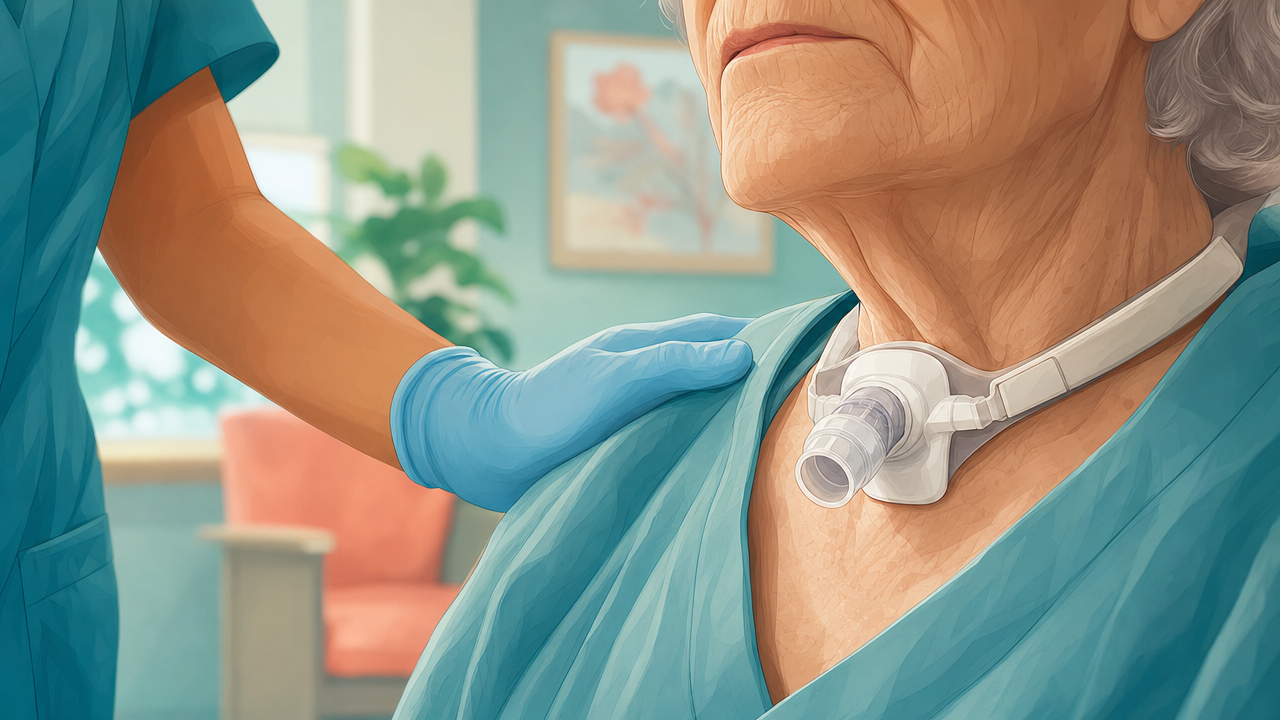
A tracheostomy tube is held in place by:
- The cuff (if present) — an inflatable balloon that seals against the tracheal wall
- Ties or a holder — fabric or velcro straps around the neck
- The stoma tract itself — the healed opening in the trachea
A trach can become dislodged if any of these fail. Common causes:
- The patient pulls on the tubing (especially common in confused or restless patients)
- The ties are too loose or the velcro has lost grip
- The cuff has deflated
- A violent cough dislodges it
In this case, the patient was changing clothes. Shirt changes are a known risk because the tube can catch on the fabric. Best practice: pull the shirt over the head or off the arm furthest from the trach first, then work the trach side carefully.
What CNAs should know about trach care
You won't be inserting or repositioning trach tubes — that's nursing. But you will be doing daily care around the stoma. Things worth flagging:
- Skin condition — note redness, breakdown, discharge, or odor during routine care
- Tube position — if it looks like it's shifted, even slightly, mention it to the nurse
- Patient behavior — patients who pull at their own tubes need closer supervision or restraint per order
- Equipment — spare tubes, suction supplies, and oxygen should always be at the bedside; if anything is missing, say so
If a trach comes out and you're alone, the priorities are: keep the stoma open, get help, stay with the patient. Everything else can wait.
What to take from this story
If you've never worked with a trach patient, the most useful takeaway is this: the emergency response matters, but the prevention matters more. Most trach dislodgements don't come out of nowhere. There are usually signs — loose ties, skin breakdown, patient behavior, a poor-fitting tube — and the team that catches those signs early is the team that prevents the 45-second emergencies.
You won't be perfect at this. No CNA is. The job is to be paying attention, to document what you see, and to know what to do when something goes wrong. This CNA did all three.
If this kind of post is useful, the full ExamReady library has 1,500+ practice questions, clinical skills with critical-step tracking, and an AI tutor that explains every answer — the same scope-and-voice approach as these posts, with the actual exam tools attached. A 7-day free trial gets you the whole thing, no card required.