 ExamReady CNA
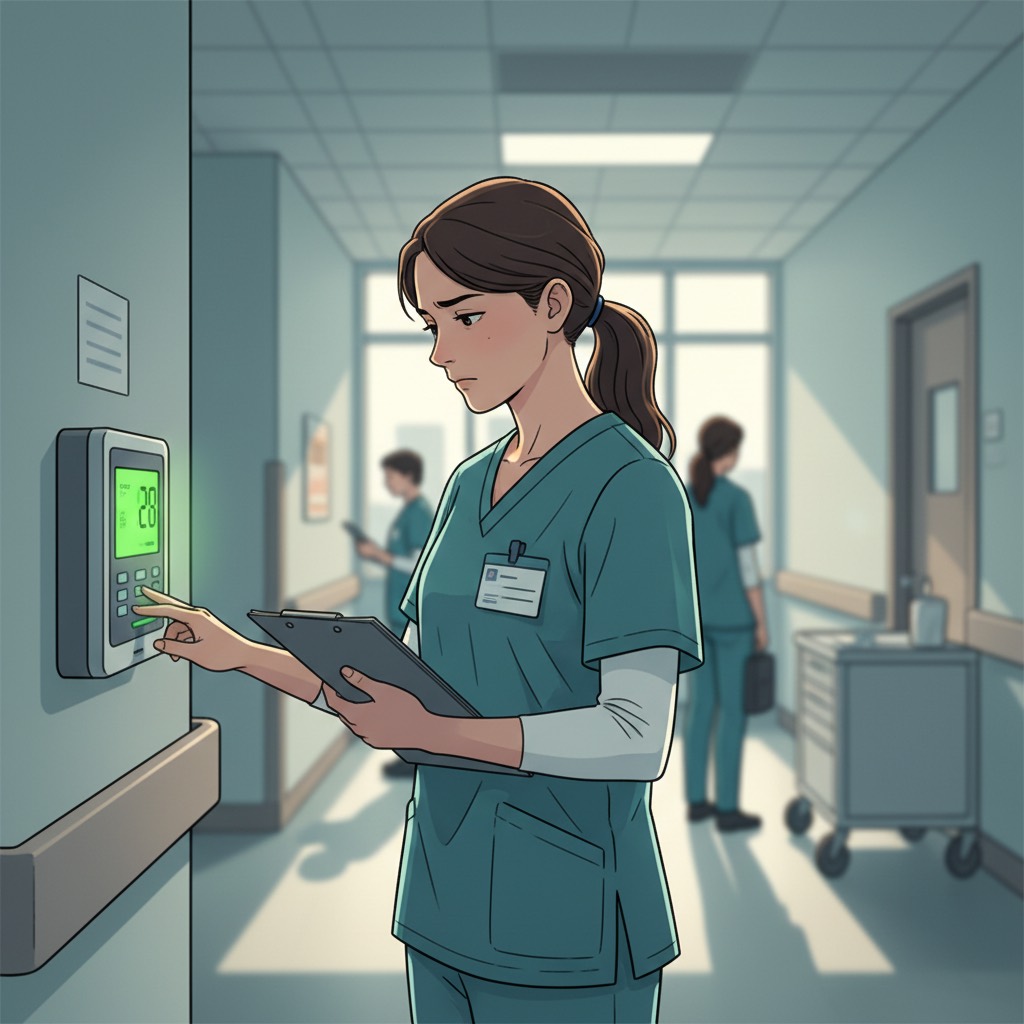
Asked to clock out and keep working: what to do when your facility pressures unpaid time
A real r/cna scenario where a charge nurse tells a CNA to clock out and finish charting. Why this happens, why it's illegal, and what to actually do without losing your job.
A CNA on r/cna posted this:
My charge nurse pulled me aside at the end of a brutal shift last week and said, "Hey, just clock out and finish your charting. It's only gonna take you 15 minutes, you've been here 13 hours already and we can't keep paying overtime." I had three residents left to chart on, two of them had behavior incidents I needed to document, and I was honestly so tired I almost just did it. I didn't, but now I'm worried I'm on her bad side. Is this even legal? What do I do if it happens again?
This post got 612 upvotes and 180+ comments. Almost every CNA has been in some version of this situation. Here's what's actually happening, what the law says, and what protects you.
Why facilities push for clock-out time
This isn't a one-bad-nurse problem. It's structural, and understanding why helps you deal with it without taking it personally.
Overtime is expensive. A facility paying you time-and-a-half for hours over 40 in a week would rather you not log those hours at all. If you "clock out and finish," they get the work product (your charting, your resident care) without the labor cost. From a budget spreadsheet, that's a win. From your paycheck, it's wage theft.
Staffing is short. If they sent you home on time, the work wouldn't get done. So instead of fixing the schedule, they offload the gap onto your unpaid time. The facility gets to claim it has "adequate staffing" on paper because you finished — just not on the clock.
Culture pressure. The charge nurse is often under the same pressure from the DON. By the time it reaches you, it sounds like a favor ("we can't keep paying overtime") when it's actually an instruction. The framing is meant to make you feel like you're being unreasonable by saying no. It usually starts small — "just finish that one note," "just sign off the MAR" — and the pattern over weeks and months is the actual harm.
What the law actually says
You are legally entitled to be paid for every minute you work. This isn't a gray area, and it doesn't depend on your state.
Federal law (Fair Labor Standards Act): Employers must pay for all hours worked. Working "off the clock" — performing job duties while not clocked in — is a violation. The Department of Labor considers it wage theft.
State laws: Most states have additional protections, and several (California, New York, Washington, and others) have particularly strong wage-and-hour statutes. Some states require employers to pay for time spent on required activities like charting, even if it's a "few minutes."
The "de minimis" rule is narrow. Employers sometimes argue that small amounts of time (a few minutes) don't need to be paid. The federal threshold is around 10-15 minutes total per day, and even that is contested. Three residents' worth of incident charting is not de minimis. It is hours of work.
Required activities are work. If the facility requires you to chart, requires you to document behavior incidents, requires you to sign off the MAR, those are work activities. They are paid time. Period.
Why CNAs say yes anyway
The pressure to clock out and keep working is real, and most CNAs who do it aren't being naive. They say yes because:
- They're exhausted and don't want a fight at the end of a 13-hour shift
- They worry about being labeled "not a team player"
- They genuinely care about their residents and don't want to leave work half-done
- They don't know it's illegal, or they know but feel powerless
- They've seen coworkers get fired or have hours cut after pushing back
All of these reasons are understandable. None of them justify the practice. You can care about your residents, be a team player, and still refuse to work off the clock. Those things aren't in conflict.
What to do in the moment
The original poster said she was too tired to push back. That's a real position to be in. Here are concrete options, in order of how confrontational they are.
Option 1: Clock back in.
If you're already clocked out and a supervisor tells you to keep working, the cleanest response is: "I need to clock back in to finish that." If they say no, you've just created a paper trail. Most facilities will not refuse a clock-in — the refusal itself is the documentation.
Option 2: Ask for a specific amount of time.
"It's going to take me more than 15 minutes. How would you like me to handle the time — should I clock back in for it?" This forces the supervisor to either pay you or tell you not to do the work. Both create a record.
Option 3: Document the request.
If a supervisor tells you to clock out and keep working, write down the date, the time, what they said, who else was in the room. If you have a personal phone or a notebook at the nurses' station, write it down before you leave the building. Memory fades. The record is what protects you.
Option 4: File a wage complaint later.
If the pattern continues and your facility won't address it, the Department of Labor (federal) and your state labor agency both have complaint processes. You don't need a lawyer to file. You can do it anonymously in many states. The statute of limitations is typically 2-3 years, so even old incidents are recoverable.
What NOT to do
Don't assume "this once" is fine. It almost never is. The first time sets the expectation. The second time is harder to refuse. The tenth time is policy.
Don't let it spread to required education. Some facilities ask CNAs to complete modules, training videos, or competency renewals at home, off the clock. This is also wage theft in most states. The work is required, the time must be paid.
Don't quit without a plan if you can't tolerate it. If your facility has a pattern of off-the-clock work and refuses to address it after you raise it, that's a serious issue. But quitting without another job lined up, or without documentation of the problem, often leaves you with no recourse. Document first, escalate, and if the response is retaliation, talk to an employment attorney before you leave. Many take these cases on contingency.
Don't confront the charge nurse as if she's the enemy. In most cases she is also being squeezed from above. You can refuse the request without framing it as a personal accusation. "I want to do it, I just need to be on the clock for it" is not a fight. It's a fact.
Protecting yourself over time
The best protection is preventive, not reactive. Build a few habits now: clock in when you start working, not when you walk through the door (most facilities have an unpaid "start time" gap that's easy to lose); keep a personal log of hours actually worked so a dispute isn't your word against the timekeeping system; read your employee handbook (some explicitly forbid off-the-clock work, which is leverage if it's being asked of you anyway); and find out if your facility is unionized — union CNAs have far more protection in wage-and-hour disputes.
The bigger picture
The facility isn't going to fix this by itself. The pressure to underpay CNA labor is structural, driven by Medicare/Medicaid reimbursement rates that haven't kept up with the cost of care, by for-profit ownership that maximizes margins, and by a labor market that has long treated direct-care work as cheap and replaceable. Individual facilities vary wildly. Some are honest. Many are not. You can't fix the industry, but you can protect yourself within it.
The original poster did the right thing by saying no. Most CNAs who refuse say it's the first time in a long career they felt like they were treated as a professional instead of a cost line.
If you want to be ready for these conversations before they happen, the clinical skills section covers the documentation expectations that facilities often use to justify off-the-clock work — knowing the standards makes it much harder for someone to tell you a 45-minute charting job "should only take 15 minutes."
If this kind of post is useful, ExamReady CNA has practice questions with kind explanations, clinical skills walkthroughs with critical steps flagged, and a study coach. Start your 7-day free trial. 7 days free, then $9.99/month. Cancel anytime.
A little every day
Practice questions with kind explanations, and 23 clinical skills walkthroughs with critical steps flagged.
Start your 7-day free trial7 days free, then $9.99/month. Cancel anytime.