 ExamReady CNA
Found a lancet or insulin needle in the trash: what to do as a CNA
You emptied a resident's trash and a used lancet or insulin syringe was sitting on top of the garbage. Is this a med-pass issue, a safety issue, or both — and what's your next move.
A CNA on r/cna posted this:
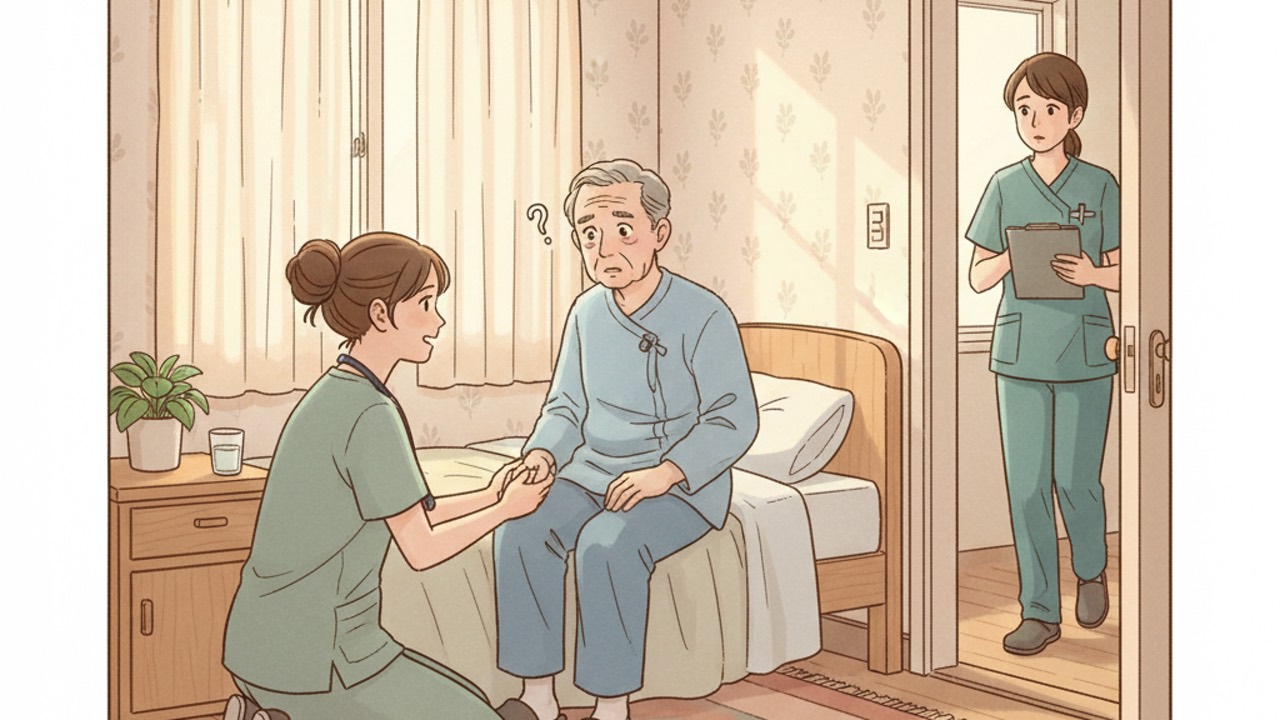
I was changing the trash out of Mr. R's room this morning (he is a new diabetic, finger-stick AC and HS, and his daughter brings him supplies). When I lifted the liner out of the can, there was a used lancet sitting right on top of the garbage. Not in a sharps container — in the trash. I double-bagged it and brought it straight to the nurse. She thanked me and said "good catch." But now I'm sitting in my car after shift freaking out. Was I exposed? Did I do the right thing? Should I have just left it? I'm a new grad and I don't know if I'm overreacting.
This post got 612 upvotes and 178 comments. It's one of the most common — and most under-discussed — safety situations in long-term care. Here's what's actually going on, what the right answer is, and the parts that even experienced CNAs get wrong.
Why this happens more than people admit
Sharps showing up in regular trash is not rare. It's not even uncommon. In a typical SNF or assisted-living facility, sharps end up in the wrong place for predictable reasons:
The resident or family is self-monitoring. Home-style glucose monitoring means lancets and pen needles are being generated at the bedside by people who are not trained in clinical disposal. They put the lancet in the nearest trash can because at home, that's what you do.
The bedside sharps container is missing, full, or inconvenient. Some rooms don't have one. Some have one but it's bolted to the wall and the resident can't reach it. Some are so over-stacked that dropping the sharp in the trash feels easier than opening the container.
The resident has cognitive impairment. Even with a sharps container two feet away, a resident with dementia may not be able to sequence "lancet → container." They just see "lancet → nearest opening."
The resident is afraid of the sharps container. Some residents, especially older ones, are genuinely frightened of the red plastic boxes. They would rather hide the lancet in a tissue than put it in the container.
In every case, the system failed before you walked into the room. Your job is to catch it. You did.
Was I exposed?
Almost certainly not, and here's why.
A lancet or insulin syringe that's been sitting in dry trash for hours — even overnight — has dried blood, if any, on the outside. Transmission of bloodborne pathogens requires a fresh, wet, visible blood exposure through a percutaneous injury (a stick) or a mucous membrane splash (eye, mouth, broken skin). Picking up a closed trash bag and double-bagging it is not an exposure. Emptying a trash can where a sharp was visible but you didn't touch the sharp is not an exposure.
An exposure would be: you reached into the trash with your bare hand and got stuck. You picked up the loose lancet directly. You had a cut on your hand and a sharp tore through the bag into the cut. Those are exposures.
If you didn't get stuck, you didn't have an exposure. If you did — or aren't sure — wash the area with soap and water, report to the nurse immediately, and complete the facility's exposure incident report. Don't wait. Post-exposure prophylaxis has a window.
The anxiety you feel after handling a sharp in trash is real and reasonable. Your brain is doing exactly what it's supposed to do — flag the situation as "this isn't supposed to be here." That doesn't mean harm happened. It means you noticed.
What the right answer actually is
Step by step, the correct sequence is:
1. Don't reach in with bare hands. Use gloves. If you have a cardboard dustpan, use it. The sharp may not be the only one in the bag.
2. Don't recap, bend, or break the sharp. That's how most needlestick injuries happen. Treat every sharp as contaminated and as sharp enough to go through a glove.
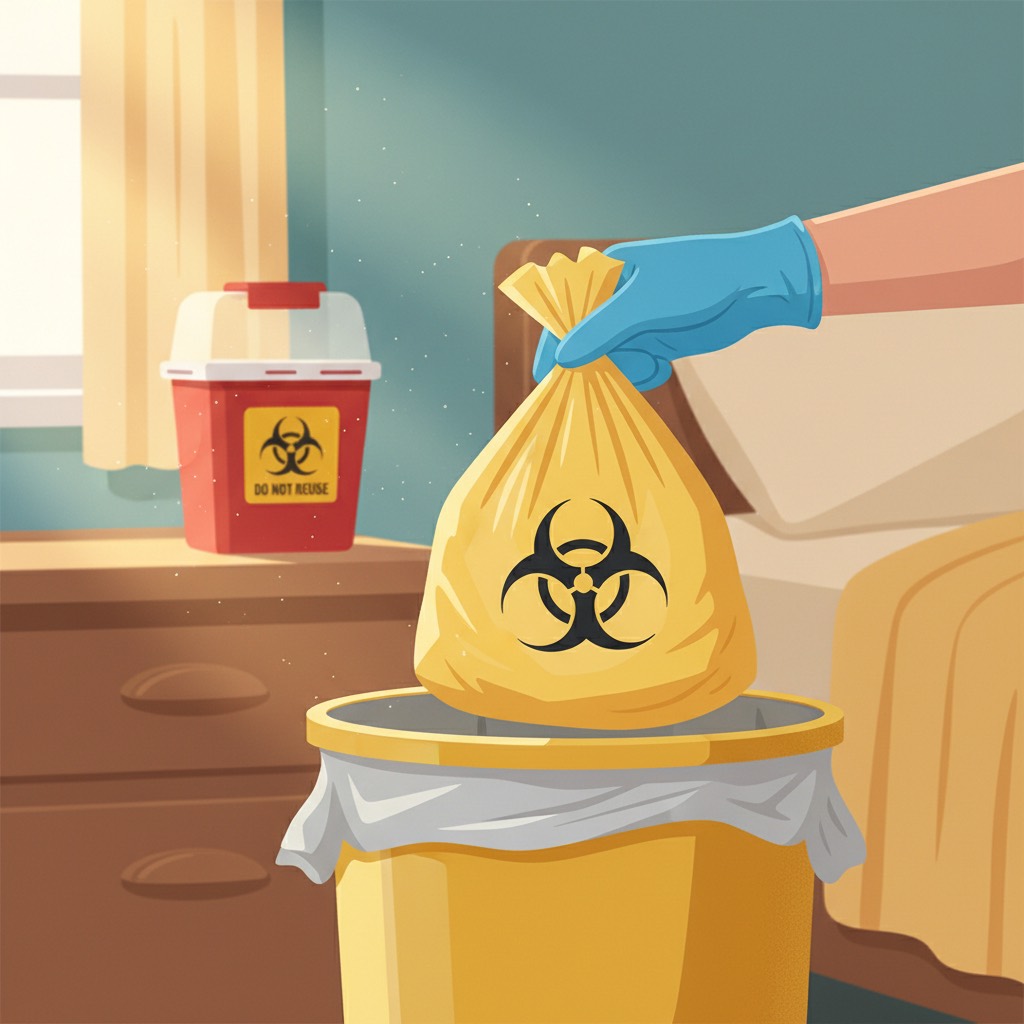
3. Double-bag it. Put the original bag inside a second bag. Tie both off. This protects anyone who handles the trash next.
4. Take it straight to the nurse. Not the next time you see her. Now. Say: "I found a used lancet in room X's trash. Where do you want it?"
5. Don't put it in the room's sharps container yourself. Even if the bedside container is right there, the nurse needs to know one was loose in the trash. The container being used doesn't fix the systemic problem that produced the loose sharp.
6. Document. A brief chart entry — "Found used lancet in resident's trash during linen/trash change. Brought to RN. No exposure to staff." This protects you and creates the paper trail that forces the facility to address the underlying issue.
7. Flag the system problem. If this is the second or third time you've found sharps in trash from this resident — or multiple residents — that's a facility-level issue. New residents with diabetes need a sharps container in their room on day one. Family education on disposal needs to happen at admission, not after a near-miss.
What NOT to do
These are the mistakes that show up over and over in the comments on this kind of post.
Don't shrug and take the trash out. "It's not my job to handle sharps" is technically true, but it doesn't make the loose sharp go away. The housekeeping staff who would have emptied that trash next has the same right to a safe workplace that you do.
Don't flush it. A used lancet is not a paper towel. Flushing sends sharps into plumbing systems that aren't designed for them and exposes maintenance staff. It also doesn't get the issue documented.
Don't confront the resident or family yourself. If you suspect the resident or their family member is improperly disposing, that's a nursing or management conversation, not a CNA conversation. You can note it. You can flag it to the nurse. You should not be the one delivering "hey, your dad is putting needles in the regular trash." That goes sideways fast.
Don't throw the loose sharp into the room container without telling anyone. This one feels efficient. It isn't. It hides the problem. The nurse can't update the care plan if she doesn't know there was a problem to begin with. The facility can't order more sharps containers or do family education if the data point disappears into a sharps container and no one writes it down.
Don't skip the exposure report even if you're "pretty sure" nothing happened. If you got stuck — even a little, even a scratch you can't quite see — report it. The window for post-exposure follow-up is real. "Pretty sure it's fine" is not a clinical decision you can make.
The bigger picture
A loose sharp in the trash is a near-miss. The point of the reporting and documentation isn't to make a federal case out of one lancet. It's to generate the data that prevents the next one from becoming a real stick injury. Facilities track these. Surveyors (state inspectors) track these. If your facility is generating near-misses without changing anything, that's the kind of pattern that shows up on a survey deficiency.
You didn't overreact. You did exactly what a CNA is supposed to do. You noticed, you protected yourself, you brought it to the nurse, and you double-bagged it. That's the whole job in that moment.
If your facility doesn't have sharps containers in diabetic resident rooms as a default, that's a systems problem worth raising. If your orientation didn't cover what to do when you find a loose sharp, that's a training gap worth raising. If your nurse rolled her eyes when you brought it in, that's a culture problem worth raising through your charge nurse or DON.
You did the right thing. The anxiety you're feeling now is your nervous system confirming that the situation was serious enough to notice. Let it settle, eat something, drink water, and go back tomorrow.
For more on the scope edges between what a CNA handles versus what goes to the nurse, the clinical skills section of ExamReady CNA walks through the critical steps for blood glucose monitoring — including what to do when something at the bedside doesn't look right.
If this kind of post is useful, ExamReady CNA has practice questions with kind explanations, clinical skills walkthroughs with critical steps flagged, and a study coach. Start your 7-day free trial. 7 days free, then $9.99/month. Cancel anytime.
A little every day
Practice questions with kind explanations, and 23 clinical skills walkthroughs with critical steps flagged.
Start your 7-day free trial7 days free, then $9.99/month. Cancel anytime.