 ExamReady CNA

Resident refuses thickened liquids: dehydration risk and what works
A real r/cna question about a dysphagia resident who pushes away thickened water and is tanking intake. What's actually happening and what to try before it becomes a hospital trip.
A CNA on r/cna posted this:
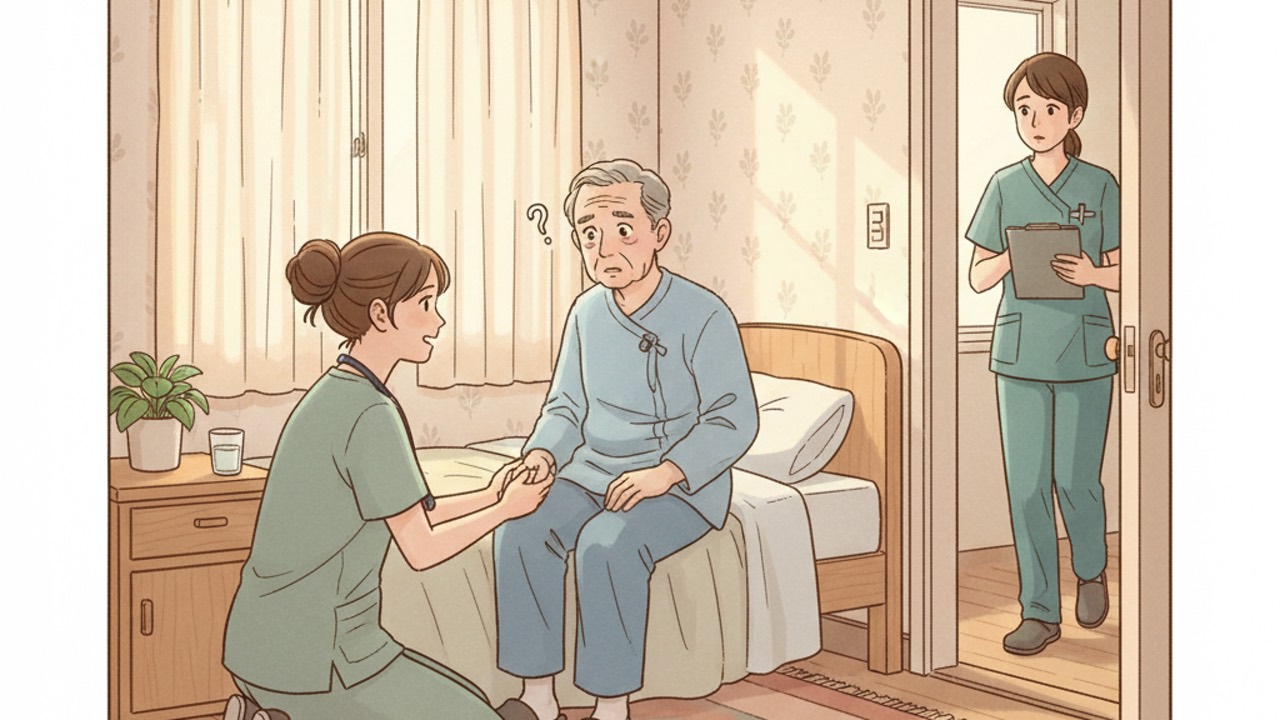
I have a resident on honey-thick liquids after a swallow study and he absolutely refuses to drink them. Says it "tastes like spit" and won't touch anything I bring him. He used to drink water all day long before the stroke. His intake has been terrible for three days. The nurse knows, said "just encourage him." I don't think he understands he's going to end up in the hospital again if he keeps this up. What am I missing?
This comes up constantly. Swallow studies come back, the SLP writes the order, the resident hates it, intake drops, the CNA is stuck between a doctor's order and a human being who won't drink. Here's what's actually going on.
Why thickened liquids are a problem, not just an inconvenience
Thickened liquids aren't a preference. They're prescribed because the resident aspirated — or came close — on thin liquids. The thickened consistency slows the swallow so the airway has time to close. Without them, the resident is one sip away from aspiration pneumonia, which is how a lot of SNF residents end up back in the hospital.
So when intake drops on thickened liquids, you have two competing risks: aspiration if you give thin liquids, and dehydration / UTI / AKI / delirium if the resident won't drink at all. Both are bad. Neither is solved by "encourage him."
Why residents refuse them
It's not stubbornness. A few things are usually stacked on top of each other:
Texture and mouthfeel. Honey-thick is genuinely unpleasant. It coats the mouth. It doesn't quench thirst the way water does. Residents describe it as slimy, chalky, like saliva. They're not wrong.
Loss of a basic pleasure. Drinking water is one of the last unsupervised, everyday pleasures a resident has. Taking away the way they drink feels like another piece of independence gone. Some residents grieve it.
Confusion about the reason. Especially post-stroke or with new dementia. They don't connect "this drink feels different" to "I almost died." To them, the thin water was fine.
Dry mouth and thirst. Thickened liquids don't relieve thirst well. The harder they try to drink, the worse it feels, so they stop trying.
Depression. A resident who gave up drinking is sometimes a resident who has given up on more than drinking. Watch for the other signs.
What actually helps
1. Honor the order. Don't bend it.
This is the part nobody wants to hear. You cannot give thin liquids because the resident prefers them or you feel bad. If you do, and the resident aspirates, that lands on you, the nurse, and the facility. The SLP order exists for a reason. Your job is to make the order livable.
2. Talk to the nurse about the intake drop.
"Just encourage him" stops being acceptable when intake is tanking for three days. The nurse needs to know the specific numbers — how much he's taken at breakfast, lunch, dinner, HS, between meals. If the nurse isn't tracking, you track. Document the mL consumed at every meal and report it. After 48 hours of poor intake, the nurse should be looping in the SLP and the provider. It is not your scope to change the order, but it is absolutely your scope to say "this isn't working."
3. Try the specific things the SLP can change.
There are options the team can pursue that you can ask about:
- Thickener brand. Some thicken more cleanly than others. Switching brands sometimes makes a real difference.
- Consistency. If he's on honey, ask whether nectar-thick would be safe. Nectar is thinner, drinks more like a real liquid, and many residents will accept it. The SLP has to re-evaluate first.
- Temperature. Ice-cold thickened water is more palatable to some residents than room-temp. Some prefer warm. Worth trying.
- Flavoring. Some thickeners mix better with flavored drinks — grape, apple, lemonade. Water is the hardest to thicken well. The SLP or dietary can advise.
- Timing. If he takes meds at 0700, offer a small thickened drink with the med. Don't wait until he's parched at 1030 to start the day.
4. Make it a routine, not a choice.
Residents with cognitive decline drink better when drinking is built into the day. Bring the thickened drink at the same times, in the same cup, in the same place. Don't ask "do you want a drink?" because the answer is often no. Say "here's your water" and set it within reach. Many residents will sip without being asked when the cup is just there.
6. Watch for the warning signs.
The line between "low intake" and "needs IV fluids" is shorter than people think. Tell the nurse right away if you see:
- Dark, concentrated urine or no urine for 8+ hours
- Dry lips, dry tongue, sunken eyes
- New confusion or sudden worsening of usual confusion
- Dizziness on standing
- Fewer wet briefs than usual
- No wet/moist mucous membranes in contact with thickened fluid
Any one of these is "tell the nurse today," not "mention it tomorrow."
7. Don't promise thin liquids as a reward.
"If you drink this, I'll let you have water" — that one sounds kind but is dangerous. You can't give thin water without an order change, and if you do, you've crossed a line that protects your license.
What NOT to do
- Don't thin the liquid yourself. Even if it looks the same. Even if the resident begs. Even if the family brings in a regular cup of water.
- Don't skip documenting low intake because "the nurse already knows." If it's not charted, it didn't happen — and that's a real legal risk for both of you.
- Don't give straight water with meds to make meds go down easier. If the meds are the issue, the nurse can ask pharmacy about thickening the med or crushing options.
- Don't take it personally when the resident refuses. It's not about you.
The bigger picture
Some residents never accept thickened liquids and end up with a PEG tube or hospice decisions. That's a team, family, and resident conversation — not yours. Your job is to do everything in your scope to make the thickened liquids tolerable, document intake accurately, and surface trends to the nurse quickly. If you do those three things consistently, you've done your job, even when intake is still bad.
If this kind of post is useful, ExamReady CNA has practice questions with kind explanations, clinical skills walkthroughs with critical steps flagged, and a study coach. Start your 7-day free trial. 7 days free, then $9.99/month. Cancel anytime.
A little every day
Practice questions with kind explanations, and 23 clinical skills walkthroughs with critical steps flagged.
Start your 7-day free trial7 days free, then $9.99/month. Cancel anytime.