Family member calls you after hours about a resident: what to do
A real r/cna scenario about a resident's daughter who got a CNAs personal number and now calls at 10pm. Where the line is, why it matters, and how to set it without burning the relationship.
A CNA on r/cna posted this:
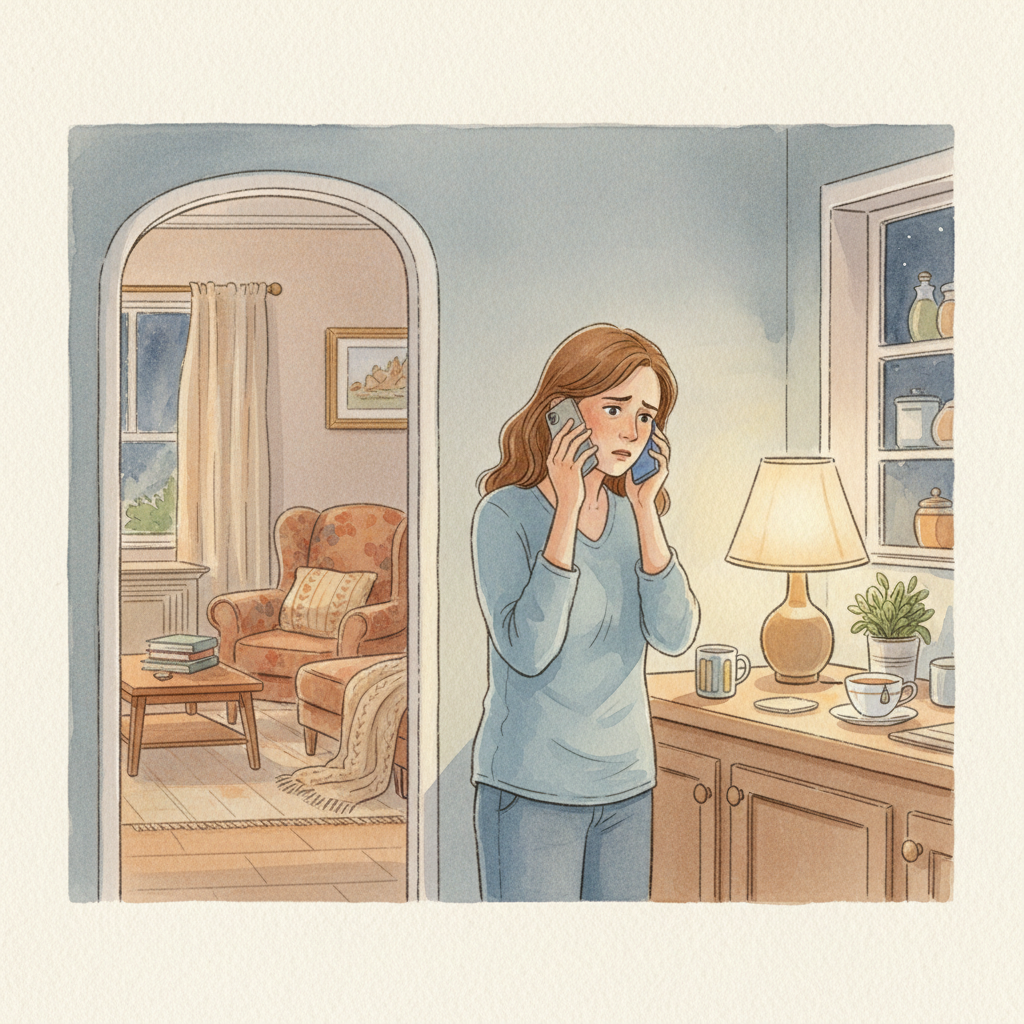
Last week a resident's daughter asked for my cell number because she said she "just had a few questions" about her mom. I gave it to her because I felt bad — her mom has dementia and I knew she was stressed. Now she texts me at 10pm, calls me at 11pm, asked me on my day off to "stop by on your way in" to check on something. I've gotten texts on three of my last four days off. I don't want to be rude, her mom is one of my favorites, but this is getting out of hand and I don't know how to back out of it.
This is one of the most common boundary problems in long-term care, and it almost never starts out feeling like a problem. It starts out as a kindness. Then the requests get bigger, the hours get later, and the CNA ends up carrying a part of the resident's care plan on her personal phone, in her own time, with no documentation, no pay, and no protection.
Here's where the line actually is, and how to set it without burning the relationship.
Why this happens
Family members of long-term care residents are often terrified. Their parent or spouse is in a building they can't see all the time, surrounded by staff who rush past them. They want a direct line to one specific person who seems to care, and once they find that person, they grip tight.
You're the one who's kind to their mom. You're the one who remembers her preferences. You're the one who explained, in human language, what happened at the care conference. You earned their trust the right way — by doing the job well. But once they have your phone number, the relationship has quietly shifted from professional to personal, and that's where the trouble begins.
Most of the time, the family member doesn't realize they've crossed a line. In their head, they're just calling "their mom's nurse" about "their mom." They don't see that you're at home, off the clock, feeding your own kid, and you'd like to not be on the phone about Mrs. Patterson's medication change right now.
Why you shouldn't keep doing it
There are three reasons, and they aren't all about your time.
First, HIPAA. Almost anything they ask you is technically protected health information. Even answering "yeah, she seemed comfortable today" from your kitchen table is a disclosure without authorization. Most facilities take this seriously. A breach can cost you your job and, in some states, your certification. The risk is small for any single call. It's not small across years of after-hours calls.
Second, you're not the right person. Even if you wanted to answer, you don't have access to the chart from home, you don't know what's changed since your last shift, and you can't speak for the nurse or the doctor. If you say "she's fine" and then she's transferred to the hospital that night, the family now has your name attached to a statement you couldn't actually stand behind. That goes wrong in ugly ways.
Third, it doesn't actually help them. The daughter's anxiety isn't really about one update. It's about not having a structured way to get information. You texting her once at 10pm doesn't fix the underlying problem — it just delays the next anxious call by a few days. Setting a real channel is what actually calms the worry long term.
What to do — the script
You don't need to be rude. You need to be clear, kind, and concrete. Something like this:
"I want to make sure your mom has the best care, and I love taking care of her. I'm not able to give out updates on my personal phone — that's a facility policy and it's also to protect your mom's privacy. The best way to get information is to call the unit desk during the day, or set up a time with her nurse for a weekly call. If something is urgent and you can't reach the unit, the after-hours line is on the back of the brochure they gave you at admission."
You can say this in person, by phone, or in a text. The medium doesn't matter; the words do. Three things are happening in those words:
- You're not rejecting the person. You're redirecting them.
- You're naming a real reason (privacy, policy) so it's not just your preference.
- You're giving them a working alternative. People accept "no" much better when there's a "yes, here's the right door."
If they push back — and some will, especially the first time — you don't have to argue. You can repeat yourself. "I really can't, but here's the desk number. Ask for [name]." Repeat as needed. Politeness burns out. Repetition works.
What if they refuse to stop?
A few options, in roughly this order.
Set the contact on Do Not Disturb. Let it go to voicemail. If they leave a voicemail, you do not have to call back.
Tell your charge nurse. Not to "get them in trouble" — to make the charge nurse aware that there's a communication gap the family is trying to fill the wrong way. Often the facility will assign the family a primary contact, set up a weekly call with the nurse, or update the care plan. This is what the family actually needed; you were a workaround.
If it continues after that, you can change your number. Awkward, but a clean break is better than years of after-hours calls. You don't owe anyone an explanation beyond "I'm not available on my cell."
The exception
There's one situation where the rules relax: end-of-life.
If a resident is actively dying and family is trying to reach you because they can't reach the facility, that's different. Most CNAs will pick up that call. Most facilities understand it. If that's where you are, your judgment is the right tool. The boundary isn't a wall — it's a default, and end-of-life is a legitimate reason to flex the default.
If you do take that after-hours call, keep the conversation short and stick to what you directly observed. "She was comfortable when I left" is yours to say. "I think she's close" is a nurse's or doctor's call.
What NOT to do
Don't ghost. If you suddenly stop replying with no explanation, the family reads it as the facility hiding something. They'll escalate to the DON, who will then ask you what happened. A 30-second "here's why I can't" is far easier to defend than silence.
Don't trade off for future shifts. "Sure, you can call, but only on my days off" sounds like a compromise. It isn't. It just trains them that your days off are fair game.
Don't do an end-run through a coworker. "Talk to Jane, she doesn't mind" passes the problem to someone who didn't agree to it. If Jane wants to take the calls, that's her call to make, not yours to broker.
Don't tell them medical information even to be helpful. "Her blood pressure looked fine when I left" feels innocuous. It isn't. It's a verbal disclosure, off the clock, undocumented, and it's the kind of thing that ends a career at the wrong audit.
The bigger picture
Setting this boundary isn't mean. The daughter isn't the enemy. But the longer the open-phone channel goes on, the more it costs you and the less it actually helps her. The right move almost always makes things better for both of you within a week or two.
If you're studying for the CNA exam or you're already on the floor and want a refresher on the scope-of-practice lines around information sharing, the study guides walk through what you can and can't say, and where the privacy line actually is.
If this kind of post is useful, the full ExamReady library has 1,500+ practice questions, clinical skills with critical-step tracking, and an AI tutor that explains every answer — the same scope-and-voice approach as these posts, with the actual exam tools attached. A 7-day free trial gets you the whole thing, no card required.