Found a pill on the floor: what to do when you suspect a med error
A real r/cna question about a pill found on the floor next to a resident's bed after the nurse passed meds. What CNAs should actually do in that moment, and what never to do.
A CNA on r/cna posted this:
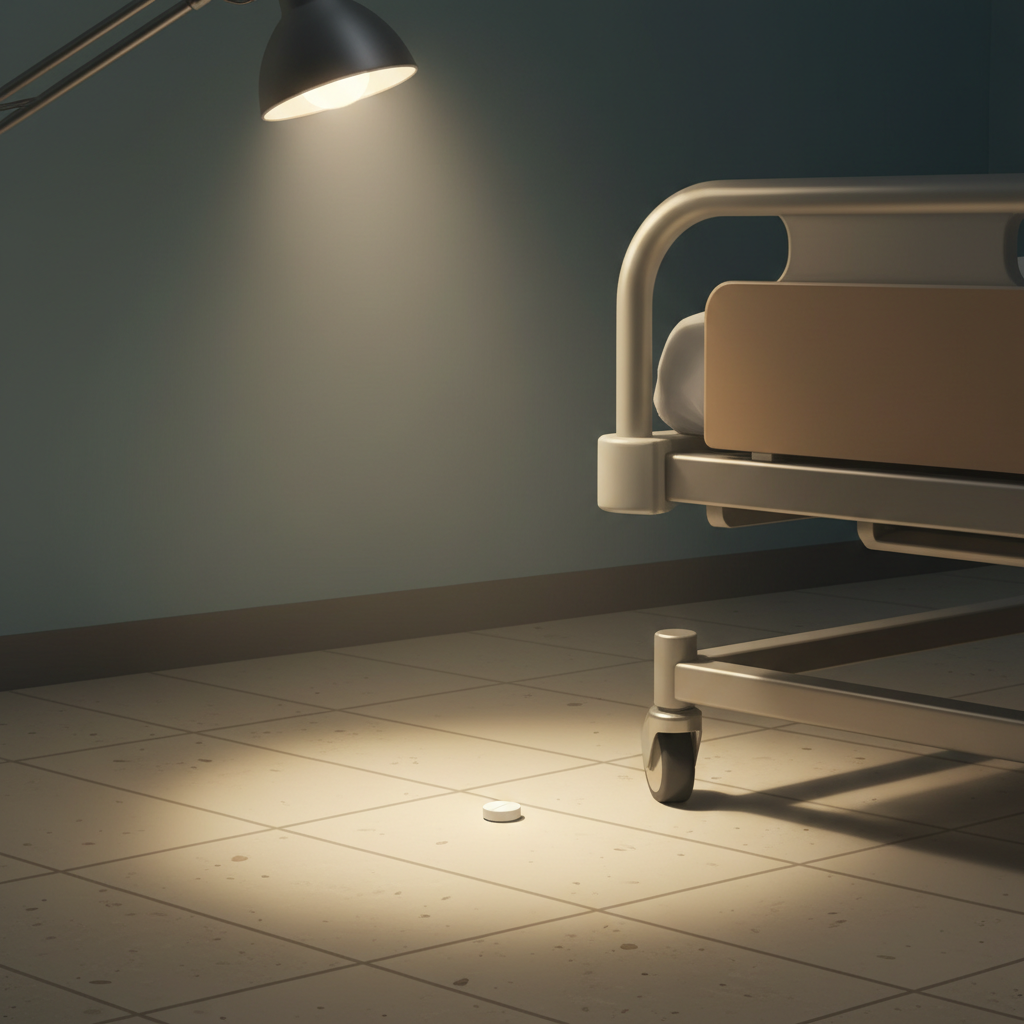
I was making rounds about an hour after the nurse passed meds and found a pill on the floor next to Mr. J's bed. It looked like it had been there a while — kind of dusty. I picked it up and brought it to the nurse. She got really quiet, said "thanks," took it, and walked away. I have no idea if Mr. J got his dose. I don't know if I should have done something different. Nobody said a word the rest of the shift. Is this going to come back on me?
This kind of moment is one of the scariest parts of CNA work. You find evidence of something that might have gone wrong with a resident's medication. The nurse's reaction is hard to read. Nobody is saying anything. You go home wondering whether you made things worse by reporting it, or whether you made things worse by saying anything at all.
Here's what's actually going on and what to do.
First: do not try to figure out what the pill is
The instinct is to look at the pill, read the imprint, try to identify it, and decide whether it matters. Don't. CNAs do not administer medications. CNAs are not trained to identify medications by appearance, and even if you happen to know what a pill is, identifying it does not tell you whether Mr. J got his dose, missed his dose, or got double-dosed. There is no version of this where you figuring it out yourself is helpful.
What you do know is that there is a pill on the floor that wasn't there before meds were passed. That is information. The nurse is the one who knows the orders, the timing, and what was supposed to be given.
What to do, step by step
1. Don't flush it, don't throw it away, don't put it back in the cup. Bring it to the nurse intact, in whatever you picked it up with — a tissue, a paper towel, a gloved hand. The nurse or pharmacist may need to identify it as part of the investigation. If you have already disposed of it, that evidence is gone.
2. Tell the nurse directly, in private. "Hey, I just found this pill on the floor next to Mr. J's bed. I wanted you to know before I said anything to anyone else." This frames it as a heads-up, not an accusation. Most nurses will take that professionally. The ones who don't are telling you something about the culture, not about you.
3. Stay factual. "I found a pill on the floor at [time]. It looked like it had been there a while. I brought it straight to you." That's it. Don't speculate about what happened. Don't say "I think someone forgot to give it." Don't say "I think Mr. J spit it out." You don't know. Let the nurse investigate.
4. Watch what happens next. A good nurse will check the MAR, assess the resident, notify the charge nurse or the doctor if needed, and document the event. A good facility has an incident report process for exactly this. If the nurse takes the pill, says nothing, and you never hear about it again, that's a red flag — but it's a red flag about the facility, not about you. You did your part by reporting it.
5. Document your own action. In your shift notes, write what you observed and what you did: time you found it, what you did with it, who you gave it to. Phrase it neutrally. "Pill found on floor next to bed at 1430. Handed to RN [name]." That's enough. You're not diagnosing, you're not accusing, you're recording what happened.
What NOT to do
Don't ask the resident. "Hey Mr. J, did you take your pill? Did you spit it out?" This is the most common mistake. Even with the best intentions, you are putting a resident in a position of answering questions about something they may not remember, may not understand, or may answer wrong out of confusion or embarrassment. Their answer will not be reliable, and you are not qualified to act on it either way.
Don't confront the nurse in front of other staff. Even if you think you know what happened, "Hey, did you forget to give Mr. J his meds?" in front of the hallway is a career-ending move and will not help Mr. J get better care. Take it to the nurse one-on-one, then escalate to the charge nurse if nothing happens.
Don't talk to the resident's family about it. Not yet, not until the care team has sorted out what actually happened. Family members hearing "a pill was found on the floor next to Dad's bed" before the facility has a chance to investigate is going to create a different kind of problem, and you do not have enough information to answer their questions.
Don't post about it on social media. Even vaguely. Even "you won't believe what happened at work today." This is a HIPAA issue and a job-security issue in one. Do not do it.
Don't try to cover for the nurse if you think she made a mistake. If you found the pill, reported it, and the nurse brushed it off, the right next step is to escalate to the charge nurse or the DON — not to stay quiet to protect her. You are protecting the resident by reporting, not by staying quiet.
Why this moment feels so loaded
CNA work is full of moments where you find evidence of something that isn't your job but is your problem. A pill on the floor. A wet bed that was supposed to be dry. A meal tray still full at 11 a.m. A bruise you didn't notice before. None of these are yours to fix — but every one of them is something you noticed, and once you've noticed it, you can't un-notice it.
The culture in a lot of facilities makes this worse. If nurses snap at CNAs who report problems, if the response to "I found this pill on the floor" is cold silence, CNAs learn to keep their heads down. That is the worst possible outcome. The residents are the ones who pay for it.
You are not going to get fired for reporting a pill on the floor. You might get snapped at. You might get the cold-shoulder treatment. But the right thing for the resident is for you to report, and the right thing for your own peace of mind is to document that you reported.
The bigger picture
If you find pills on the floor more than once, that's not a one-off. That's a pattern, and patterns are how facilities get better or stay bad. Document each one with time, location, and what you did with it. If the same nurse is involved in repeated incidents, that's information the charge nurse and DON need.
A facility that handles this well will investigate, document, talk to the nurse, and follow up with you. A facility that handles this badly will tell you to drop it. The first kind of facility is one you can grow in. The second kind is one where you do your time, learn what you can, and move on when you can.
You didn't make the pill land on the floor. You didn't make the error if there was one. You found it, you reported it, you documented it. That's the job, done right.
If this kind of post is useful, the full ExamReady library has 1,500+ practice questions, clinical skills with critical-step tracking, and an AI tutor that explains every answer — the same scope-and-voice approach as these posts, with the actual exam tools attached. A 7-day free trial gets you the whole thing, no card required.