Resident asks if you're married or have kids: how to answer without over-sharing
A real r/cna question about residents asking personal questions — married, kids, religion, politics, age — and how to set a kind boundary without making the resident feel shut out.
A CNA on r/cna posted this:
I'm a 24-year-old CNA and almost every single one of my residents asks me if I'm married, if I have kids, why not, what church I go to, who I voted for. Some of them push past the first answer and keep digging. I don't want to be rude — these are lonely people and I get that conversation matters — but I'm exhausted from explaining my life choices to people I'm trying to toilet. How do other CNAs handle this?
This post hit a nerve. It's one of the most upvoted questions in the sub every month. Here's what's actually going on and what tends to work without burning bridges.
Why they ask
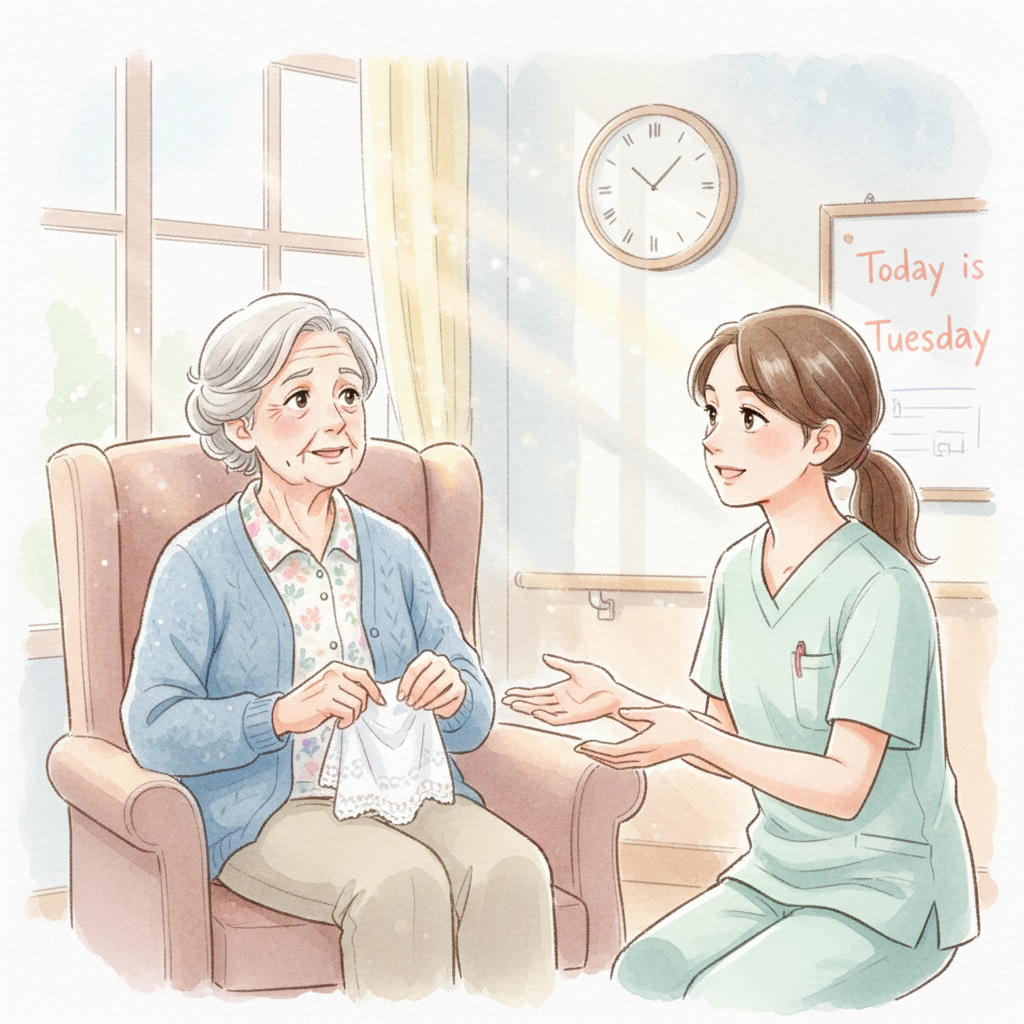
Residents ask personal questions for the same reason they hit the call light every three minutes — they want connection. Long-term care is a lonely place. Many residents have lost spouses, friends, mobility, independence. The CNA walking in the door is one of the few humans they see today who isn't rushing through a med pass.
Most of the time, the question isn't really about your marital status. It's an opener. It's the same thing a coworker would do at a new job — "so, what do you do outside of here?" — except the resident can't go to the break room and ask you over coffee. They ask while you're brushing their teeth.
A few other things are layered in:
- Boredom. Some residents have very little to talk about and the questions are filler.
- Cultural habit. For people from certain generations and regions, asking about marriage and kids is how you show interest. It's not prying — it's warmth.
- Trying to find common ground. "Are you married?" often leads to "oh, my husband was a plumber too!" That comparison is the goal.
- Dementia. Some residents genuinely can't remember they asked, or the question is a script they run on every new face.
Knowing which one you're dealing with changes how you respond.
What doesn't work
Lying is the default most CNAs fall into, and it has real downsides.
"I'm married with three kids" — and then a week later they ask why your husband never visits. Now you're maintaining a fake life on top of an eight-hour shift. Or you say "I have no kids" and they spend the next week pitying you and trying to set you up with their grandson.
The full shutdown backfires too. "I'd rather not talk about that" said flatly makes a lonely person feel rejected, and they'll either escalate ("why not?") or stop trusting you. You need them to trust you to do your job.
Over-sharing isn't the answer either. Telling residents about your divorce, your financial stress, your dating life — it feels intimate in the moment, but it changes the relationship. You're not their friend. You're their caregiver. That line matters because it protects you when things go wrong, and it protects them from depending on someone who isn't staying.
What tends to work
1. The short, kind, deflect.
"Yes, I'm married" or "no, not yet" — one sentence, warm tone. Then pivot to them. "How about you, how long were you married?" That gives them the conversation they wanted without giving them your data.
The pivot is the move. Most residents want to talk, not interrogate. Give them a place to land.
2. The "general but warm" answer.
If the question is about kids and you don't want to say yes or no: "I don't have kids of my own but I have a nephew I spoil rotten." That's true, deflects, and lets them talk about their grandchildren, which is what they actually wanted.
If the question is about religion or politics, the answer is even more general. "I grew up [faith] but I'm not really practicing these days" — true for a huge number of people, and it sidesteps the whole thing.
3. The kind redirect for repeated asking.
Some residents — especially those with dementia — ask the same question every visit. Repeating the same answer is fine. But if it gets to be five times in one shift, a gentle redirect works: "you already asked me that today, and I really enjoyed hearing about your granddaughter again." It's warm, it's accurate, and it gives them back their own material to talk about.
4. The polite boundary when pushed.
If a resident keeps digging after one short answer — "well why aren't you married, a nice girl like you" — you can be kind and firm.
"I appreciate that, really. I'm pretty private about my personal life, but I'd love to hear more about your family."
Said warmly, once, this works almost every time. Said twice in a row, it usually works. Said a third time, you're allowed to disengage — finish the care, say you'll see them tomorrow, leave. You're not being rude. You're enforcing a boundary that's reasonable.
5. The "I'll think about it" deflection.
For questions you really don't want to answer: "you know, I haven't really thought about that lately. I'll get back to you." Then you don't get back to them. By the next visit they've forgotten.
What NOT to do
- Don't share your real phone number, social media, or personal email. Even if you feel close to a resident. It almost always backfires.
- Don't tell residents about your financial problems, your health issues, your relationship drama. You're the caregiver, not the patient. The role asymmetry matters.
- Don't make promises you can't keep. "I'll come back and visit you" — don't, unless you mean it and your facility allows it.
- Don't get pulled into politics or religion arguments. "I hear you" is a complete sentence. Then redirect to care.
- Don't take it personally when a resident with dementia asks the same question twenty times. It's not about you. It's about a brain that doesn't have much else to grab onto.
What to document
You don't need to document every personal question. But you should document:
- Any question or comment that felt like a boundary violation (a resident asking about your body, your sex life, your race in a hostile way)
- Any time a resident became aggressive or fixated after you set a boundary
- Any pattern that suggests the resident is treating you differently than other staff (which can be a red flag for inappropriate attachment)
Bring those to the charge nurse. The pattern matters more than any single question.
The bigger picture
Residents are going to ask you personal questions. It's part of the job, especially in long-term care, and especially if you're young, female, or new. You can either burn out trying to be everyone's best friend, or you can get comfortable with a kind, short, deflecting style that protects your privacy and still gives the resident what they actually need — which is a human who is paying attention to them.
You can be warm without being exposed. You can be kind without being a confidant. The CNAs who last in this work are the ones who learn that line early.
If you're studying for the CNA exam and want practice with the kind of communication scenarios you'll actually face on the job, the communication and patient-interaction section of the ExamReady library walks through these situations in exam-style questions.
If this kind of post is useful, the full ExamReady library has 1,500+ practice questions, clinical skills with critical-step tracking, and an AI tutor that explains every answer — the same scope-and-voice approach as these posts, with the actual exam tools attached. A 7-day free trial gets you the whole thing, no card required.