 ExamReady CNA

Resident asks you to pray with them: what CNAs should and shouldn't do
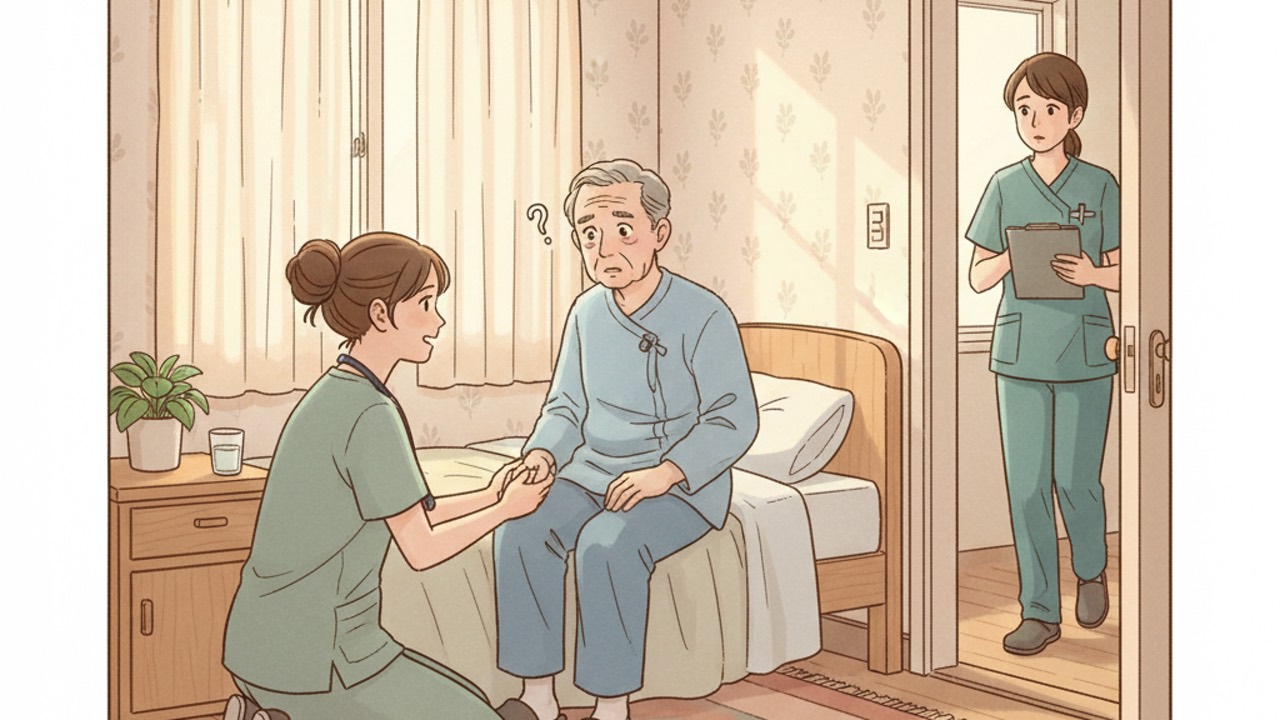
A dying resident asks you to pray with them. You're not religious, or you're a different religion, or you just don't know what to say. What's the right move at the bedside?
A CNA on r/cna posted this:
Had a resident on hospice who asked me to pray with her. I am not religious at all, like zero, and I completely froze. I just stood there for what felt like forever and said "I don't really know how." She started crying and I felt awful. Did I do the wrong thing? I didn't want to lie and say something I didn't believe but I also didn't want to make her feel alone in that moment. I've been thinking about it for days.
This post got 412 upvotes and 189 comments. It's one of those situations CNAs are never trained for, that comes up regularly, and where the wrong instinct can hurt someone who's already hurting. Here's how to handle it.
What the resident is actually asking for
A dying or seriously ill resident asking you to pray with them is almost never asking about your theology. They're asking for presence. They're scared. They're facing the end of their life. The prayer is a container for a feeling — a wish to not be alone with it.
The fact that they chose you, their CNA, instead of the chaplain or the pastor down the hall, is the most important part. You're the person who wipes their face, who holds their hand during turns, who has been at the bedside more than anyone. They trust you with this. They're not testing your faith. They're asking for you.
This reframing changes what "doing it right" means. You're not being asked to perform a religion. You're being asked to be with them in a vulnerable moment.
What to do when it happens
1. Stay. Don't leave to "find someone."
The instinct is to say "let me get the chaplain" and bolt. By the time you come back, the moment has passed. They're alone again, possibly feeling like they scared you off. Stay in the room.
2. It's okay to say you don't know the words.
What the CNA in the post said — "I don't really know how" — was not the disaster she thought it was. It was honest, and honesty is fine. What made it land badly was that she stopped there. The fix is to follow it with something that keeps you present.
Try: "I don't know the right words for a prayer, but I'd be happy to sit with you while you say one, or just hold your hand while you're quiet." That works. It says: I'm not going anywhere, I just don't have the script.
3. Use their words, not yours.
If the resident starts praying out loud, you don't have to match. You can hold their hand, close your eyes, bow your head. That is participation. You're not faking belief — you're honoring theirs.
If the resident asks you to lead and you genuinely can't, try: "Why don't you say it, and I'll say 'amen' at the end." It's a small thing but it gives them permission to start without putting the whole thing on you.
4. If you are religious, keep it short and resident-centered.
Don't preach. Don't ask them to accept Jesus. Don't use the prayer as a vehicle for your theology. A short, generic, loving prayer — "thank you for this day, please watch over [name], please give her comfort" — is what they want. Even devout chaplains keep bedside prayers brief. The point is presence, not a sermon.
5. The non-religious version.
If you're not religious at all and want an alternative to a traditional prayer, you can offer a moment of quiet reflection. "Let's just sit quietly together for a minute" is a real thing. So is reading a favorite psalm or poem the resident likes, even if it's not your tradition. You're providing a container, not a creed.
What NOT to do
This is where CNAs actually get into trouble. The wrong moves:
-
Don't proselytize back. If you're Christian and they're Jewish, or you're Muslim and they're Hindu, do not use the moment to share your faith. Even if you mean well. Even if you "just want them to know Jesus before they go." The bedside is not your pulpit. It is theirs.
-
Don't refuse to engage and walk out. Saying "I'm not religious, I'll get the nurse" and leaving is worse than saying nothing. The resident will read it as rejection. Stay.
-
Don't make it about your beliefs. "Well, I'm actually not a believer, but…" is a conversation about you, not them. The moment belongs to the resident. If your faith or non-faith needs a voice, save it for after shift, in the break room, with your coworkers.
-
Don't promise things you can't deliver. "You're going to be fine" / "God has a plan" / "You'll be walking again next month" — don't. You're not the doctor, you're not a prophet, and false reassurance is a specific kind of cruelty at the end of life. If you don't know what to say, "I don't know what to say, but I'm here" is enough.
-
Don't gossip about it later. A resident's faith, or their request to pray, is private. Don't tell the next shift "Mrs. Johnson is super religious, it was kind of awkward." Don't bring it up at the dinner table. Treat it with the same confidentiality as anything else in their care.
The facility angle
Some facilities have clear policies about spiritual care. Most delegate it to chaplains, social work, or the resident's own clergy. You're almost certainly allowed — and often expected — to be present and quiet, and to hold a hand. You are not usually authorized to lead prayer in any official capacity, especially if it could be perceived as proselytizing. If you're unsure, ask your charge nurse or your DON what your facility's policy is. It's a 30-second question that protects you.
If the resident asks and you really cannot stay — you have three other call lights, you're behind on rounds — say so honestly: "I have to go help someone right now, but I'll come back in 20 minutes and we can do that then. Is that okay?" Most residents will say yes. A promise to come back, kept, is almost as good as staying.
What to take from this
You are going to be asked to pray with residents. Probably more than once, especially if you work long-term care, hospice, or memory care. The residents who ask are almost always the ones who don't have family nearby, or whose family has stopped visiting, or who are facing the end. They are not asking for a theologian. They are asking for the person who has been kind to them all day.
You don't have to be religious. You don't have to have the words. You have to stay in the room, and you have to be honest about what you can offer. That's it. Most of the time, that's enough.
If this kind of post is useful, ExamReady CNA has practice questions with kind explanations, clinical skills walkthroughs with critical steps flagged, and a study coach. Start your 7-day free trial. 7 days free, then $9.99/month. Cancel anytime.
A little every day
Practice questions with kind explanations, and 23 clinical skills walkthroughs with critical steps flagged.
Start your 7-day free trial7 days free, then $9.99/month. Cancel anytime.