 ExamReady CNA
Resident complains of pain but meds aren't working: your role as a CNA
A real r/cna scenario about a post-op resident whose pain medication isn't touching the pain. What a CNA can and can't do, when to call the nurse, and how to document so the team can fix it.
A CNA on r/cna posted this:
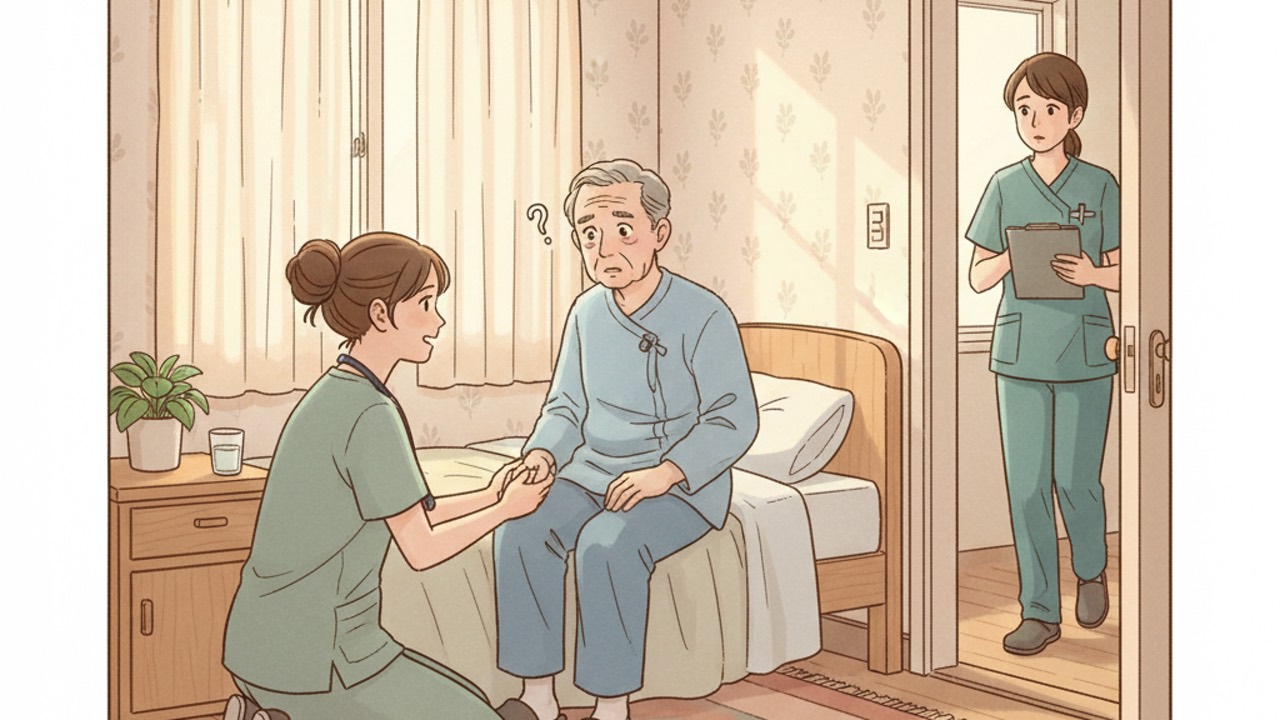
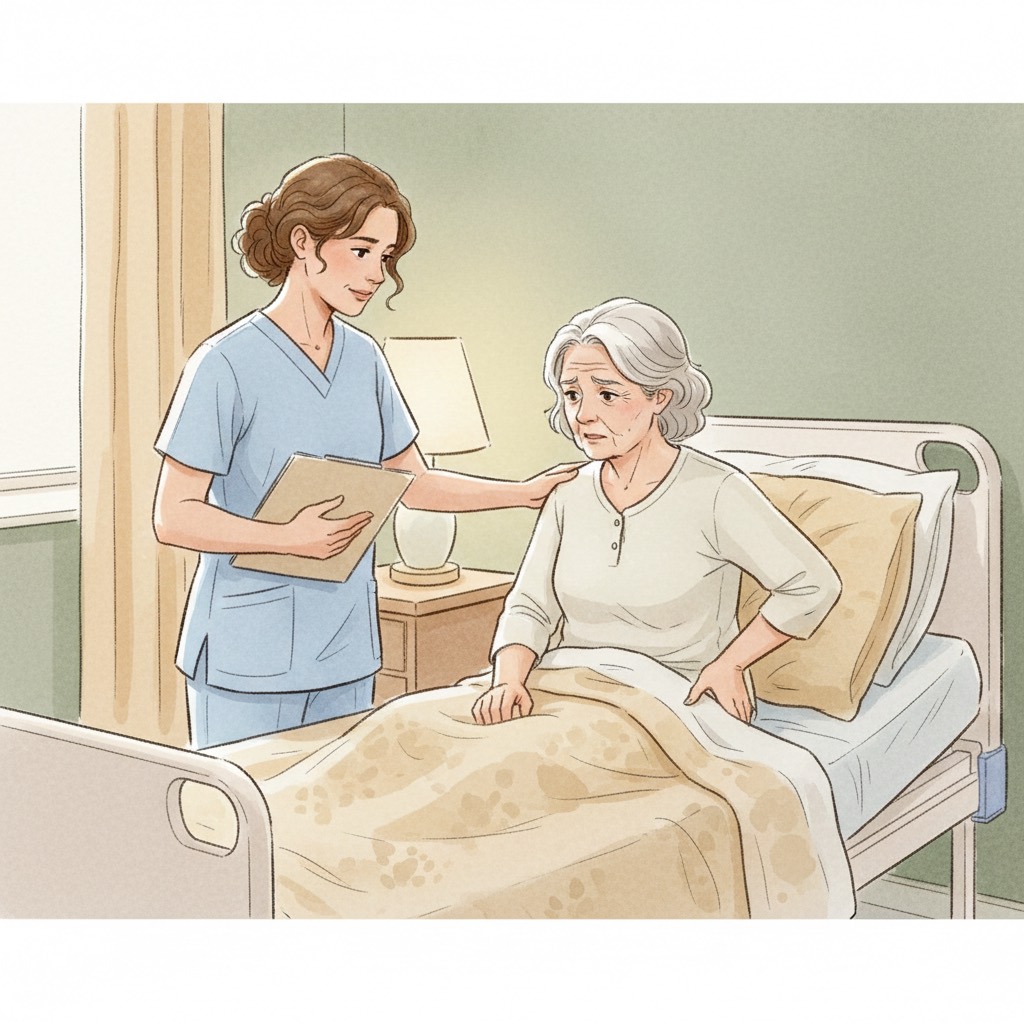
I work on a rehab unit and I have a resident who is two weeks out from a hip replacement. She is constantly telling me her pain is a 9 out of 10. She just had her pain med 45 minutes ago and she's saying it's not touching it. She is crying during repositioning, she's refusing therapy because she says it hurts too much, and she's barely eating because she's in too much pain to sit up. I have told the nurse three times today already and the nurse just said "okay" both times and walked away. I don't know what to do. I'm not supposed to give meds but she's clearly suffering. What am I missing?
This is one of the most frustrating situations in long-term and post-acute care. A resident is in real pain, you've said the words, and the response from above doesn't match the urgency you can see with your own eyes. It feels like you are standing between a person who is suffering and a system that isn't moving.
Here is what you can actually do, what is not your job, and how to make sure your report gets acted on.
Why this happens
A few things are usually true at the same time when a CNA is reporting pain and nothing seems to change:
The nurse has more residents than you do. A rehab floor might run with two nurses for thirty residents. Your one resident in pain is one of many things on that nurse's list. A flat "okay" does not always mean "I don't care." It sometimes means "I heard you, I'm triaging, I have not forgotten." It should not mean that. But it does.
The pain medication may genuinely be the wrong one or the wrong dose. Post-op pain control is hard. Some residents are on a schedule, some on PRN (as-needed). Some are on Tylenol when they need something stronger. Some are on a strong med with a six-hour window when their pain spikes every four. The nurse may know this. The provider may not have been called yet.
Pain is invisible on the chart. When you tell the nurse "she says her pain is a 9," that is a one-time data point. When the nurse sees a chart with "9/10 pain, refused therapy, declined lunch, crying during repositioning" entered at 10:15, 12:30, 2:45, and 4:00, the picture changes. The chart makes pain visible in a way a verbal report sometimes does not.
You may be the first person who has asked the resident to localize it. "Where does it hurt?" is not a question residents always answer without prompting. They say "everywhere" or "I don't know." The nurse's assessment depends partly on the data you bring.
What you can do without crossing scope
CNAs do not give medications. That is the line, and you do not cross it. But there is a lot of room on the correct side of that line.
1. Do a focused pain assessment. You are not diagnosing. You are gathering information the nurse needs.
- Ask the resident to point to where it hurts. Hip? Groin? Down the leg? Back?
- Ask when it started and whether it is constant or comes and goes.
- Ask what makes it worse (movement, weight-bearing, repositioning, lying flat).
- Ask what makes it better (ice, position, distraction, being still).
- Ask them to rate it on a scale of 0 to 10, both at rest and with movement.
- Ask whether it feels different from yesterday.
Write this down. Hand it to the nurse, do not just say it.
2. Use the non-pharm comfort measures that are within your scope. These do not replace medication, but they are not nothing.
- Reposition with a pillow between the knees for hip pain. Even a small position change can drop a pain score by a point or two.
- Offer ice if the resident has an order for it and the site is appropriate. A lot of post-op hip residents have an ice order that gets forgotten.
- Slow down during care. The two minutes you save by rushing a pivot transfer is the two minutes the resident is bracing for the next one.
- Cluster care so the resident has longer stretches of rest between being moved.
- Offer a warm blanket, fresh water, a clean brief. Pain is worse when you are cold, thirsty, and wet. Fix the things you can fix.
- Reduce stimulation: lower the TV, close the door, ask the roommate to keep voices down. Pain and noise feed each other.
3. Document what you see, every time. This is the single most important thing in this whole post.
- Time of the complaint
- Pain rating (at rest and with movement)
- Location, character, what makes it worse, what makes it better
- What you did (repositioned, offered ice, called nurse at 14:32)
- The resident's response to your interventions
- Time you reported to the nurse and the nurse's name
You will feel like you are writing the same thing every two hours. That is the point. Repetition is what makes a pattern visible to the provider who has never met this resident.
4. Call the nurse again, and name the pattern. A second or third "she says her pain is a 9" report can get lost. A report that says "she has rated her pain a 9 or higher at every interaction since 10 am, she refused therapy this afternoon, she ate less than 25% of lunch, I have repositioned her twice and offered ice and neither has helped, I am worried" is hard to set down.
What to do when the nurse still doesn't act
This is the hard part. You have reported, you have documented, the nurse has not escalated or has not changed the plan. What now?
Tell the nurse you are going to follow up. "I just want to make sure I understand the plan — are we waiting on something from the provider, or is there anything else you need from me?" This is professional, it puts the question in writing later if you document it, and it forces the nurse to either act or say "no, we're good."
Go up the chain if you have to. Charge nurse, then, then the unit manager or DON. You are not "going over the nurse's head." You are reporting an unresolved clinical concern to the next person in the chain. That is what they are there for.
Call the provider only if your facility allows it and you cannot reach anyone else. Most facilities do not. But if you are alone on a unit, the nurse is unavailable, and the resident is in distress, follow your facility's chain-of-command policy. It exists for this.
Trust what you see. If a resident is crying during repositioning, refusing meals, and declining therapy because of pain, that is not "just complaining." That is a person who is not getting adequate pain control. You do not need to diagnose the cause to act on what you are seeing.
What NOT to do
Do not give the medication yourself. Even if you know where it is. Even if the nurse says "just go ahead." Even if the resident begs. You cannot administer medications. If you do, you have committed a board-of-nursing-reportable act and you have made the next CNA's job harder.
Do not tell the resident "the nurse is coming" if you have not just spoken to the nurse. A false promise is the fastest way to lose the trust of a resident in pain. If you have not been able to reach the nurse, say so: "I am going to try the nurse one more time. If I cannot reach her in the next few minutes I am going to find her in person."
Do not minimize. "You're okay," "It's not that bad," "Try to relax" — none of this is helpful. Pain that a person is pointing at is real pain. Your job is to validate the report and act on it.
Do not let the resident's age or condition change your threshold. "She's 89, of course she hurts" is not a clinical assessment. A 9 out of 10 is a 9 out of 10.
Do not document "resident complains of pain" and nothing else. "Complains of pain" tells the next reader nothing. Document the rating, the location, what you did, and the response.
The bigger picture
Under-treated pain in a post-acute setting is one of the most common reasons rehospitalizations read, and it is one of the most fixable. Most of the time, the answer is a medication adjustment, a non-opioid adjunct like scheduled Tylenol, an ice protocol that actually gets done, or a therapy plan that is more realistic to the resident's pain pattern. None of that happens without data, and the data starts with you.
You are not the prescriber. You are the person who is in the room eight times a day. That makes you the most reliable source the team has on what this resident's pain actually looks like. Take the data seriously. Write it down. Say it out loud. Keep saying it until the plan changes.
If this kind of post is useful, ExamReady CNA has practice questions with kind explanations, clinical skills walkthroughs with critical steps flagged, and a study coach. Start your 7-day free trial. 7 days free, then $9.99/month. Cancel anytime.
A little every day
Practice questions with kind explanations, and 23 clinical skills walkthroughs with critical steps flagged.
Start your 7-day free trial7 days free, then $9.99/month. Cancel anytime.