Resident falsely accuses you of abuse or theft: how to protect yourself
A real r/cna question about a dementia resident who told family the CNA stole from her and hit her. What to do in the moment, what to document, and how to keep your name clear when the accusation is wrong.
A CNA on r/cna posted this:
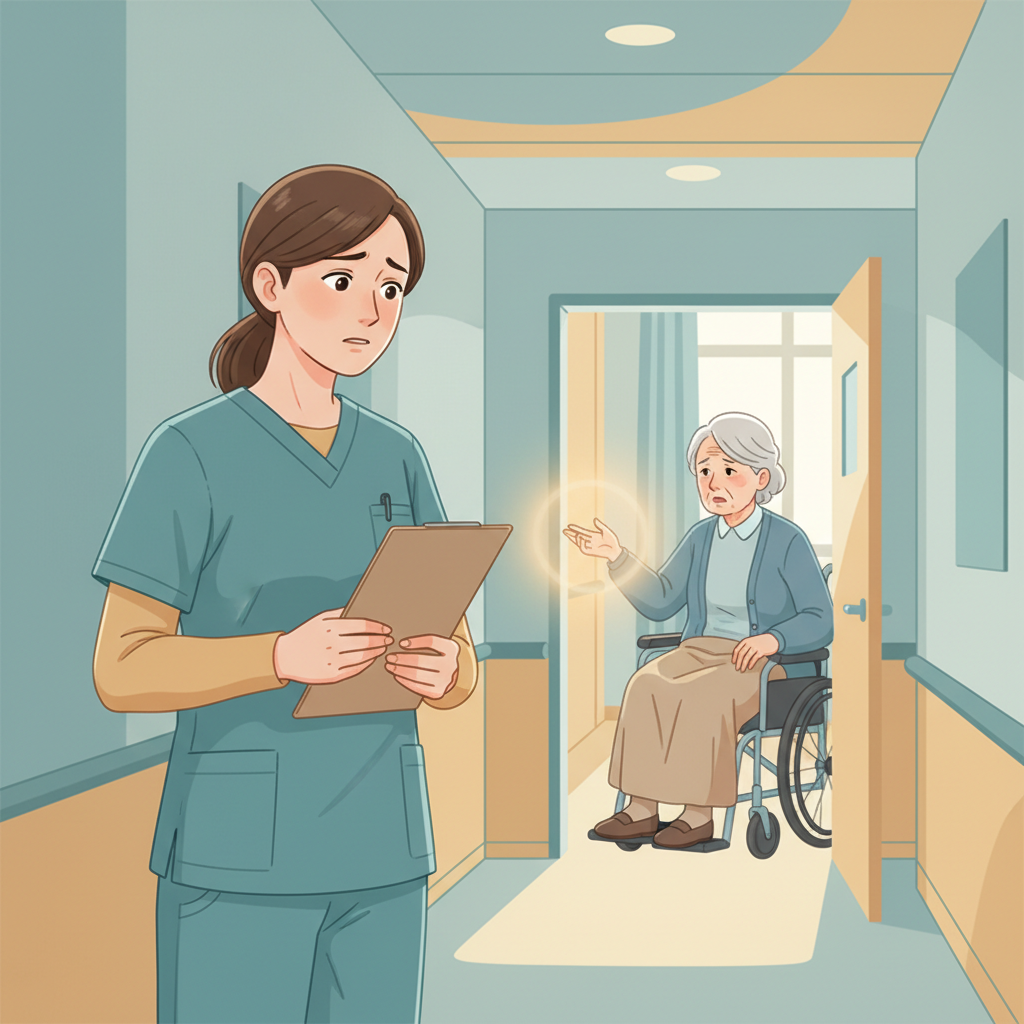
I'm a new CNA, only about three months in. Yesterday I was assigned to a resident with dementia — sweet lady, mostly, but sundowners bad. When her daughter came to visit, the resident told her I hit her and stole $40 from her purse. The daughter went straight to the DON. I did NOT touch her roughly and I did not take her money. The DON said "we'll look into it" and sent me home. I feel sick. I could lose my license over something that didn't happen. What do I do?
This is one of the scariest things that can happen to a CNA. The accusation feels like it could end your career overnight, and the worst part is that for a lot of false accusations, there's no way to prove a negative. Here's how to think about it and what protects you.
Why residents make false accusations
This is the part most CNAs don't get told, and it changes how you handle the situation: false accusations from residents are almost never personal, and almost always a symptom of something.
Delirium and dementia. A resident who is sundowning, in pain, dehydrated, or has a UTI can become paranoid and confabulate. They aren't lying — to them, the memory of being hit or robbed feels real. The brain is filling in gaps with whatever narrative explains the distress. This is well-documented and well-known to any charge nurse who's been around long enough.
Fear or confusion. A resident who feels unsafe — or simply can't keep caregivers straight — may accuse whoever they're looking at. You may be the third CNA she's had today. To her it's "the girl this morning." If she sees you in scrubs, you become that face.
Real complaints dressed up as accusations. Sometimes a resident is trying to say "I'm in pain" or "no one is helping me" and what comes out is "she hit me." The family hears the accusation, the CNA hears a threat, but the resident is just trying to communicate.
In every case, the right response is the same: take it seriously, document carefully, do not retaliate, and let the investigation do its job.
What to do in the moment
When a resident accuses you, your next 10 minutes matter. Here's the order.
1. Stay calm and do not raise your voice. The first reaction is usually panic, then defensiveness. Both are visible and both get recorded in incident reports. Take a breath. Your tone in the next few minutes is going to be in the report.
2. Do not approach the resident alone to "explain" or "smooth it over." That conversation will be misremembered, will look suspicious, and is exactly the kind of thing the investigator will flag. Your only job in the next hour is to be factual and to follow the chain.
3. Tell the charge nurse immediately, in person. Don't wait for the end of shift. Don't wait for the accusation to come to you through a manager. Go to your charge nurse, state what was said and by whom, and ask how they want you to proceed. Put that conversation in writing later if you can.
4. Write down everything you remember about that interaction, right now. Date, time, who was in the room, what you actually did, what you actually touched, what you said. Do this on your break or as soon as you can. Use your phone's notes app, a personal journal, a scrap of paper — whatever. Memory fades fast and your written account from that day is one of your strongest tools.
5. Identify your witnesses. Did the resident have a roommate? Was another CNA in the hall? Did a family member visit during the interaction? Anyone who saw the interaction is now a potential witness. Get their names.
6. Do not quit, do not resign, do not transfer off the assignment without talking to the DON first. Quitting looks like admission. Transferring looks like avoidance. Both are recorded in the file.
What to document
Documentation in this case is everything. It needs to be specific and unemotional. A good note looks like this:
09/17/2026, 14:20. Resident in room 214 told visitor (daughter) that I "hit her" and "stole $40 from her purse." No physical contact occurred during my shift. No items were removed from her purse. The purse was last observed on her bedside table at approximately 12:45 when I delivered her lunch tray. I did not handle the purse or its contents at any point. I reported the accusation to Charge Nurse [name] at 14:25 and was instructed to continue normal duties. — [your name], CNA
What that note does:
- It gives the date, time, and people involved
- It states what was said without arguing the accusation
- It states specifically what you did and did not do
- It references your earlier observation of the room as evidence
- It shows you followed the chain of command
What it does NOT do:
- Call the resident a liar
- Speculate on the resident's diagnosis
- Editorialize about the family
Save a copy outside the facility's chart system. A personal note on your phone, a printed copy at home. If the case goes to state, your contemporaneous note from the day of the incident is gold.
What NOT to do
This is where CNAs most often hurt themselves.
Do not get into a "she said, he said" argument with the resident. Don't say "I never touched you." Don't say "you're confused." You are not the person who can make that diagnosis, and arguing in the room makes everything worse.
Do not retaliate with reduced care. The instinct is to "go in there less." That is documented as neglect and the accusation becomes true in the file. Care for the resident exactly as you would any other.
Do not talk to the family directly. If the family comes to you angry, the right answer is "I understand you're upset, and I'm going to let the DON and the care team look into this so you get the right answer. I can't discuss it with you one-on-one." Anything you say to the family without a witness can be twisted.
Do not discuss the case with coworkers. Not in the break room, not in the parking lot, not on social media. The only safe place to process it is with your union rep, your attorney, or your own therapist.
Do not delete any chart notes or messages. If state investigates, the audit trail starts the moment the accusation is filed. Anything that looks like you deleted records is treated as destruction of evidence.
Do not skip the state-required reporting process. If the facility does not report the allegation to the state registry within the required window, that's their problem — but you need to know they did. You can confirm by asking the DON in writing.
What the investigation actually looks like
The good news is that facilities have a process for this, and most experienced DONs know how to separate real abuse from confused-resident statements.
You'll be asked for a written statement. Be specific, be unemotional, and stick to what you did and did not do. Don't speculate. The care plan, ADL log, and behavior tracking from the resident will be pulled. If she's sundowners, her chart probably shows it. The family will be interviewed and told, gently, that dementia can cause these statements.
If the investigation clears you, get that in writing. Keep it. If the accusation resurfaces years later, "case closed, allegation unsubstantiated" is a much stronger file than "no record."
The hard truth
If you work in long-term care long enough, this will happen to you. Most CNAs who have been in the field a few years have at least one false accusation in their file. It is not the career-ender it feels like in the moment, but it is terrifying while it's happening.
What protects you is the same stuff that protects you in every other high-stakes CNA scenario: document everything, follow the chain, never retaliate, and have your own copy of the truth outside the chart. The accusation lives in the file, but so does your careful documentation, your witness list, and the investigation that cleared you.
If you're a brand-new CNA reading this and feeling sick, the most important thing to know is that the system has handled this before. You're not the first CNA this has happened to, and your DON has almost certainly seen it. Let them handle it. Do your job. Document. Go home.
If this kind of post is useful, the full ExamReady library has 1,500+ practice questions, clinical skills with critical-step tracking, and an AI tutor that explains every answer — the same scope-and-voice approach as these posts, with the actual exam tools attached. A 7-day free trial gets you the whole thing, no card required.