 ExamReady CNA
Resident fell and says 'I'm fine, don't tell anyone': what to do
A real r/cna question about a resident who took a fall, told the CNA they're fine, and begged them not to report it. Why the cover-up puts everyone at risk and what to actually do in the moment.
A CNA on r/cna posted this:
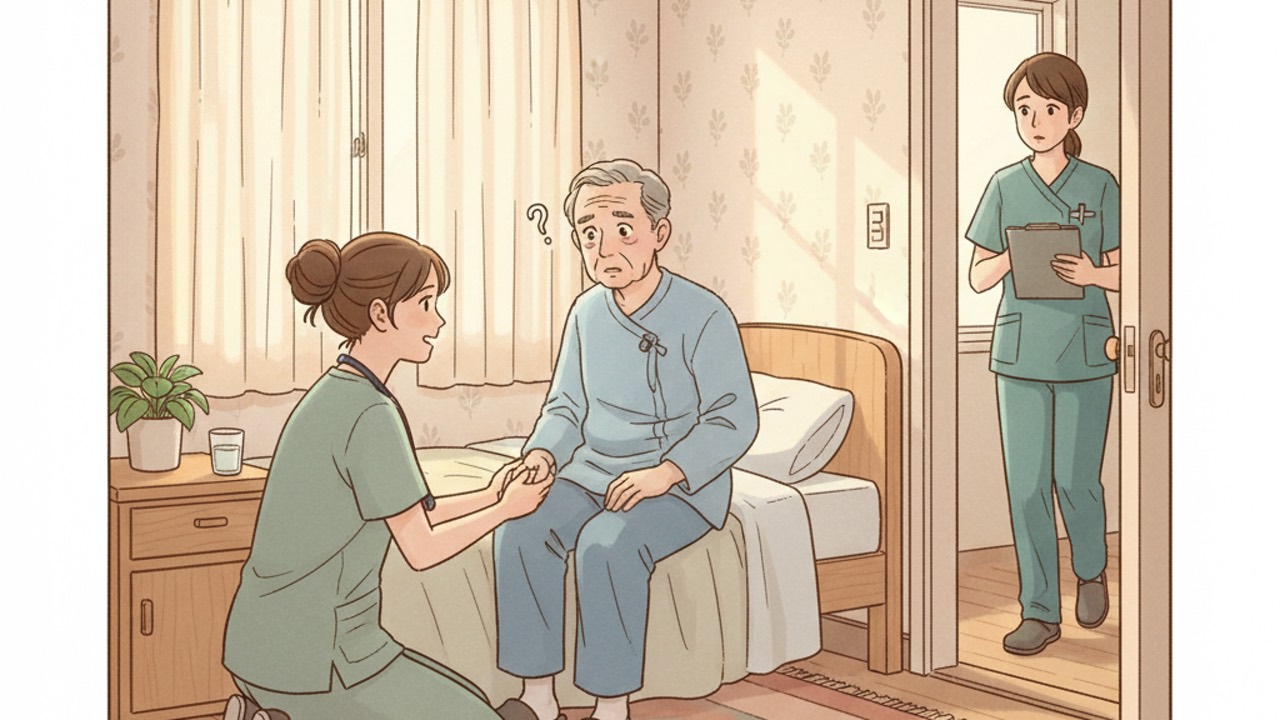
I watched a resident try to stand up on her own, lose her balance, and slide to the floor from a sitting position on the edge of her bed. It wasn't a hard fall — she kind of eased down. She didn't hit her head. I helped her up, she said she's fine, asked me not to tell the nurse because she "doesn't want to deal with all the paperwork" and is scared the facility will make her stay in bed or put her on a restraint. I get where she's coming from but something feels wrong about not saying anything. Am I obligated to report this?
This is one of the most common fall scenarios in long-term care, and one of the most legally and ethically loaded. The resident's request is reasonable from her perspective. Your obligation isn't really in question — but the way you handle it matters.
Why "don't tell" feels tempting, and why it doesn't work
You care about this resident. You don't want her to lose independence. You don't want her to be upset. You understand that a fall report triggers a cascade she didn't ask for: neuro checks, a possible change of code status conversation, maybe a chair alarm, maybe family calling her, maybe the doctor ordering something she'd rather not have. So your instinct is to respect her wishes.
Here's the problem. A fall is a clinical event whether anyone reports it or not. The injuries you're worried about — head bleed, hip fracture, internal bleed — don't care about paperwork. If she has a slow intracranial bleed and you didn't report the fall, the symptoms show up hours later with no one knowing why, and she's the one who pays for it. You also pay for it: every state board treats an unreported fall as a reportable failure on the CNA's part. "She told me not to" is not a defense. It isn't even a mitigating factor.
The resident asking you not to tell isn't a request you can honor. It's a request you have to translate into something you can do.
What to do in the moment
1. Stay calm. Don't argue with her about reporting yet.
She's scared. If you start the conversation with "I have to tell the nurse," she'll escalate — denial, anger, bargaining, promises she's fine. You'll get into a power struggle you don't need. Instead: "Okay, let's get you settled. I want to make sure you're okay before I do anything else." Then actually assess her.
2. Do a focused assessment right there.
You are not diagnosing. You are looking for things that need an immediate nurse call regardless of what she wants:
- Did she hit her head? Even a glancing blow counts.
- Is she alert and oriented to her baseline, or is she "off"?
- Any visible injury — bump, bruise, skin tear, swelling?
- Pain anywhere? "Anywhere that hurts when you move?"
- Can she bear weight on both legs? Walk a few steps?
- Equal grip strength, equal smile, pupils equal — the basics you were taught.
If anything is wrong, the decision is already made. You're calling the nurse. Don't negotiate.
3. Tell her what's about to happen, plainly.
Once you've assessed and she's settled, say something like:
"I'm going to tell the nurse what happened. I have to — it's a fall, and if something shows up later and nobody knew you fell, that's bad for you. The paperwork isn't about restricting you. It's about making sure you're safe."
You're not asking permission. You're explaining what's happening and why. Most residents, once they understand the cascade is about safety not punishment, stop fighting you.
4. Call the nurse. Use the word "fall."
Don't soften it. "She had a fall, I witnessed it, no head strike, no obvious injury, vitals stable, neuro intact at baseline." The nurse decides next steps — neuro checks, provider notification, family notification, incident report — but they need accurate facts.
5. Document before the end of shift.
Even if the nurse enters the formal incident report, your charting needs to describe what you witnessed in your own words. Time, mechanism, your assessment, the resident's statement ("she stated she was fine and asked me not to report"), your actions, who you notified. The line about her asking you not to report is important — it shows you were honest and it protects you later.
What NOT to do
- Don't hide it. No "I helped her up and she seemed fine." If you witnessed a fall, you witnessed a fall. Pretending you didn't is falsification, and it can cost you your certification.
- Don't make a deal with her. "I'll only tell the nurse if you promise to use the call light" — that's a contract you can't enforce and a promise you can't keep. Don't.
- Don't skip the head-strike question. Head injury in older adults can present with zero symptoms for hours, then deteriorate fast. "I don't think she hit her head" is not the same as "she did not hit her head." If you weren't sure, say so.
- Don't move her if she fell from standing. The slide-to-floor fall in this scenario is one thing — you can help her up after assessing. A full standing-height fall is different. Wait for help, especially if there's hip pain, shortening, or rotation of the leg.
- Don't let her convince you she's "always like that." "She's always confused" is not an assessment. Baseline means you compare to her baseline, not to your impression of older adults in general.
The "she'll lose independence" fear
This is the part the resident is really worried about, and it's a real concern. A single witnessed fall doesn't automatically mean restraints or bedrest. What it triggers is a fall risk reassessment — which might actually keep her safer and more independent by addressing whatever caused the fall. Unsteady getting out of bed? Maybe she needs a grab bar, a bed at a different height, a different chair, non-skid socks, a medication review. Without the report, no one looks at the cause. The next fall could be the one that breaks her hip.
Your report doesn't take her independence away. It gives the team the information to protect it.
What if she threatens or insists after you explain
If she gets angry, that's her right. You're still reporting. If she's competent and keeps refusing further evaluation once the nurse arrives, that's a different conversation — capacity, refusal of care, code status — and it's the nurse's and provider's call, not yours. Your job ends at: witnessed event, accurate report, accurate documentation, follow-through on whatever the nurse asks you to do.
If she's confused and doesn't remember the fall later, that itself is information. Tell the nurse. It changes the differential.
What to document
- Time you witnessed the fall
- Mechanism (slip, lost balance, reached for something, leg gave out — whatever you saw)
- Witnessed head strike: yes / no / unsure
- Your focused assessment findings
- The resident's statement, in her own words if possible
- Who you notified and when
- Your interventions
This is the document that protects her and protects you. The note about her asking you not to report isn't a confession — it's evidence that you handled the situation professionally despite pressure not to.
If this kind of post is useful, ExamReady CNA has practice questions with kind explanations, clinical skills walkthroughs with critical steps flagged, and a study coach. Start your 7-day free trial. 7 days free, then $9.99/month. Cancel anytime.
A little every day
Practice questions with kind explanations, and 23 clinical skills walkthroughs with critical steps flagged.
Start your 7-day free trial7 days free, then $9.99/month. Cancel anytime.