 ExamReady CNA
Two residents fighting: how to handle resident-to-resident aggression
A real r/cna scenario about two dementia residents getting into a physical fight in the day room. What you do in the first five seconds, what you do after, and what to document so you're covered.
A CNA on r/cna posted this:
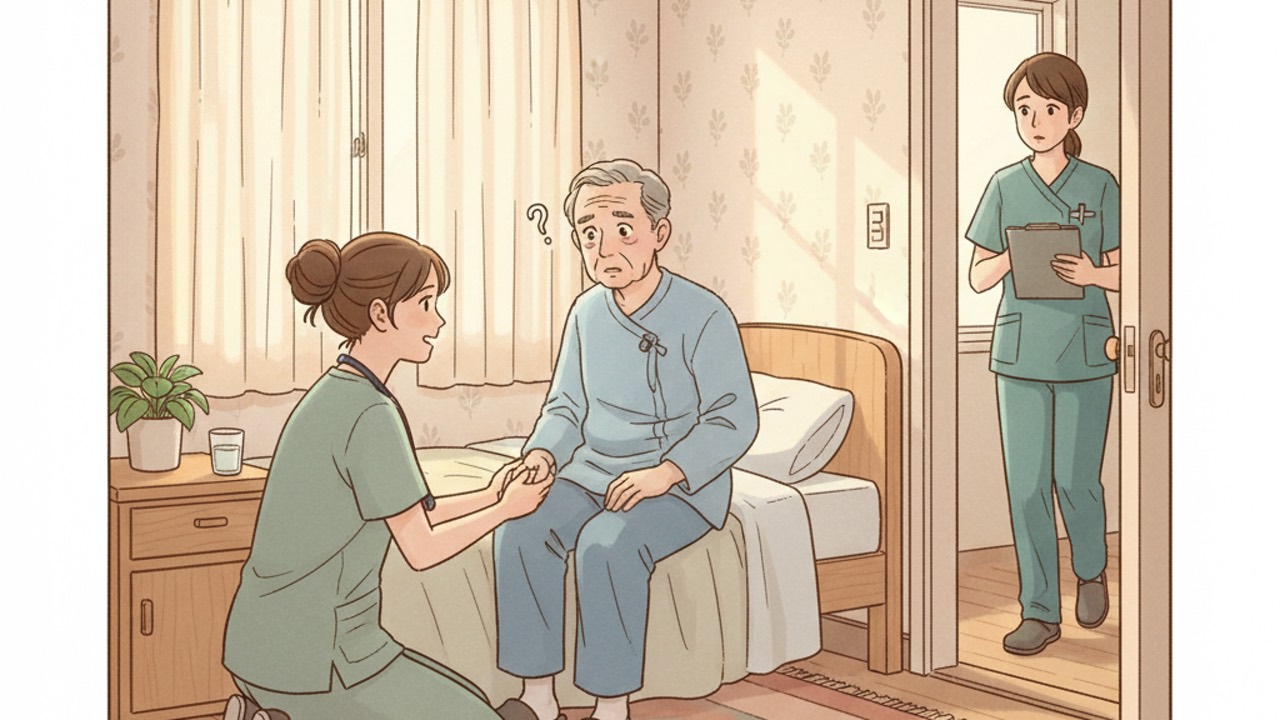
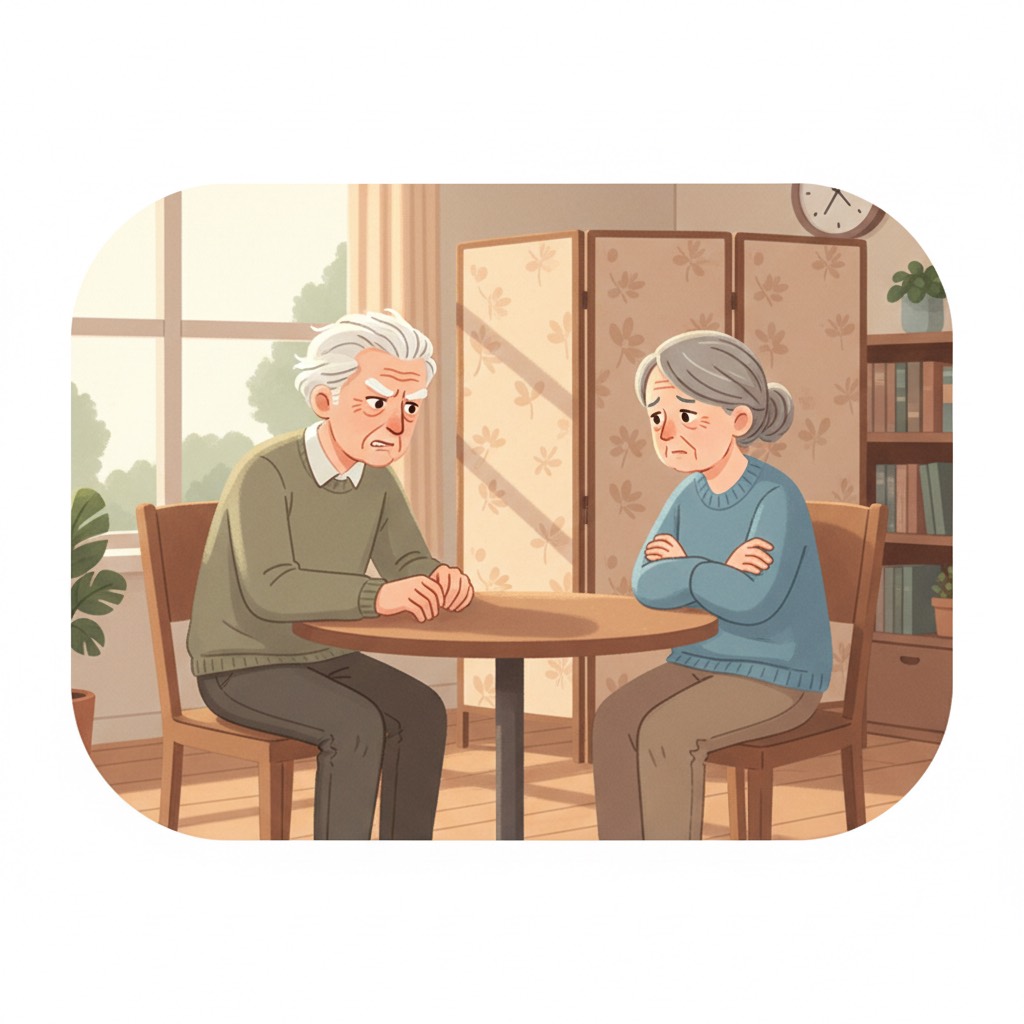
I'm a CNA at a memory care unit. Today two of my residents got into a fist fight in the day room. I was the only one in there when it started. One of them was hitting the other in the face and the other one was biting her arm. I froze for maybe two seconds, then I yelled for help, pulled the smaller one off, and sat them in separate rooms. Nobody was seriously hurt but the one who got hit has a bruise on her cheek and a small scratch. The other one is now in her room screaming. I wrote an incident report but my charge nurse made a face at me like I did something wrong. I feel like I should have done more but I don't know what.
This is one of the more common scenarios in memory care and in long-term care generally. It happens most often between residents with dementia, but it can happen between cognitively intact residents too — roommates who have never gotten along, or residents who are confused, in pain, or scared. Resident-to-resident aggression is also one of the more underreported events in nursing homes, partly because CNAs aren't always sure what counts, partly because the paperwork feels heavy, and partly because of exactly what this CNA described — you do what you can, you report it, and then someone looks at you like you made a problem.
Here's what you actually do, in the right order, and how to document it so the paper trail protects you.
The first five seconds
When two residents are actively fighting, your brain will go a little blank. That is normal. You do not have to be heroic. You have to be fast, safe, and predictable.
1. Call for help first. Yell down the hall, hit the call light on the wall, use your Vocera if you have one. The single most useful thing another person can do in this situation is be a second set of hands so you are not alone trying to separate two people who are trying to hurt each other. If you work on a memory care unit, your facility almost certainly has a code or phrase for this. Use it. Loudly.
2. Do not put your hands in the middle. This is the part nobody tells you. You cannot safely grab a resident who is actively swinging or biting from the front. If you try to pull one off the other, you are very likely to get hit, scratched, or bitten yourself — and once you are hurt, you cannot keep working the rest of your shift. The standard teaching is to approach from the side or behind, redirect the aggressor's arms, and guide them away. If you cannot safely do that, you wait for the second person. Standing between them, talking loudly, and using your body as a barrier is also acceptable for the first 10 to 15 seconds.
3. Redirect, do not restrain. You are not allowed to physically restrain a resident. What you can do is redirect — get the aggressor focused on something else, walk them in a different direction, take them to a different room, give them a soft object to hold. Once the aggressive resident is no longer physically engaged, the situation usually de-escalates in under a minute.
4. Check both residents for injury. Once the fight is over, before you go back to your other work, both residents need a quick head-to-toe. Bruises, scratches, skin tears, bloody noses, swelling, complaints of pain. You are not diagnosing anything. You are looking and you are asking. "Does this hurt? Can you open your hand for me? Can you look at me?" Anything you find gets reported to the nurse immediately.
That is the in-the-moment part. Everything after is paperwork, but it matters more than people think.
What to document
The incident report for resident-to-resident aggression should include:
- Date, time, and where it happened
- Who was involved (by name and room number, no diagnosis)
- What you saw, in plain words: "Resident A was hitting Resident B in the face with a closed fist. Resident B was biting Resident A's left forearm."
- What you did, in order: "Called for help. Waited for second staff. Separated residents. Took Resident A to her room. Checked Resident B for injuries. Reported to charge nurse at 14:32."
- Any injuries you saw on either resident
- Any witnesses (other residents, visitors, other staff)
- Anything either resident said
- What time you reported it and to whom
The temptation is to write a short report and move on. Don't. Two weeks from now, when the bruise is still there, or the family of the resident who got hit calls, or state comes in for a survey, the only record of what actually happened is what you wrote on the day of. Write it the day of. Write what you saw, not what you think happened. Skip the adjectives.
What NOT to do
This is the part the CNA in the post was really asking about, and it is the part that doesn't get said out loud.
Do not let a coworker or charge nurse talk you out of filing the report. "They do this all the time," "It was nothing," "She barely touched her" — none of that is a reason not to document. The bruise on the cheek is not "nothing." A bite is not "barely." You document what you saw. Every time. The pattern of incidents is what triggers a care plan change, a medication review, a room reassignment, and sometimes a state report. Without your report, the pattern is invisible.
Do not blame the resident. Even when the resident who started it has dementia and "doesn't know what they're doing," your report should not say "Resident A is aggressive and dangerous." It should say "Resident A struck Resident B three times with a closed fist." The first is a label. The second is a behavior. Labels follow people. Behaviors get addressed.
Do not tell the family of the injured resident that "she's fine" if she isn't. A bruise on the cheek from a punch is not "fine." Tell the family what happened in plain words: "There was an incident in the day room today. Your mom got hit. She has a bruise on her cheek. The nurse is coming to look at her. I'll have the nurse call you as soon as she can." That is a 30-second conversation that prevents a 30-minute complaint.
Do not skip your own injury check. If you got scratched, hit, or bitten, that gets reported too. You matter, and your workers' comp claim is part of the same incident report.
Do not let it go for two days. If you froze for two seconds, that is human. If you are still beating yourself up about it two days later, talk to someone. Most facilities have an employee assistance program with a few free counseling sessions. The job does not get easier if you carry it alone.
The bigger picture
Resident-to-resident aggression is usually a sign that the care plan needs adjusting, not a sign that you failed. Common underlying causes: a resident is overstimulated, in pain, in a room with someone they don't get along with, sundowning, has a UTI they haven't been treated for, is hungry or thirsty, or has had a medication change. Two-thirds of the time, the next step is a care plan meeting, not a behavior plan, and not a restraint.
You will have more of these. Not because you are bad at your job — because the population you work with is more behaviorally complex than it was 20 years ago, and the staffing hasn't always kept up. Knowing the right order — call for help, do not grab, redirect, check for injuries, document, report — turns the worst five seconds of your shift into something you can come back from.
If this kind of post is useful, ExamReady CNA has practice questions with kind explanations, clinical skills walkthroughs with critical steps flagged, and a study coach. Start your 7-day free trial. 7 days free, then $9.99/month. Cancel anytime.
A little every day
Practice questions with kind explanations, and 23 clinical skills walkthroughs with critical steps flagged.
Start your 7-day free trial7 days free, then $9.99/month. Cancel anytime.