 ExamReady CNA
Resident hoarding food in their room: what to do
A real r/cna question about a SNF resident who hides food in drawers and trash cans. Why it's happening, the safety risks no one talks about, and what actually works.
A CNA on r/cna posted this:
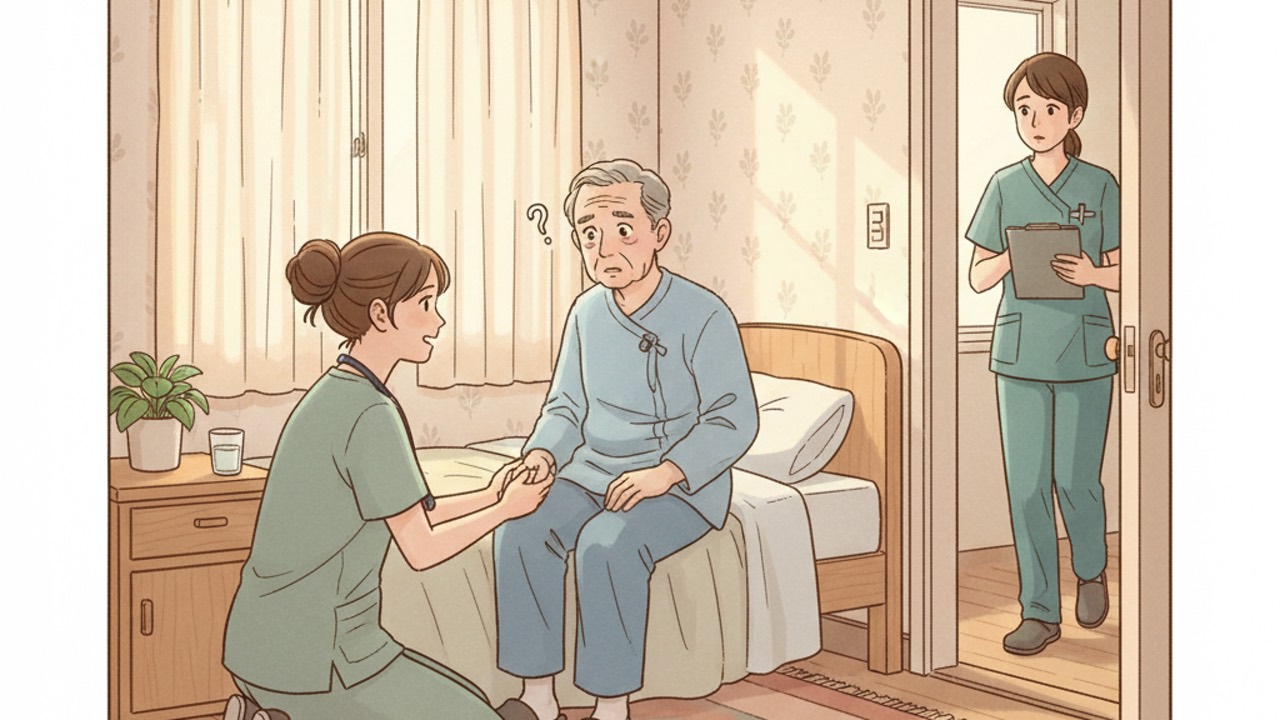
I work nights and one of my residents has been stashing food all over her room. I've found sandwich halves in her sock drawer, an apple under her mattress, an entire pudding cup inside a trash bag with the twist tie on it. Her family brings her snacks and she saves them "for later," but "later" never comes. Yesterday I found a sandwich that was so old I can't even describe the smell. When I tried to throw it out she got really upset with me and told me I was stealing her food. Her daughter is at the bedside constantly and says mom has always been like this. I'm worried about her eating spoiled food but I also don't want to start a fight every shift. What do I do?
The post got a few hundred upvotes and a long thread of CNAs saying "I have this exact resident right now." Hoarding food in a SNF room is one of those problems that gets brushed off as a quirk until it becomes a safety issue. Here's what's actually going on and what tends to work.
Why residents hoard food
The behavior almost always has one of these roots:
A lifetime of scarcity thinking. A lot of long-term-care residents grew up through the Depression, rationing, or poverty that left a real imprint. Saving food isn't a "quirk" — it's a deeply wired survival strategy. Telling someone like this to stop saving food is like telling them to stop breathing. The impulse is older than your facility.
Control. A SNF takes away almost every form of autonomy. Residents eat when food comes, sleep when lights are scheduled, bathe when staff has time. A drawer full of crackers and an apple under the mattress is one of the last things that is fully, privately, theirs. Taking it away — even with the best intentions — removes one of the few remaining pieces of agency they have.
Memory impairment. The resident may genuinely not remember what's in the drawer, or may not be able to track time, so a sandwich from Tuesday looks the same as a sandwich from Friday. They aren't being unreasonable; they just don't have the working memory to manage a "snack supply."
Anxiety or grief. Hoarding shows up in people who are anxious, depressed, or grieving a loss of independence, a spouse, a home. The food becomes a tangible thing to hold onto when everything else is slipping.
Diabetes or appetite dysregulation. Some residents are medically restricted — NPO, carb-controlled, thickened liquids only — and they hoard the things they aren't supposed to have because the restriction feels punitive. This is the highest-stakes version and needs the care team's attention.
Knowing which of these is driving your resident changes what helps. You can usually tell by asking — directly and gently — why they're saving what they're saving. The answer is almost always illuminating.
Why this is a safety issue
Most of the thread on that r/cna post was CNAs laughing about what they'd found in drawers. That's the wrong read. Hoarded food in a room is a real safety hazard.
Spoilage and foodborne illness. Soft foods left at room temperature grow bacteria fast. A pudding cup, a sandwich, even fruit — left 8-12 hours at SNF room temperature, especially in a warm building — can cause serious GI illness in an elderly, often immunocompromised resident. The home fridge was 38°F. The sock drawer isn't.
Pests. Mice, ants, and flies find hoarded food fast. Once pests establish, the room — and adjacent rooms — become a recurring problem.
Diet and swallow-safety risks. Residents with diabetes hoarding the cookies family brings, or someone with dysphagia hiding regular-thickness liquids, are at real risk. Aspirating on a hidden hard candy while the CNA isn't in the room is a documented scenario.
Conflict with staff. The resident who accuses you of stealing their food puts you in a documentation and trust problem. If they say "she took my pudding" and you didn't, but you also can't prove where the pudding went, the family and the care team end up in a he-said-she-said that mostly hurts you.
Family dynamics. Family members who bring in unrestricted food against the care plan, and then the resident hoards it, put the facility in a bind. The safety risk is still the resident's, even when the food source is the family.
None of this gets fixed by quietly throwing food away on your shift. It needs a care-plan conversation.
What NOT to do
- Don't sneak in and throw food away while the resident is asleep or out of the room. This confirms the worst thing the resident believes — that staff is stealing from them.
- Don't argue with the resident in the moment. "This is spoiled, you can't eat this" sounds reasonable to you and feels like a personal attack to them.
- Don't restrict family visits or food gifts on your own. That's not your call. Bring it to the nurse.
- Don't take the food home, eat it yourself, or give it away to other residents. Yes, someone in the comments said they used to do this. Don't.
- Don't document it as "resident non-compliant with care plan." That's a phrase that sounds clinical and accomplishes nothing. Describe what you actually observed instead.
What actually works
1. Talk to the nurse about a care-plan review.
The hoarding behavior is data. The care team needs to know it's happening, how often, and what kind of food is involved. The nurse can loop in the dietitian, social work, and the family. There may already be a behavior plan that needs updating — most facilities have a "hoarding" or "food-seeking" care-plan template for dementia residents that staff can implement once it's ordered.
2. Make a small, visible, scheduled "snack shelf."
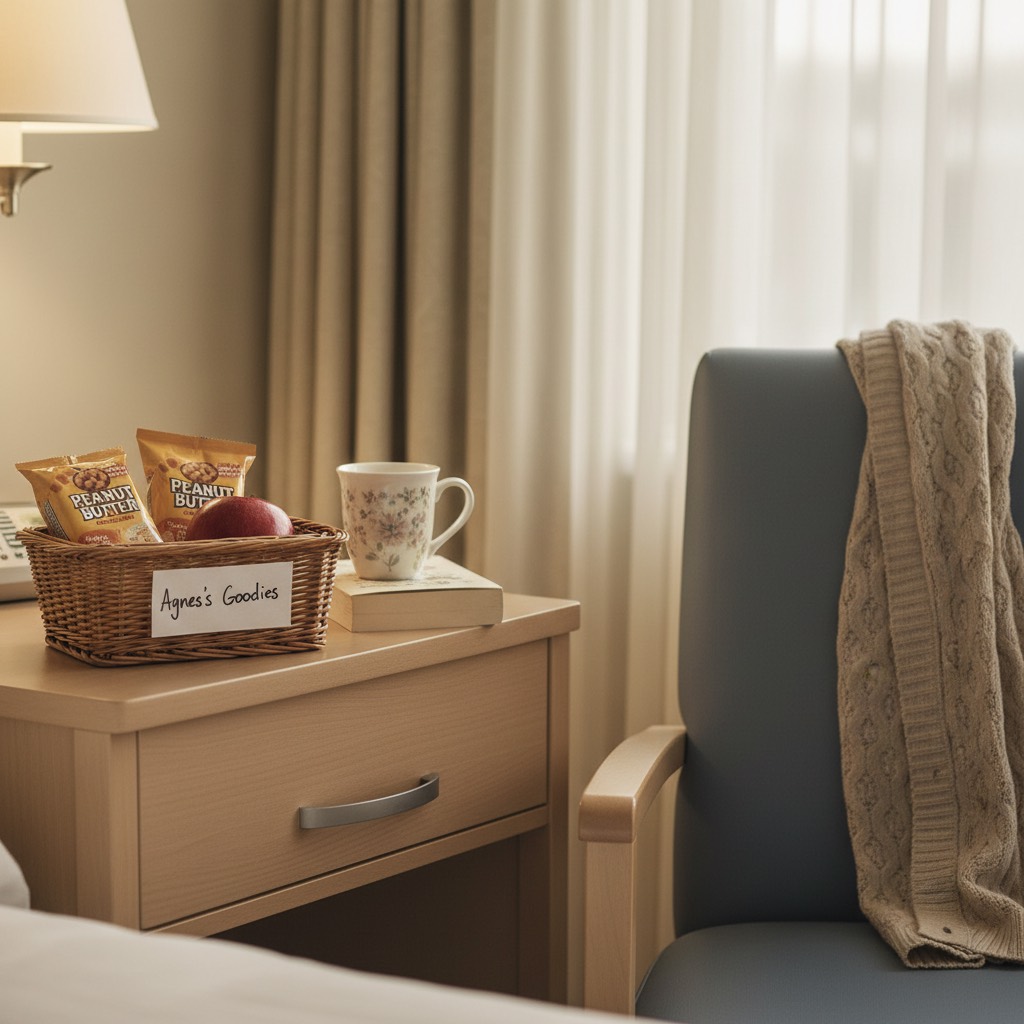
If the resident is saving food because of the control issue, give them a designated, visible spot — a small basket on the bedside table, labeled with their name — and check it together at each shift. "Let's see what's in here tonight." It reframes hoarding as curation, and it lets you remove spoiled items without a fight, because the resident sees you checking.
3. Address the medical side.
If the resident is diabetic and hoarding the cookies family brings, that's a medication and monitoring issue. If the resident has dysphagia and is hiding regular-thickness liquids, that's a swallow-safety issue. The nurse needs to know so the team can address it. You don't diagnose it, but you observe it and report it.
4. Family conversations, held by the right person.
You are not the right person to tell a family member to stop bringing in junk food. That's social work or the nurse, ideally with the dietitian present, and ideally framed around safety, not judgment. "Mom is hiding food because she loves your gifts and wants to make them last — let's figure out what she can safely keep in her room" works better than "your snacks are making her sick."
5. Routine room checks, done transparently.
A scheduled, documented room check at the start of every shift — with the resident present when possible — normalizes the activity and gives you a chance to remove spoiled food without it being a surprise. Frame it as part of the room tidy, not an inspection.
6. Document what you actually see.
Document the hoarding pattern: what kind of food, how much, how old, where in the room, the resident's explanation if they give one, and any safety concerns (spoiled food, restricted-diet items, pests). This is the data the team uses to update the care plan, and it's also your protection if the resident or family later reports you for "stealing."
The bigger picture
Hoarding food in a SNF room is usually a symptom, not a problem. The resident is telling you something — about control, fear, memory, grief, or unmet needs — and the food is just the medium. Once the care team treats it as a behavior with a cause, the practical fixes fall into place.
You don't have to solve it on your shift. You just have to document it, report it, and not make it worse by sneaking food out at 3 a.m.
If you want a script for the room-check conversation — what to say, what to offer, how to loop the nurse in without it becoming a confrontation — the clinical skills library walks through the documentation and behavior-tracking steps the way a care plan should.
If this kind of post is useful, ExamReady CNA has practice questions with kind explanations, clinical skills walkthroughs with critical steps flagged, and a study coach. Start your 7-day free trial. 7 days free, then $9.99/month. Cancel anytime.
A little every day
Practice questions with kind explanations, and 23 clinical skills walkthroughs with critical steps flagged.
Start your 7-day free trial7 days free, then $9.99/month. Cancel anytime.