 ExamReady CNA
Resident keeps getting up despite fall risk: what to actually do
A real r/cna scenario about a resident who won't stay in bed or the wheelchair, has fallen before, and keeps standing up the second you leave. What the CNA's role actually is, and what isn't.
A CNA on r/cna posted this:
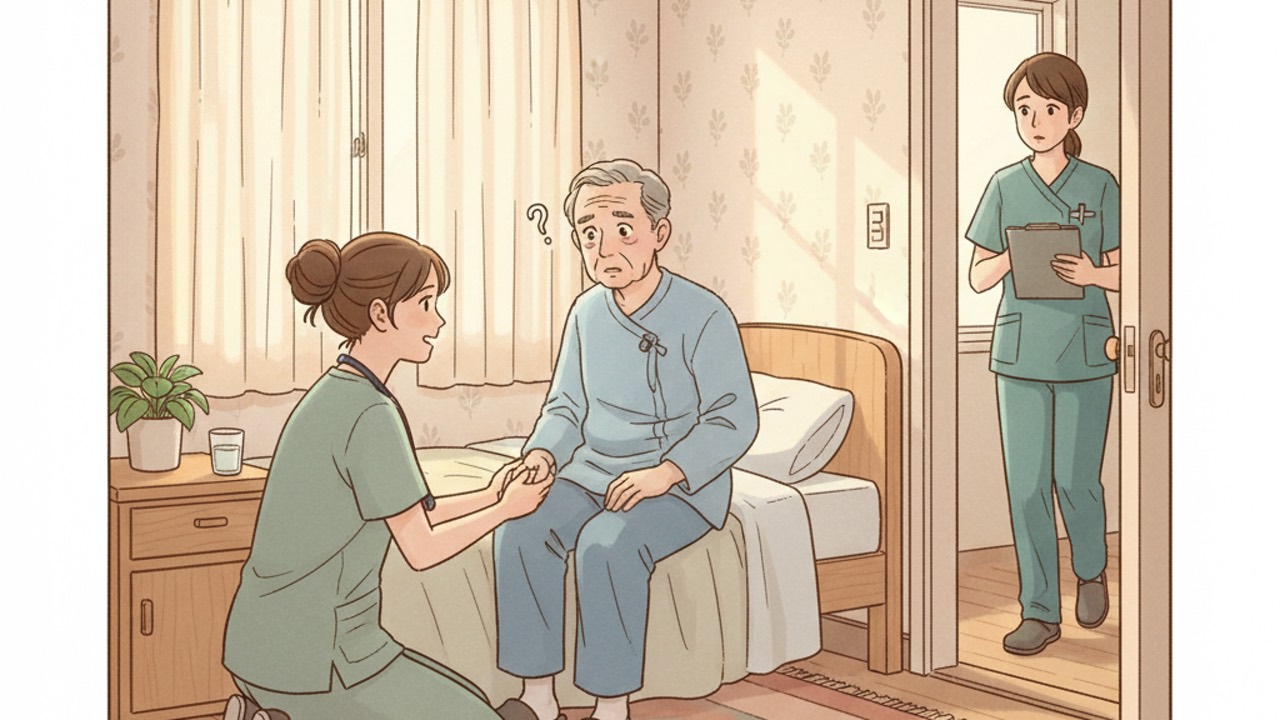
I have a resident who is a high fall risk. She has fallen multiple times. She's sometimes oriented, sometimes not, and she WILL NOT stay in bed or in her wheelchair. The second I walk out she is up trying to walk on her own. She doesn't have the strength or balance and she knows it. I keep telling her "please don't get up, call me first" and she just says "okay" and does it anyway. I'm watching her on the monitor and she's up again right now. I have five other residents. What am I supposed to do??
This is one of the most stressful situations in long-term care. The resident is at risk, you have five other people, the call light is going off, and nothing you do is working. Here's what's going on and what your role is.
Why she gets up
The default assumption is that the resident is being defiant, manipulative, or "noncompliant." Almost never. People in SNFs get up for reasons:
She has to use the bathroom. The number one reason is they have to pee. Toileting rounds every 90 minutes drops the getting-up dramatically. Most facilities have a "toileting rounds" protocol for exactly this reason. Run it.
She's bored or lonely. Same root cause as the resident who hits the call light every three minutes. Standing up is something to do.
She's in pain. A resident in pain shifts position. A resident in real pain tries to find a position that doesn't hurt, which often means standing.
She's disoriented. Dementia, sundowning, UTI, medication change, dehydration — any of these can flip a resident from oriented to "I have to find my mother" in an afternoon. A resident who understood "call me first" at breakfast may not understand it at 2pm.
She doesn't remember she's a fall risk. Even residents with good cognition forget sometimes. They wake up from a nap disoriented and just stand.
Telling her not to get up fails because it doesn't address any of these. It's an instruction, not a need.
What your CNA role actually is
A CNA cannot physically restrain a resident. A CNA cannot lock a wheelchair. A CNA cannot refuse to let a resident get up. Everything you do falls into one of three buckets: presence, supervision, or environment.
Presence. Be in the room. The single most effective fall reduction for a high-risk resident is physical proximity. If you can't be in the room, position yourself so the doorway is in your line of sight and check every 60-90 seconds. If your assignment is too heavy to do this, that is a staffing problem, not a you problem.
Supervision. When she stands, you stand with her. Walk her to the bathroom. Walk her back. Stay at arm's length when she's walking. This is the whole point of a fall-risk intervention at the CNA level.
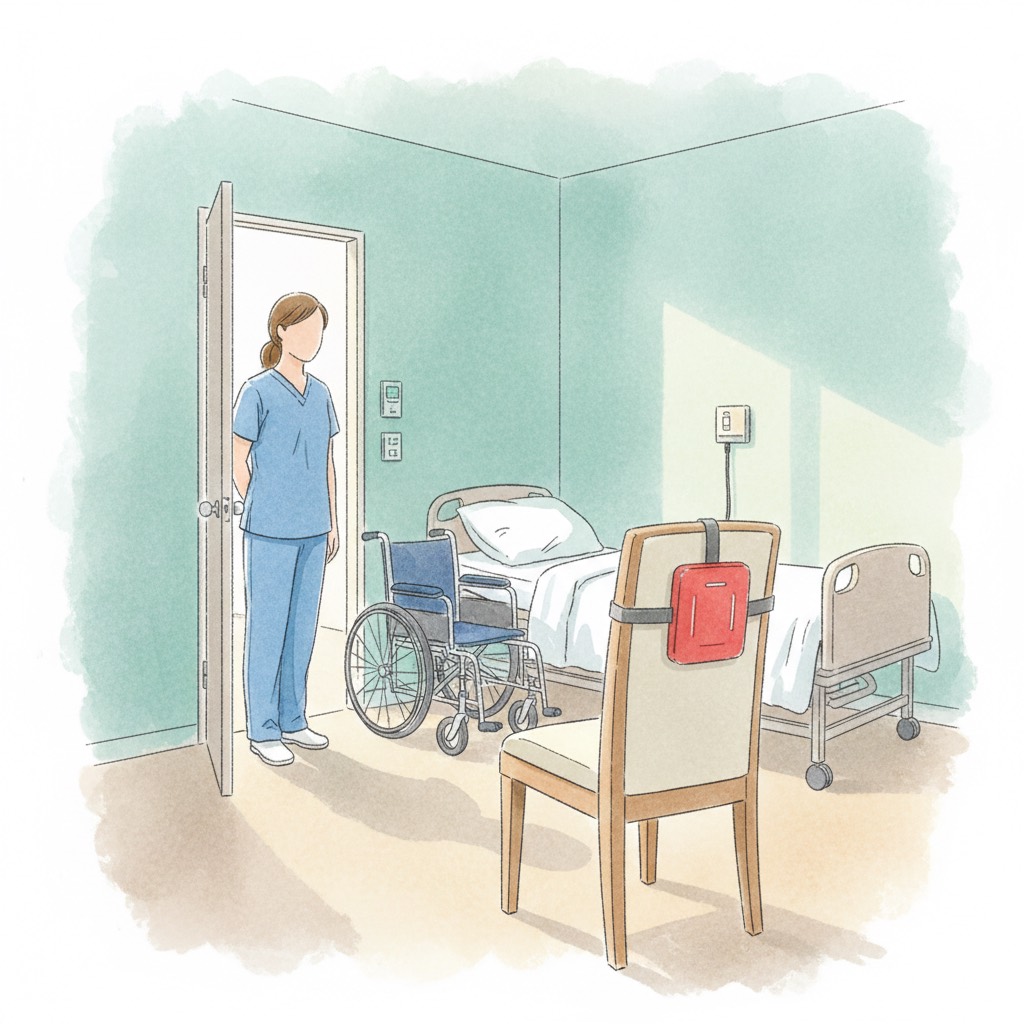
Environment. Bed alarm. Chair alarm. Floor mats. Low bed. Non-skid footwear that is actually on her feet (check — non-skid socks in the closet don't help). Bed in the lowest position. Call light within reach. Wheelchair wheel locks on. These are environmental interventions, and they are the highest-yield things you can do.
Telling her to "call me first" is none of these. It's a verbal instruction that requires a cognitive ability the resident often does not have. Stop relying on it.
The plan that actually works
If you have a resident who is a frequent unsanctioned stander, here's the multi-step approach that catches most of the episodes:
1. Toileting rounds every 90 minutes, on a schedule. Not "when she asks." On a schedule. Bring her to the toilet, even if she just went. Most of the unsanctioned standing will be to the bathroom.
2. Bed alarm or chair alarm, always on. These are not restraints. They are monitoring tools. The bed alarm goes off, you go to the room. The first 10 times this happens is exhausting. By day 4 the resident often settles because the alarm going off is itself a cue that someone is watching.
3. Hourly rounds with face time. Walk into the room. Make eye contact. "Hi Mrs. Garcia, just checking on you. Do you need anything?" Ten seconds. The point is not the request, the point is that you were just there. Most residents wait 5-10 minutes after a visit before trying to get up on their own.
4. Engagement. A resident who is doing something does not try to stand up. Folding towels. Looking at a magazine. A TV show they actually like. Talking to a roommate. If you can get activities involved, do it.
5. Footwear check. Non-skid socks on, every shift, every round. Bare feet and tube socks are fall factories.
6. Pain check. If the standing started recently, tell the nurse. A behavior change in a dementia resident is often the only signal of pain or infection.
If you do these six things consistently, the unsanctioned standing drops by half to two-thirds in most facilities. It does not go to zero. The resident will still get up sometimes. That's the job.
What to document
Every shift, document the number of unsanctioned standing episodes (or alarm activations), whether the resident had been recently toileted, activity and orientation level, pain cues, and any injury even minor (skin tear, bruise, complaint of pain).
The documentation matters because fall risk assessments are reviewed at care plan meetings, and the data you write is what determines whether the resident gets a 1:1 sitter, a medication review, a room closer to the nurses' station, or none of those. If you aren't documenting, the team is flying blind.
It also matters for you. If the resident falls and breaks a hip, the lawyer is going to ask what the CNA documented about her standing pattern. If the answer is "nothing," you and the facility are exposed. If the answer is "the resident was up 14 times on my shift, alarm went off 11 times, toileted at these times, pain reported at 1400, RN notified," that is the paper trail that protects you.
What to tell the nurse
You are not alone in this. When the pattern is more than you can manage, escalate. Tell the nurse this is a high fall risk and the interventions in place aren't enough, plus any behavior changes (new confusion, new pain cues, refusal to eat or drink) and any family concerns or new family instructions.
A nurse can do a medication review, request a PT/OT consult, request a low bed or floor mat from therapy, request a sitter, or request a room change. None of those are in your scope. They are in hers. You cannot do your scope well while doing her scope by yourself.
What NOT to do
- Do not physically block a resident from standing. A CNA pushing a resident back into a chair is battery. You can stand next to her, redirect, say "let me help you," but you cannot restrain.
- Do not yell at her. She isn't doing this to you. The behavior is the disease, not a choice.
- Do not lock the bed against the wall or jam the wheelchair without an order. Restraints require a physician order, an MD assessment, family consent in many states, and a care plan update. A CNA deciding "she's safer tied down" is illegal.
- Do not take it personally. She isn't doing it to you. The fifth time you walk into her room in 20 minutes is not a statement about you. It's a statement about her brain.
- Do not turn off the bed alarm because it annoys her. The alarm is the intervention. If she wants it off, that is a discussion with the nurse, not a unilateral call.
If you find yourself getting angry at a resident who won't stop standing, take a break. Eat something. Drink water. Step outside for two minutes. Needing a moment is not wrong.
The hard truth
Some residents fall. You can do everything right — every toileting round, every alarm, every environmental fix — and a resident will still get up when you are not in the room, and you will not be there in time. That is the worst day of the job. It is not your fault if you have been following the care plan, documenting, and escalating appropriately. It is the system working as it can with the resources it has.
If your facility is short-staffed to the point that a high fall risk resident on your assignment of five is unmanageable, that is not your failure to fix. That is a staffing failure the charge nurse, the DON, the administrator, and the state surveyor need to hear about. Your job is to do the work and document the constraints. Their job is to fix them.
You're not failing because a resident stands up. You're only failing if you stop showing up.
If fall risk interventions are part of your exam prep, the ExamReady clinical skills library walks through ambulation, transfers, and the rest of the skills the same way the in-facility training does — same scope, same language.
If this kind of post is useful, ExamReady CNA has practice questions with kind explanations, clinical skills walkthroughs with critical steps flagged, and a study coach. Start your 7-day free trial. 7 days free, then $9.99/month. Cancel anytime.
A little every day
Practice questions with kind explanations, and 23 clinical skills walkthroughs with critical steps flagged.
Start your 7-day free trial7 days free, then $9.99/month. Cancel anytime.